Start with the trail you’re on
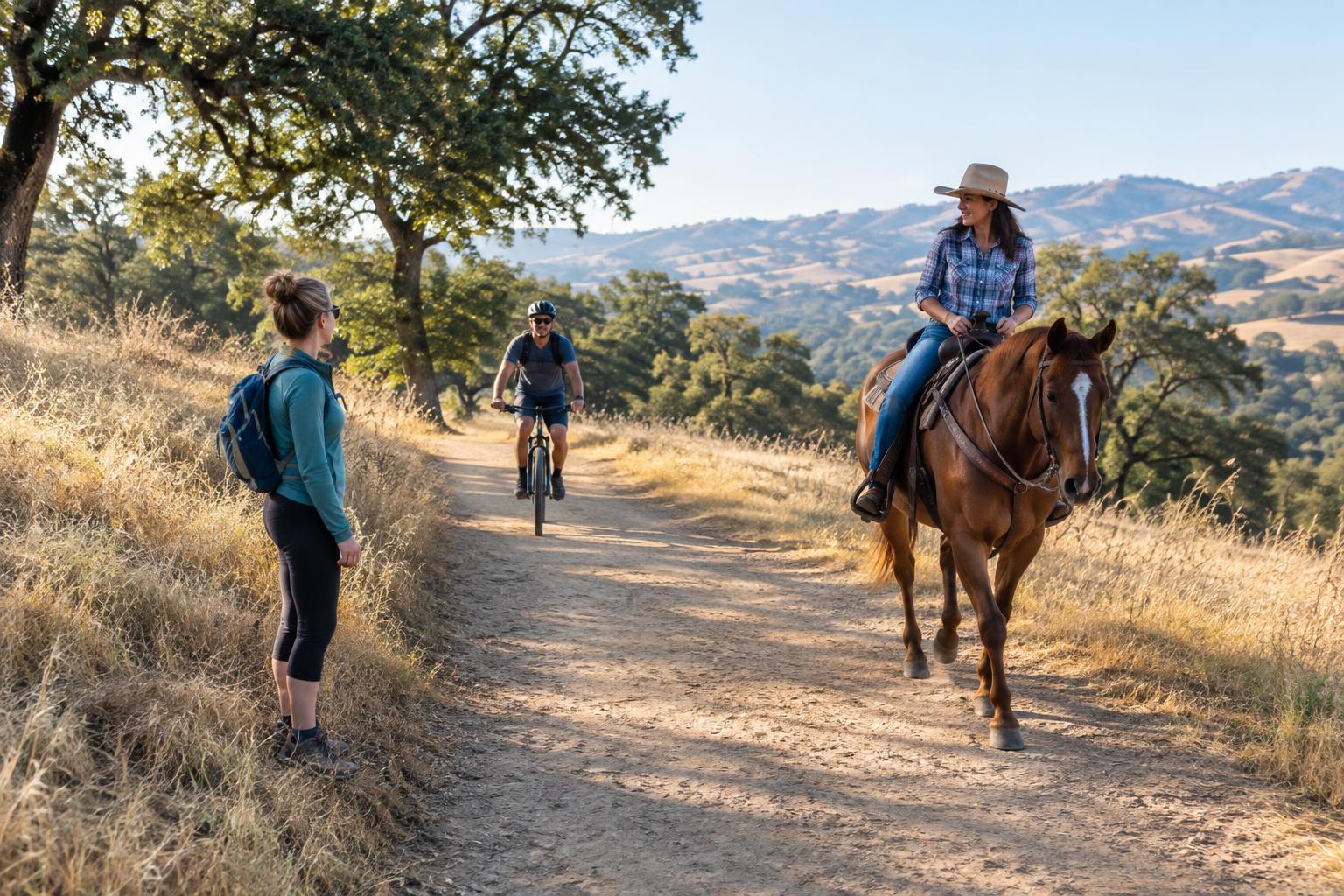
A shared trail can bring together people moving at very different speeds. A walker may be taking in the view, a cyclist may be approaching around a bend, and a horse rider may need room to keep an animal calm. Whether you are exploring a Central Valley park or a path farther afield, the most useful habit is simple: look ahead, slow down when others are near and make your intentions clear.
Before setting out, check posted signs for permitted uses, direction of travel, speed limits and any local yielding rules. Not every path allows horses or bicycles, and general etiquette does not replace a trail’s specific instructions. If a route is narrow, busy or unfamiliar, plan to travel at a pace that lets you stop within the distance you can see.
Make passing predictable
When approaching someone from behind, reduce your speed early and give a friendly verbal notice with enough time for them to respond. A bell can help on a bicycle, but it may not tell another trail user what you intend to do. Say which side you hope to pass on, then wait until there is space and the person ahead has had a chance to acknowledge you. Avoid squeezing through a gap or assuming silence means the way is clear.
When meeting another trail user head-on, keep to the customary side where possible and leave room between you. If the path is too narrow, find a safe place to pause rather than stepping into vegetation or forcing someone else off the trail. Cyclists should approach blind corners slowly; walkers in a group can make passing easier by moving into a single file. A brief greeting and a little patience often prevent an awkward stop from becoming a conflict.
Give horses time and space
Horses can react to sudden movement, unfamiliar sounds or something approaching quickly from behind. If you see a horse, slow down well before you reach it. Speak in a normal, calm voice so the horse and rider know you are there, and leave generous space. Cyclists may need to stop or dismount if that is the safest way to pass. Follow the rider’s guidance when it is practical to do so, since they can often judge what their horse needs in the moment.
Do not ride or run close behind a horse, cut between horses in a group, or reach out to touch one without asking. If you have a dog, keep it close and under control; use a leash where required. When there is little passing room, wait at a wider spot and let the rider move through at a steady pace. Posted rules may specify who yields, but a safe, calm encounter matters more than insisting on your turn.
Leave room for different ways of moving
Walkers should stay aware of traffic behind them, especially when chatting in a group or listening to audio. Cyclists should ride at a speed suited to the trail, not just to their ability: families, uneven ground and limited sightlines can all call for a slower approach. Horse riders can help others by signaling when it is safe to pass and by avoiding unexpected changes of direction when possible.
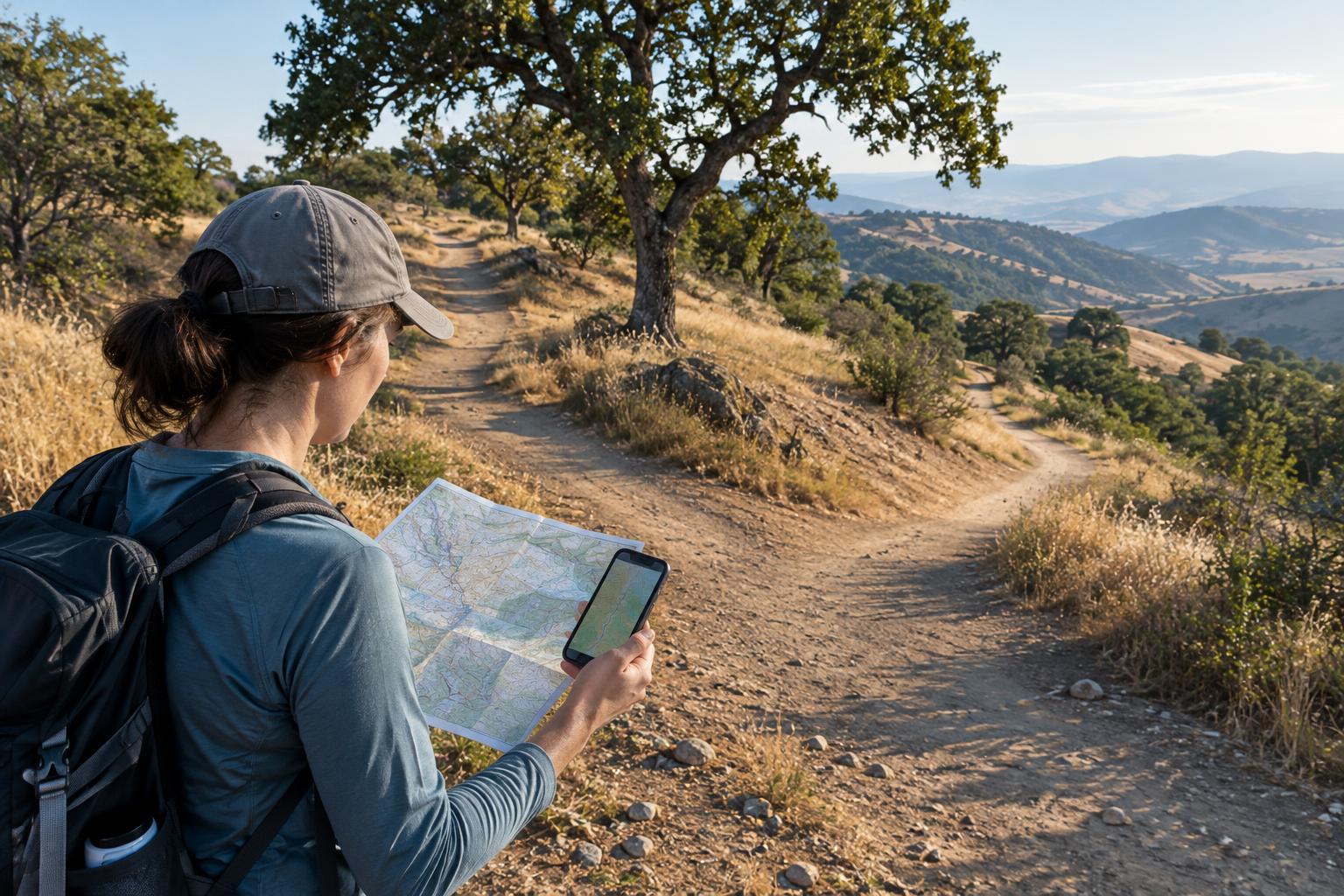
Everyone benefits from keeping the traveled path clear. Step aside at a durable, wide spot if you need to check a map, adjust gear or take a break. Keep children and dogs close when another user approaches, and avoid leaving leashes stretched across the trail. If a dog is uneasy around bicycles or horses, create distance early rather than waiting for the encounter to happen at close range.
Respect the trail, not just the traffic
Good etiquette also protects the place you came to enjoy. Stay on designated routes, carry out litter and follow any rules about dogs and trail use. After rain, soft ground can be easily damaged; check for closures and avoid leaving deep tracks or widening the path to get around a muddy patch. If an obstacle makes the route impassable, turn back rather than creating a new track without permission.
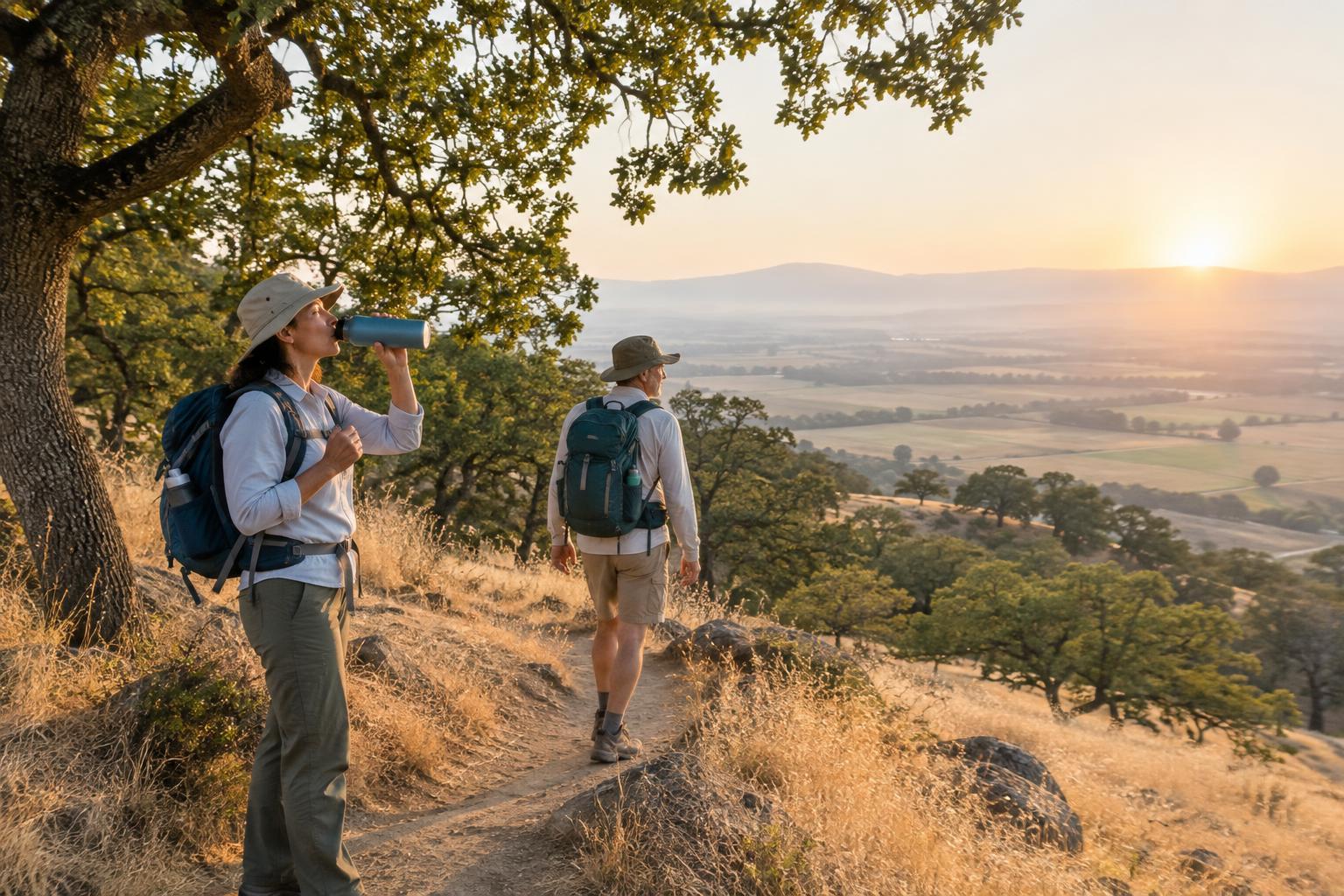
In warmer weather, bring water, choose an outing that suits your group and allow extra time so no one feels rushed through a crowded stretch. Shared trails work best when each person leaves a little margin for the unexpected. You do not need a perfect script for every encounter—just enough awareness to slow down, communicate and give others a comfortable way through.