An accessory chosen for the life you already have
UniqueYou focuses on women’s scarves, shawls, wraps and square scarves. Its approach is most useful when you begin not with a trend, but with what is already in your closet. Pull out the coat you reach for most, the sweater that gets worn twice a week and the dress you would take to dinner. Those pieces reveal more about a good scarf choice than an imagined outfit assembled entirely from new purchases.
A scarf may add a light point of contrast, connect two colors that otherwise feel unrelated or bring texture to simple clothes. It can also serve a practical purpose, such as offering an extra layer when you leave a sunny afternoon for a cooler evening. Neither role requires a dramatic transformation. If an accessory feels comfortable alongside your usual clothes and occasions, it has a better chance of becoming something you actually wear.
A brand story with a pause, not a straight line
UniqueYou began in 2014 with scarves and clothing. Its story includes a pause and a later return after the domain was recovered, rather than an uninterrupted run of trading. That distinction matters: a brand can carry an idea forward without pretending every year looked the same. The current focus on accessories offers a clear starting point for anyone interested in pieces that can work with an existing wardrobe.
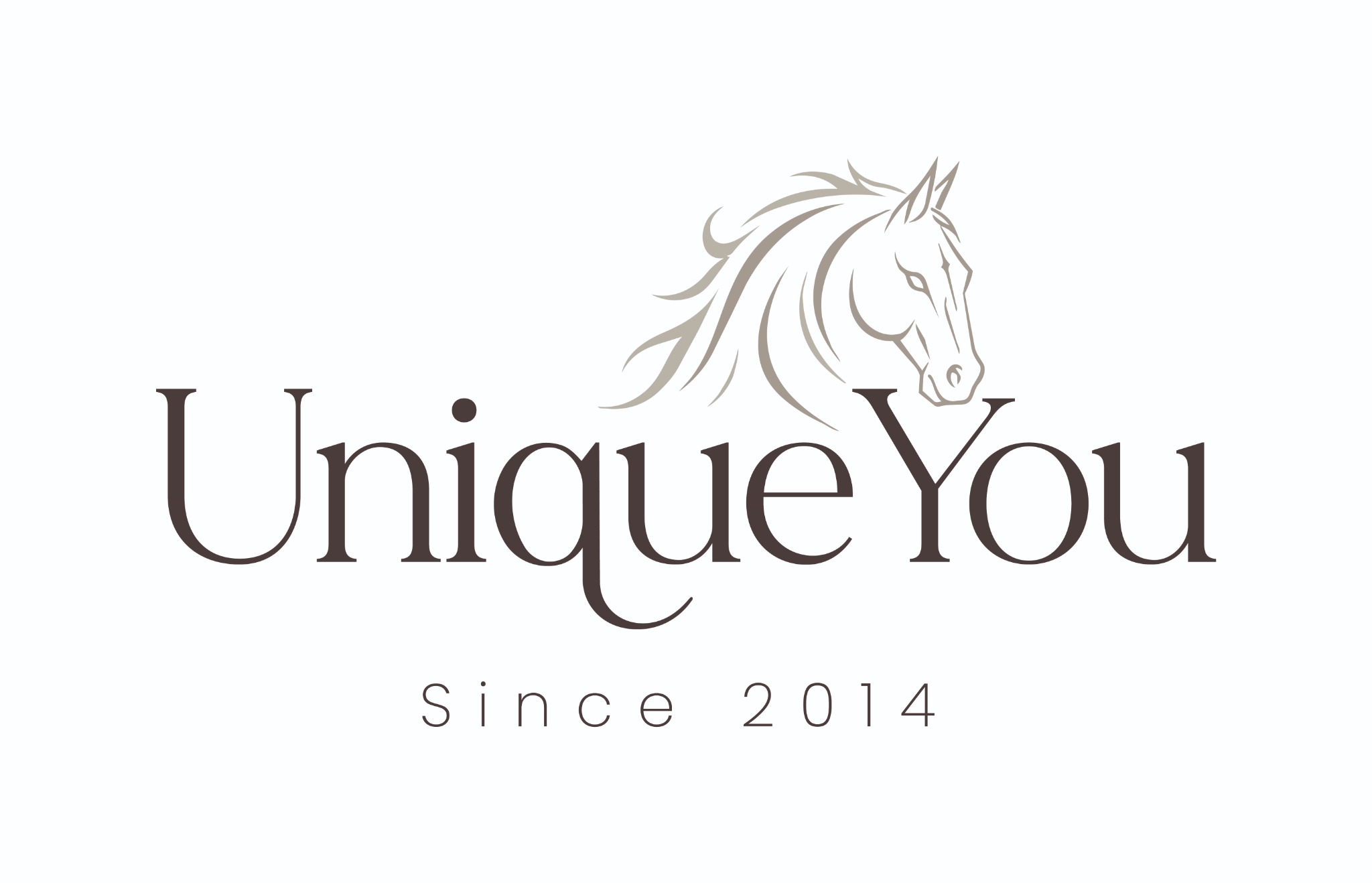
Its original brown wordmark included a horse motif and the words “Since 2014,” while its neutral taupe palette offers a quieter visual frame. Those identity details suggest a preference for understated presentation, but they do not tell you how a particular scarf will feel or fit. For that, look at the individual item: its stated composition, dimensions, color and shape. Let the brand’s style introduce the selection, then let the product details guide the decision.
Start with shape before choosing a pattern
Scarves, shawls, wraps and square scarves invite different ways of wearing them. A small square can sit close to the neck, be tied near a ponytail or add a measured accent to a simple shirt. A longer scarf can hang loosely over a jacket or be looped for a more sheltered feeling. A shawl or wrap takes up more visual space and may be especially useful when you want a layer that can rest over the shoulders.
Before settling on a print, think about the place you want the piece to occupy in an outfit. Will it sit inside a coat collar, frame the neckline of a dress or travel in a tote until the temperature changes? Check the listed measurements against that plan. A photograph can suggest scale, but dimensions offer a more dependable way to judge whether a square will tie as you expect or a wrap will cover the area you have in mind.
Read the material details one piece at a time
UniqueYou includes silk, cashmere and wool categories, and the composition varies by product. A category name is a useful path into a selection, not a substitute for the material information on a specific listing. Read that information before deciding how the scarf will fit your routine, especially if you care about how it feels against the neck, how much warmth you want or how you prefer to care for clothing.
Silk can be an appealing direction for a fluid accent, while wool or cashmere categories may draw your attention when you are planning a cooler-weather layer. Those are starting points for comparison, not a promise that every item within a category has the same feel, weight or composition. If the scarf is a gift, material details matter even more: the recipient’s preferences and care habits are more helpful than an assumption based on a category label.
Give a scarf with the recipient in mind
A scarf is an appealing gift because it can be worn in more than one way, but the best choice still comes from observation. Notice whether the recipient usually wears warm or cool colors, quiet solids or expressive prints, small neck details or generous layers. A person who loves a carefully arranged square may not want a large wrap, and someone who values an easy extra layer may appreciate more coverage than a decorative accent provides.
When you are uncertain, start from a garment you have seen them wear repeatedly. Choose a color that relates to it, then check the scarf’s dimensions and stated composition rather than relying on a general impression. You can make the gift feel thoughtful by explaining the connection: perhaps the shade reminded you of their favorite coat, or the shape seemed suited to their travel routine. That personal reasoning is more meaningful than calling any accessory universally perfect.
A few checks before deciding
Treat browsing as a short comparison rather than a race to choose. Make a list of the intended wearer, the two outfits the scarf should accompany and the role it needs to play: color accent, neck detail, shoulder layer or cooler-weather companion. Then compare shape, measurements, stated materials and care information for the individual items you are considering. These checks turn an attractive image into a more informed wardrobe choice.
If you are choosing for yourself, keep the standard pleasantly simple: can you picture wearing it next week with clothes you already own? If you are choosing for someone else, allow for their taste rather than projecting your own. UniqueYou’s range spans different scarf forms and material categories, so there is no need to treat one style as the answer for everyone. A good accessory earns its place by fitting the wearer’s habits.
A regional guide to browsing UniqueYou
UniqueYou has 20 regional domains, 21 regional-language versions and 16 distinct languages. The figures differ because countries can share a language, and a single country can offer more than one language version: the United Arab Emirates has an Arabic root version and an English /en version. Choose the country and destination language that suit you before following a regional reference. The descriptions below identify what each destination is for; individual product details should still be checked on the relevant listing.
Poland — Polish
For the Polish-language destination in Poland, begin with the regional UniqueYou home page — UniqueYou. If a lighter-looking accessory for a dress or a familiar blouse is on your mind, the Polish term for women’s silk scarves points to that collection — szale jedwabne damskie UniqueYou. Compare the individual listings for size and stated composition before choosing how you would wear one.
Germany — German
The German-language home page for Germany provides the broad starting point — UniqueYou. If brown is the color that ties together your coats and knits, the German term for a brown scarf leads to a color-focused collection — schal braun UniqueYou. For another material direction, the German-language cashmere-scarf collection is here — UniqueYou; check each item’s details rather than assuming a category describes every piece identically.
Czechia — Czech
For Czech-language browsing in Czechia, the regional home page is the place to start — UniqueYou. The Czech term for an online selection of cotton neck scarves leads to a more specific collection — bavlněný šátek na krk e-shop UniqueYou, useful when a small everyday detail appeals more than a broad shoulder layer. There is also a Czech-language cashmere-shawl collection — UniqueYou for comparing a different shape and material category.
Spain — Spanish
The Spanish-language destination for Spain begins at the regional home page — UniqueYou. For a scarf that could bring color to a simple shirt or dress, the Spanish term for women’s scarves leads to the relevant collection — fulares de mujer UniqueYou. If you are thinking instead about a cooler-weather layer, the Spanish-language wool-scarf collection is another route — UniqueYou. Look at dimensions as well as color when comparing the two ideas.
France — French
In France, the French-language UniqueYou home page offers the broad view — UniqueYou. A black scarf can be a deliberate finishing touch when the rest of the outfit is light, patterned or colorful; the French term for women’s black scarves takes you to that color collection — écharpes noires femme UniqueYou. Consider texture and scale alongside the shade, since two black scarves can play quite different roles in a wardrobe.
Hungary — Hungarian
The Hungarian-language home page for Hungary is the general starting point — UniqueYou. If you want to explore a fluid accent for clothes you already wear, the Hungarian term for women’s silk scarves leads to that collection — selyem sál női UniqueYou. For a different material category and a potentially different styling role, the Hungarian-language cashmere-scarf collection is here — UniqueYou. Read each item’s composition and measurements before deciding.
Italy — Italian
For Italian-language browsing in Italy, start with the regional home page — UniqueYou. Burgundy can connect neatly with cream, navy, charcoal or brown pieces already in a closet. The Italian term for a burgundy scarf leads to the matching color collection — sciarpa bordeaux UniqueYou. Hold the color in mind beside a coat or dress you own, then use the listed size and material information to narrow the choice.
Romania — Romanian
Romanian-language browsing for Romania begins at the UniqueYou home page — UniqueYou. If the intended outfit is a dinner dress or another piece you like to wear for gatherings, the Romanian term for elegant women’s shawls leads to a collection to explore — saluri elegante dama UniqueYou. Decide first whether you want a visible shoulder layer or a smaller accent, and check the measurements of any item that catches your eye.
Slovakia — Slovak
The Slovak-language home page for Slovakia offers an overview — UniqueYou. For a neat detail near the neckline, the Slovak term for an elegant silk neck scarf takes you to a focused collection — elegantná hodvábna šatka na krk UniqueYou. If you would rather compare broader scarf options before settling on a shape, the Slovak-language scarf collection is here — UniqueYou. Think about how each size would work with the collars you wear most.
Finland — Finnish
For Finnish-language browsing in Finland, begin at the regional UniqueYou home page — UniqueYou. A scarf can be a hair accessory as well as a neck detail; the Finnish term for a women’s hair scarf leads to a collection organized around that use — naisten huivi hiuksiin UniqueYou. If you plan to tie one in your hair, check its measurements and fabric information so the shape suits the way you like to style it.
Sweden — Swedish
The Swedish-language destination for Sweden starts at the regional home page — UniqueYou. Red can serve as a single lively note against restrained everyday layers, and the Swedish term for a red women’s scarf leads to that color collection — scarf dam röd UniqueYou. Imagine the shade with a jacket or knit you already reach for, then compare the individual shapes rather than choosing on color alone.
Denmark — Danish
The Danish-language home page for Denmark gives you the broad view — UniqueYou. When you want an accent that will not take over an outfit, the Danish term for small women’s scarves points to a focused collection — små tørklæder til damer UniqueYou. For a wider comparison of scarf styles, the Danish-language scarf collection is also available — UniqueYou. A quick look at dimensions can clarify which pieces will sit neatly at the neck.
Belgium — Dutch
For the Dutch-language version serving Belgium, start at the regional UniqueYou home page — UniqueYou. A white scarf can brighten a dark coat or bring a soft contrast to a colorful outfit; the Dutch term for white scarves leads to that collection — witte sjaals UniqueYou. Check the particular shade, fabric details and size against the clothes you plan to pair with it.
Austria — German
The German-language destination for Austria begins at its regional home page — UniqueYou. If a bold accent would work with your usual neutral layers, the German term for a red women’s scarf leads to a color collection — roter schal damen UniqueYou. For a different sort of neck detail, the German-language silk-neckerchief collection is here — UniqueYou. Compare scale and composition before deciding which direction fits your routine.
Netherlands — Dutch
For Dutch-language browsing in the Netherlands, the regional home page offers the overview — UniqueYou. The Dutch term for a small silk scarf takes you to a collection suited to exploring compact neck accents — sjaaltje zijde UniqueYou. If you need to compare a more substantial seasonal layer, the Dutch-language wool-scarf collection is another starting point — UniqueYou. The individual listings will tell you more than either category name alone.
United States — English
For readers in the United States, the English-language home page is the broad starting point — UniqueYou. If you are choosing something to accompany a dress for a gathering, the English phrase for a formal shawl for a dress leads to the shawl collection — formal shawl for dress UniqueYou. Picture the layer with the actual dress, including its neckline and sleeves, and check the measurements before selecting one.
United Arab Emirates — Arabic
The United Arab Emirates has an Arabic-language root destination. To begin browsing that version, use the regional UniqueYou home page — UniqueYou. It is the Arabic starting point rather than the separate English /en version. From there, consider the same practical questions you would anywhere: who will wear the scarf, what clothes it should accompany and which item details matter to them.
United Arab Emirates — English
For the English-language version in the United Arab Emirates, the destination is the separate /en path, not the Arabic root. The English phrase for a scarf shop takes you to that English-language starting point — scarf shop UniqueYou. Use it to explore styles in a language you prefer, then assess any individual scarf by its shape, dimensions and stated composition.
Ireland — English
The English-language home page for Ireland is the general starting point — UniqueYou. If you are considering a generous layer as a gift or for your own wardrobe, the English phrase for women’s cashmere wraps leads to that collection — cashmere wraps for women UniqueYou. Check each wrap’s listed size and material details, and think about whether the intended wearer prefers a shoulder layer or a smaller scarf.
United Kingdom — English
For English-language browsing in the United Kingdom, begin at the regional home page — UniqueYou. The English phrase for a square scarf worn at the neck leads to a shape-focused collection — neck square scarf UniqueYou. If material is your first consideration instead, the English-language silk-scarf collection offers another route — UniqueYou. A square shape and a silk category are different ways to browse, so check the details of the pieces that interest you.
Portugal — Portuguese
The Portuguese-language destination for Portugal starts at the regional UniqueYou home page — UniqueYou. The Portuguese term for a cashmere scarf leads to a material-focused collection — cachecol cashmere UniqueYou. If color is the more useful filter for your wardrobe, the Portuguese-language red-scarf collection is also available — UniqueYou. Compare the listed composition, dimensions and shade of individual items before choosing.
Choose the scarf that makes sense with the clothes and moments already in your life. A thoughtful match can be both useful and quietly distinctive.
 Outdoor Experiences