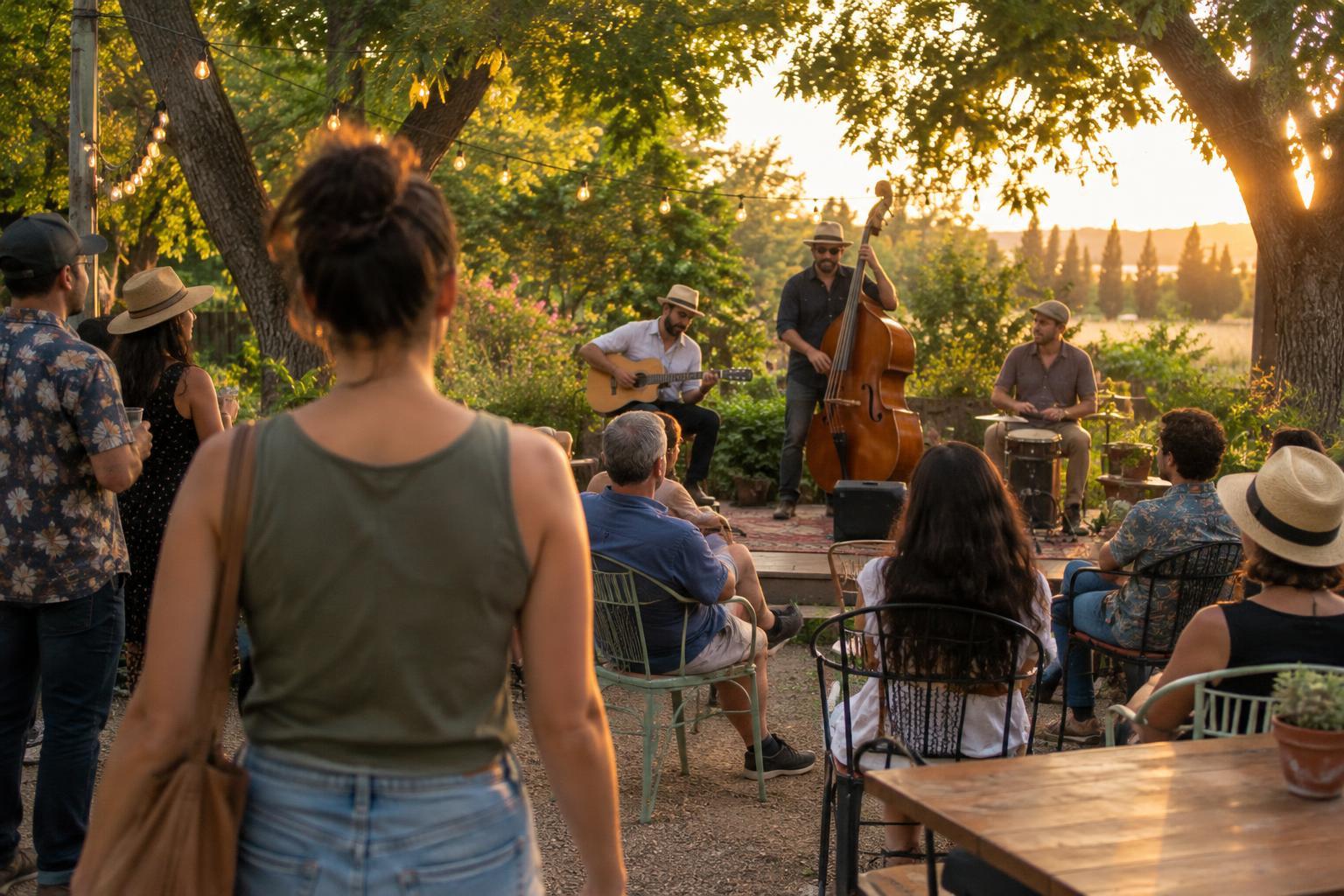
Start with a show that sounds inviting
Local music can happen in many settings: a seated community concert, an outdoor gathering, a small performance space, or a casual event where music is one part of the evening. For a first outing, choose a format that matches how you like to spend time. If you want to listen closely, look for a seated show. If you would rather move around or bring a friend who is unsure about live music, a more informal event may feel easier.
You do not need to recognize an artist’s name to make a good choice. Read the event description for clues about the style of music, whether there are multiple performers, and how long the program might run. A short sample of an artist’s work can help, but it is fine to go in curious. Across the Central Valley, where a night out might mean a downtown stop or a drive between communities, the best first show is often the one you can attend without turning the trip into a complicated project.
Check the practical details before you leave
Confirm the start time, location, admission details, and whether tickets are needed. If the listing gives both a door time and a performance time, they may be different: the first tells you when you can enter, while the second tells you when music is expected to begin. Check whether seating is provided or first come, first served, and look for information about accessibility if you need it. When details are unclear, contacting the organizer is more reliable than guessing.
Dress for the setting rather than for an imagined concert rule. Comfortable shoes are useful if you may stand, and a light layer can make an evening outdoors more pleasant. Bring what you normally need for a few hours away from home, but check the venue’s policies before packing outside food, drinks, or a large bag. If you are traveling across town or between towns, leave a little room in your schedule for parking, walking to the entrance, and getting settled.
Find your place and follow the room
Arriving a bit early gives you time to take in the space without interrupting a song. Notice where people gather, where the performance area begins, and whether there is a clear aisle to keep open. At a seated show, put your phone on silent and save conversation for breaks. At a social event, quiet conversation may be welcome farther from the performers. If you are uncertain, watch what others do while making sure your own presence does not block someone’s view or movement.
There is no test of how to appreciate the music. You can listen for a rhythm you like, notice how the performers respond to one another, or simply enjoy the feeling of sharing a moment with a crowd. Applause between songs is usually welcome. Singing along, dancing, or taking photos depends more on the setting; follow posted rules and the cues of the performers and audience. Keep any recording brief and considerate, especially when it might distract people nearby.
Make space for a little discovery
A local performance offers something a recording cannot: the small exchanges that happen in a room. A musician might introduce a song, the audience might settle into a quiet passage together, or an unexpected sound might become your favorite part of the night. You do not have to love every song to have a worthwhile experience. Give yourself permission to be new to the music and to notice what holds your attention.
If you attend with someone else, consider talking about the show afterward rather than throughout it. Ask which song or moment stayed with them. If you go alone, you can enjoy the freedom to listen at your own pace and leave when you are ready. Either way, be respectful of the space and the people who make the event possible, from performers and sound crew to volunteers and other guests.
Support the scene in ways that fit
If you enjoyed the performance, a sincere thank-you is a good start. You might follow an artist through a channel they provide, tell a friend about the show, or attend another event. If merchandise or recordings are offered and your budget allows, buying something can be a direct way to show appreciation. None of that is required to belong in the audience; paying attention and treating people well matter, too.
Over time, try different kinds of performances and spaces. A quiet acoustic set and a lively outdoor concert ask different things of an audience, and each can reveal another part of a community’s creative life. Start with one approachable evening. Once you know how a local show feels, finding the next one becomes less about knowing the scene in advance and more about staying open to what your neighbors make.