Let the thermometer make the decision
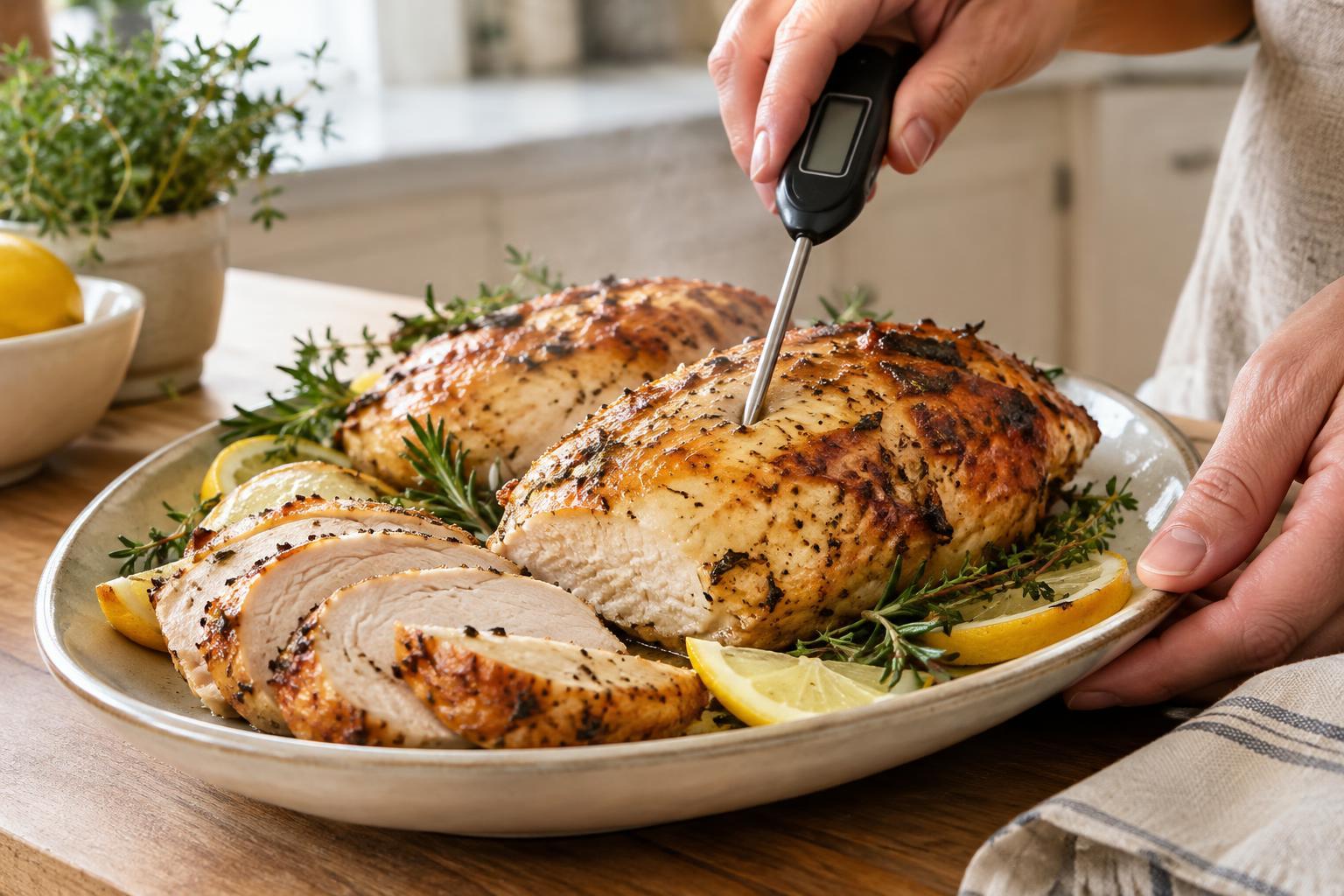
The most reliable way to avoid both undercooked and overcooked chicken is to check its internal temperature. Chicken should reach 165°F in the thickest part. A digital instant-read thermometer makes that brief check easier than judging by the clock, the color of the meat, or the clarity of its juices. Cooking times vary with the size and shape of the chicken, the pan, and the heat source.
Insert the probe into the center of the thickest area without touching bone or passing all the way through the meat. For a breast, check near its widest point. For a whole bird, check the thickest part of the breast and the innermost part of the thigh; check stuffing separately if the bird is stuffed. If a piece has uneven thickness, take more than one reading. The lowest reading tells you whether it needs more cooking.
Start checking shortly before you expect the chicken to be done, then check again as needed. This gives you a chance to stop cooking when it reaches 165°F rather than leaving it on the heat just in case. Resting can improve the texture and make slicing less messy, but do not rely on resting alone to bring chicken to a safe temperature unless you verify the final temperature with the thermometer.
Choose a method that suits the cut
Boneless breasts are lean, so their main challenge is cooking evenly. If one end is much thicker than the other, gently pound the thick end until the piece is more uniform. Use moderate heat in a skillet or oven, and begin temperature checks early. A lid or a loosely covered baking dish can help limit moisture loss, though the thermometer remains your guide.
Thighs contain more fat and connective tissue and often tolerate a little extra time on the heat better than breasts. They still need to reach at least 165°F. If you prefer a softer texture, you may choose to cook thighs beyond that point, checking as you go rather than following a fixed time. For a whole bird, avoid assuming the breast and thigh finish together: measure both before serving.
For a crowded pan of chicken pieces, leave enough room for heat to circulate and turn the pieces as needed. If one piece is ready before the others, remove it to a clean plate and continue cooking the rest. This small step can save the thinner pieces from drying out while the thicker ones catch up.
Build flavor without depending on extra cooking time
Seasoning helps chicken taste satisfying even when you cook it only as long as needed. Salt, pepper, citrus zest, garlic, and herbs are simple starting points; a little olive oil can help seasonings coat the surface. If you have time, salt the chicken ahead and keep it refrigerated until you cook it. A marinade can add flavor, but it does not replace a temperature check. Discard marinade that has touched raw chicken unless you boil it before using it as a sauce.
A sauce served alongside the cooked chicken is another way to bring moisture to the plate. Try a quick mixture of lemon juice, olive oil, and chopped herbs, or spoon the chicken’s fully cooked pan juices over sliced pieces. For a relaxed Central Valley–inspired dinner, serve the chicken with seasonal vegetables and warm bread. The sides can be flexible; the temperature check should not be.
Keep raw and cooked chicken separate
Good temperature control begins before the pan heats up. Keep raw chicken refrigerated until you are ready to cook, and use a separate plate for the finished meat. Wash your hands and clean utensils and surfaces after they touch raw chicken. There is no need to rinse chicken in the sink; splashing can spread raw juices around the kitchen.
Once the chicken reaches 165°F, move it off the heat and let it rest briefly before cutting. Use a clean knife and board for slicing. Refrigerate leftovers promptly in covered containers, and reheat them to 165°F. With those habits in place, the goal is straightforward: measure carefully, stop cooking at the right time, and serve chicken that is both safe and enjoyable.