Start with oil, acid and a little seasoning
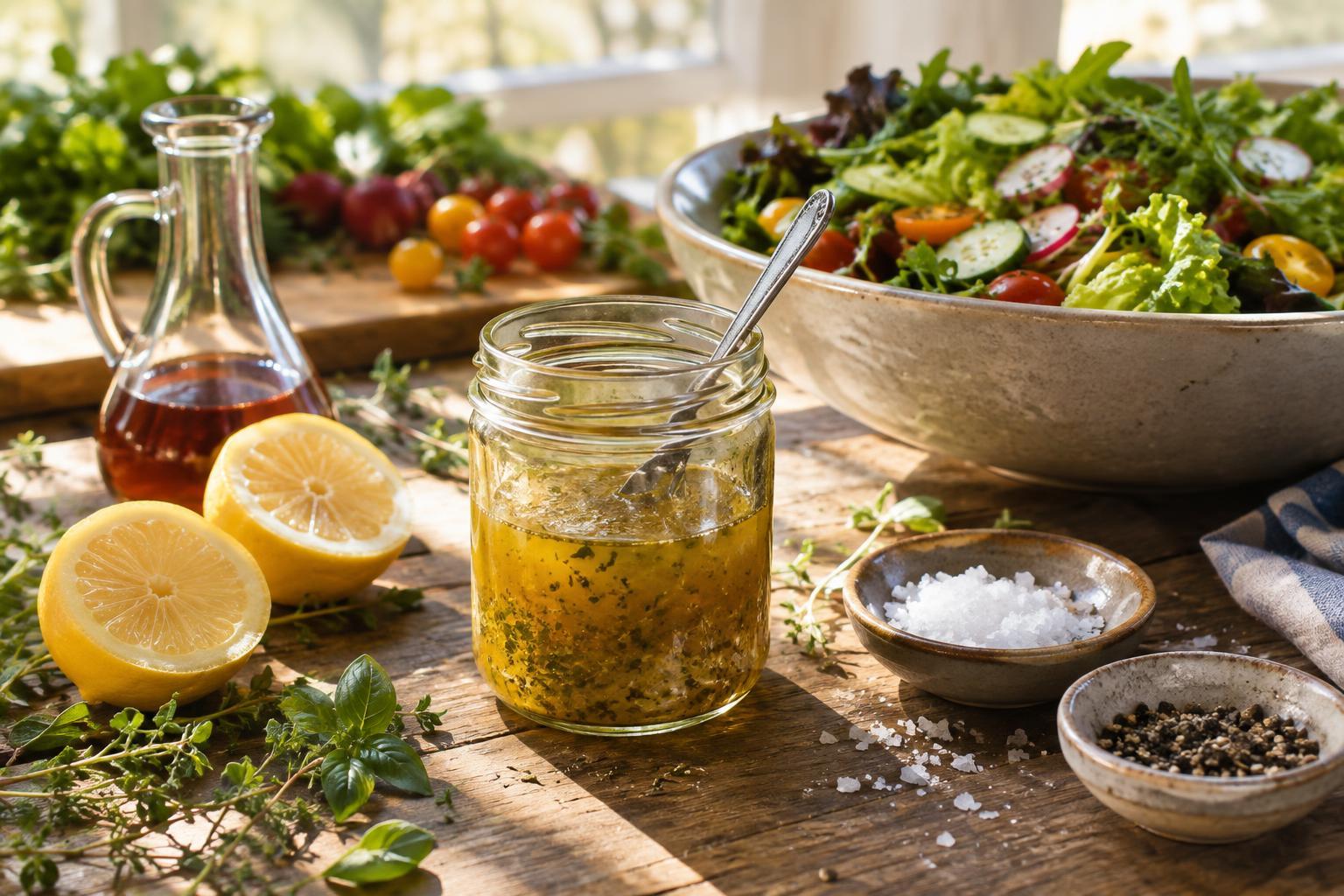
Salad dressing is easier to improvise when you think of it as a balance rather than a fixed list of ingredients. Oil gives it body and helps coat the salad. Acid brings brightness. Salt makes the other flavors clearer. Put a little of each in a jar or bowl, mix, and taste before adding anything else.
For a first try, use roughly three spoonfuls of oil to one spoonful of acid. That is a starting point, not a rule: tender lettuce may suit a gentler dressing, while sturdy greens or roasted vegetables can take more tang. Olive oil and vinegar make a familiar combination, but a mild oil with lemon juice works just as well. Choose what tastes good with the food you plan to dress.
Taste, then change one thing at a time
To check your dressing, dip a leaf or a piece of the vegetable you are serving into it. A spoonful on its own can taste sharper or saltier than it will on a salad. If the bite is too strong, add a little oil. If the dressing tastes flat, try a small splash of acid or a pinch of salt. Mix and taste again after each change so you know what helped.
You can round out a tart dressing with a small dab of honey or a bit of finely chopped ripe fruit. If it tastes heavy, more acid or a splash of water may lighten it. Mustard adds savory flavor and helps a shaken dressing stay blended a little longer. None of these additions is essential; use them to solve a problem you can actually taste.
Let the salad guide the flavor
Consider the ingredients in the bowl before reaching for extras. Delicate greens, cucumber and fresh herbs often need little more than lemon, oil and salt. Tomatoes can stand up to a lively vinegar dressing with minced shallot. For a salad built around roasted squash, grains or beans, try mustard, garlic or a warmer-tasting vinegar.
Seasonal produce offers other cues. A salad with peaches or nectarines might welcome lemon and a touch of honey; a bowl of crisp carrots and cabbage might benefit from lime and chopped herbs. You do not need every flavor in the dressing. If the salad already contains salty cheese, olives or toasted nuts, taste it before adding more salt or richness.
Mix it well and dress with a light hand
A lidded jar makes mixing simple: add the ingredients, close it securely and shake until they come together. A bowl and fork work too. Oil and vinegar may separate as the dressing sits, so give it another shake or stir just before serving. If you are adding garlic or shallot, mince it finely so its flavor spreads through the salad instead of turning up in one sharp bite.
Begin with less dressing than you think you need. Pour a little around the edge of the bowl, toss thoroughly and taste a leaf. Add more only if the salad needs it. This matters especially with soft lettuce, which can become weighed down by excess dressing. For a gathering, you can set extra dressing on the table and let everyone add more to their own plate.
Keep a few combinations in mind, not a formula
Once the basic method feels familiar, a few loose pairings make weeknight cooking quicker. Try olive oil, lemon and black pepper for green salads; oil, red wine vinegar and mustard for tomatoes and beans; or a mild oil, lime and chopped cilantro for crunchy vegetables. Each can be made brighter, softer, sweeter or more savory by tasting and adjusting.
The useful skill is noticing what the salad needs. Start with a small amount, taste it on an ingredient from the bowl and make one change at a time. Soon, making dressing becomes a natural part of preparing the meal rather than another recipe to look up.