Why bring one home?
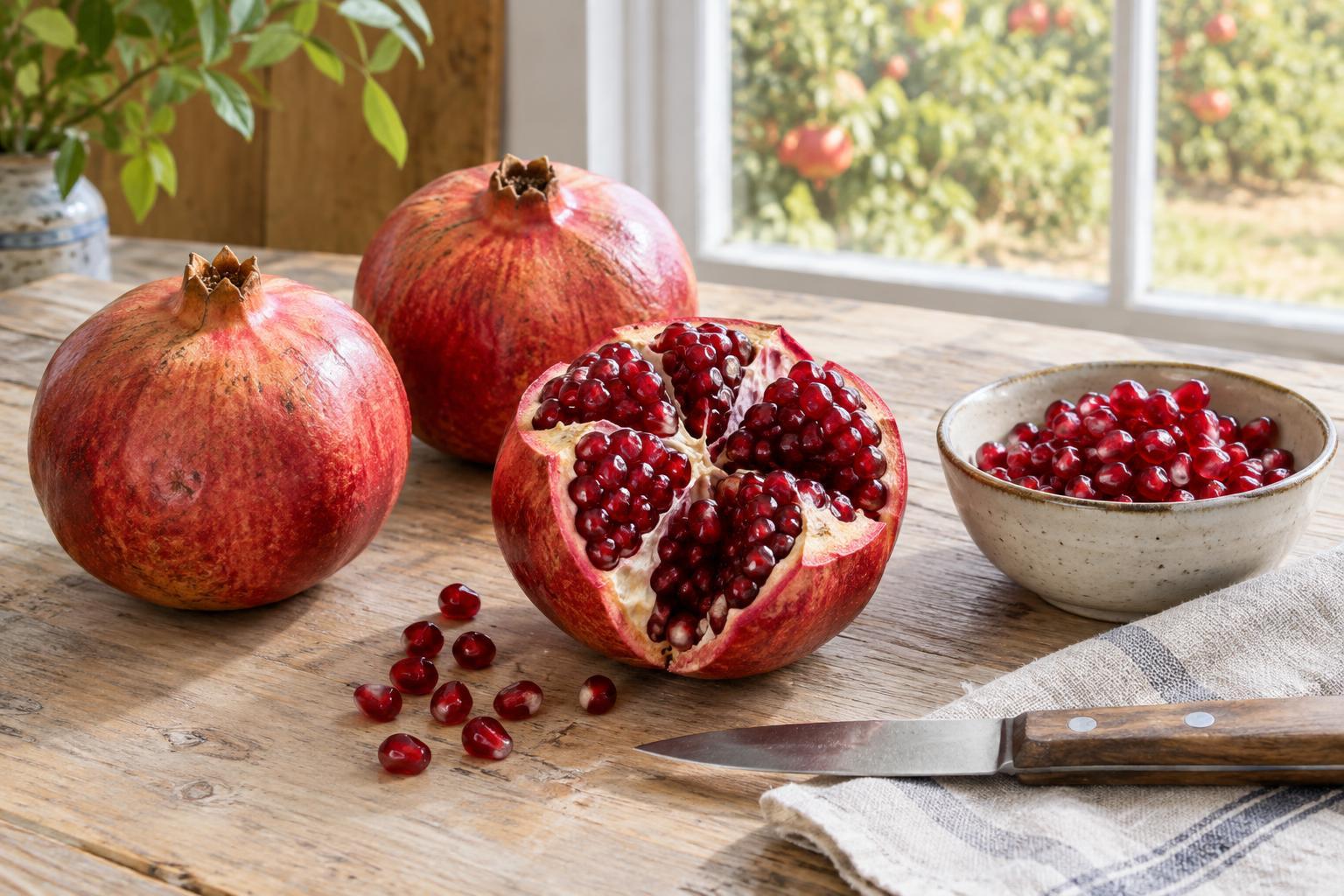
In the Central Valley, pomegranates feel right at home alongside the region’s abundance of fruit and vegetables. Inside the sturdy rind are small, juicy seeds called arils. They offer a sweet-tart burst and a bit of crunch, making them as useful on a bowl of yogurt as they are on a platter of roasted vegetables.
The fruit’s thick skin can make it seem difficult to handle. The trick is to think of the pomegranate as a collection of sections, not something to slice straight through. A shallow knife cut and a bowl to catch the arils will do most of the work.
How to choose a pomegranate
Pick up a few fruits of similar size and choose one that feels heavy in your hand. Its weight suggests plenty of juice inside. Look for firm skin without soft, sunken spots, visible mold or leaking juice. A pomegranate does not need to be perfectly round or glossy: its rind may look leathery, and some fruits develop a slightly angular shape.
Color alone is not a dependable guide to flavor. Depending on the variety, the rind can range from pinkish to deep red, and the arils inside may vary in color too. If you can inspect the fruit closely, give more weight to firmness and overall condition than to a particular shade.
A small crack in otherwise sound skin does not automatically mean the fruit is unusable, but a split fruit needs closer inspection. If the exposed area looks dried out, moldy or damaged, choose another. For your first try, an intact fruit will also be easier to open neatly.
A low-mess way to open it
Set a cutting board on a stable surface and have a large bowl ready. Pomegranate juice can stain fabric and some work surfaces, so an apron or a washable towel nearby is helpful. Rinse the outside of the fruit before cutting it.
With a sharp knife, make a shallow cut around the top, near the crown, without driving the blade deep into the arils. Lift off the cap. You should be able to see pale membranes dividing the fruit into sections. Following those lines, score the rind from top toward the base in several places. Keep the cuts shallow; you only need to get through the skin. Hold the fruit over the bowl and gently pull the sections apart with your hands.
To release the arils, bend each section back slightly and loosen them with your fingers. You can do this over a dry bowl, or put the sections in a bowl of water first. Water may help contain splashes and lets some of the light membrane float away, though you will still need to pick out stray pieces. Drain the arils well if you use the water method. Discard the rind and the bitter white membrane.
Store the arils, then put them to work
An unopened pomegranate can wait in a cool spot if you plan to use it soon; refrigeration is a better choice when you need more time. Once opened, keep the arils in a covered container in the refrigerator and use them within a few days. If you have more than you can eat, spread them on a tray to freeze separately, then transfer them to a freezer-safe container. Thawed arils may be softer, but they still work well stirred into sauces or spooned over breakfast.
For a simple introduction, scatter a handful over a salad of greens, herbs and toasted nuts. Their acidity brightens roasted squash, carrots and other sweet vegetables, while their color makes a bowl of grains or beans look inviting. They are just as welcome on oatmeal, yogurt or a dessert served with lightly sweetened cream.
Add arils near the end of cooking or just before serving to preserve their fresh pop. Keep a small bowl on the table when hosting, and let guests sprinkle their own. Once you know how to get past the rind, a pomegranate becomes an easy way to bring texture and lively flavor to familiar dishes.