Start with where the olives were grown
A bottle on a California shelf is not necessarily made from California olives. Begin with the origin statement rather than the brand name or imagery. Look for wording that clearly identifies where the olives were grown. “Bottled in California” tells you where the oil went into the bottle, but it does not, on its own, tell you where the fruit came from.
Some producers name a county, growing region or individual grove. That detail can be useful if you enjoy getting to know the range of oils made across California, but a more specific place name is not automatically a promise of better flavor. If the label names several origins, read the wording closely so you know whether you are buying a single-origin oil or a blend.
You may also see terms such as “estate grown.” Treat these as prompts to learn more about how a producer sources its olives, not as substitutes for a clear origin statement. A straightforward label should make it reasonably easy to understand what is in the bottle.
Understand the grade and production language
“Extra virgin” is a useful starting point when you want an oil with the aroma and flavor of freshly pressed olives. It identifies a grade associated with specific quality standards; it does not describe a single flavor. One extra virgin oil may taste grassy and peppery, while another is mild, buttery or fruit-forward. For a dressing or a finishing drizzle, those differences matter as much as the grade itself.
Labels may also say “cold extracted,” “first cold pressed” or “unrefined.” These phrases can describe aspects of production, but they cannot tell you whether you will enjoy the oil. Modern extraction methods vary, and familiar-sounding words are not a tasting note. Read them alongside the origin, dates and any description of the finished oil rather than letting one phrase make the decision for you.
If a bottle lists an acidity figure, do not mistake it for how sour the oil will taste. Acidity in this context is a technical measure, not a direct description of flavor. A short list of sensory words—such as green almond, artichoke or ripe olive—is more helpful when you are deciding what to put on the table.
Look for a harvest date, not just a deadline
Olive oil is a fresh food whose character changes with time. A harvest date tells you when the olives were picked; a best-by date tells you how long the producer expects the packaged oil to keep under appropriate conditions. If both appear, use the harvest date to understand the oil’s age and the best-by date as a practical guide for planning when to use it.
Dates are most useful when considered with your own habits. If you cook with olive oil every day, a larger bottle may be convenient. If you use it only for occasional salads, a smaller bottle you can finish comfortably may be the better buy. There is little advantage in purchasing a large container for its impressive label if it will sit open in a warm kitchen for months.
No harvest date does not necessarily mean the oil is poor. It simply leaves you with less information. When comparing two bottles that otherwise appeal to you, a clearly marked harvest date can help you make a more informed choice.
Choose for the dish, then protect what you buy
Flavor notes are a bridge between the label and your cooking. A robust oil described as grassy, bitter or peppery can bring contrast to beans, grilled vegetables or a bowl of soup. A gentler oil may suit tender greens, baking or dishes where you want the other ingredients to lead. Bitterness and a peppery catch in the throat can be normal features of an extra virgin oil, not signs that something has gone wrong.
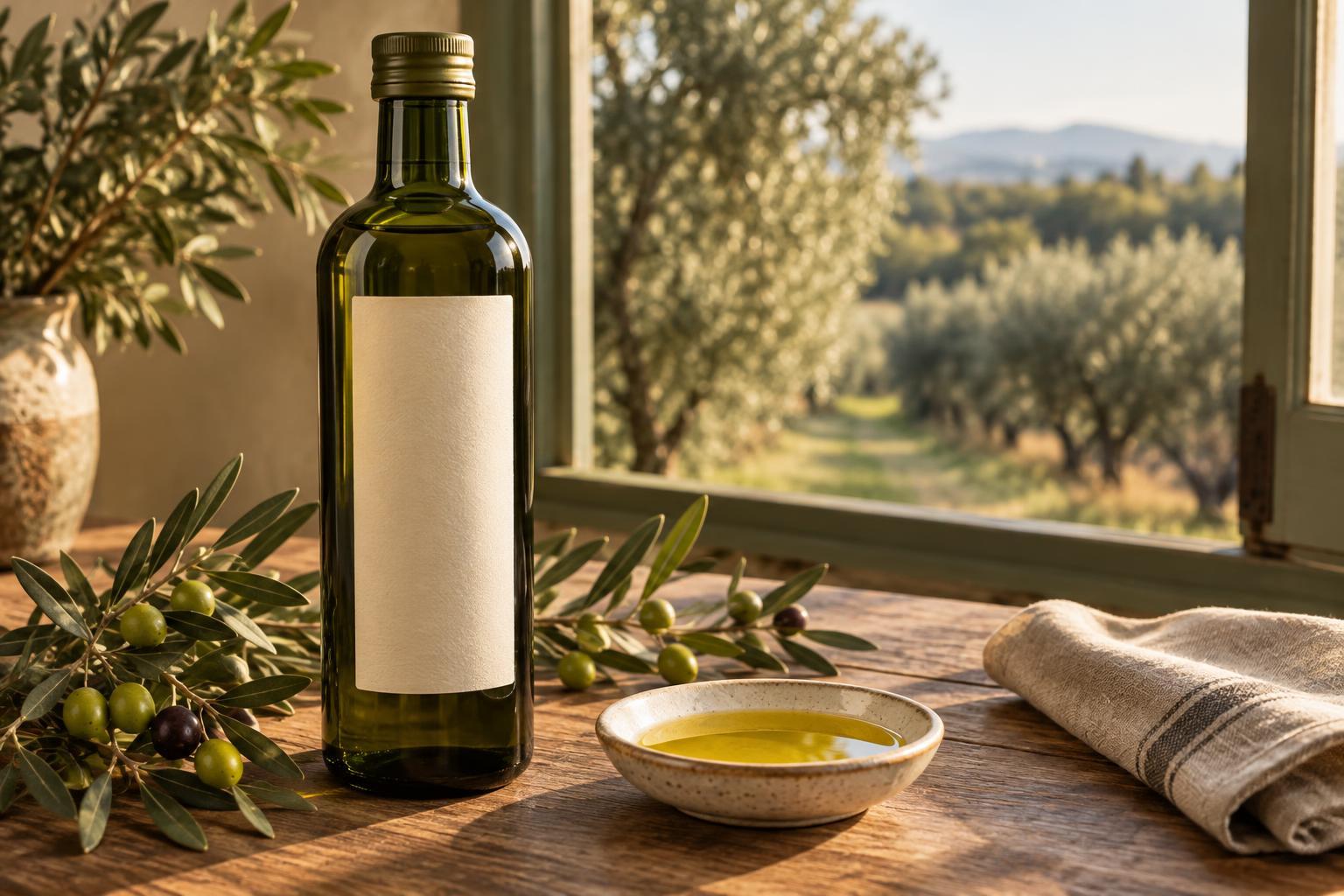
Packaging matters because light, heat and air can diminish an oil’s flavor over time. Dark glass, a tin or another light-protective container is a sensible choice, particularly if the bottle may spend time on a kitchen counter. Once home, close it tightly and keep it in a cool, dark cupboard away from the stove. Refrigeration can make olive oil cloudy or firm; that change in appearance alone does not mean it has spoiled.
For a relaxed Central Valley meal, you need not find one bottle that does everything. You might keep a versatile oil for everyday cooking and a smaller, more distinctive California oil for finishing tomato salads, roasted vegetables or warm bread. The best label is the one that gives you enough clear information to choose an oil you will enjoy using while it still tastes lively.