Two nuts, two distinct roles in the kitchen
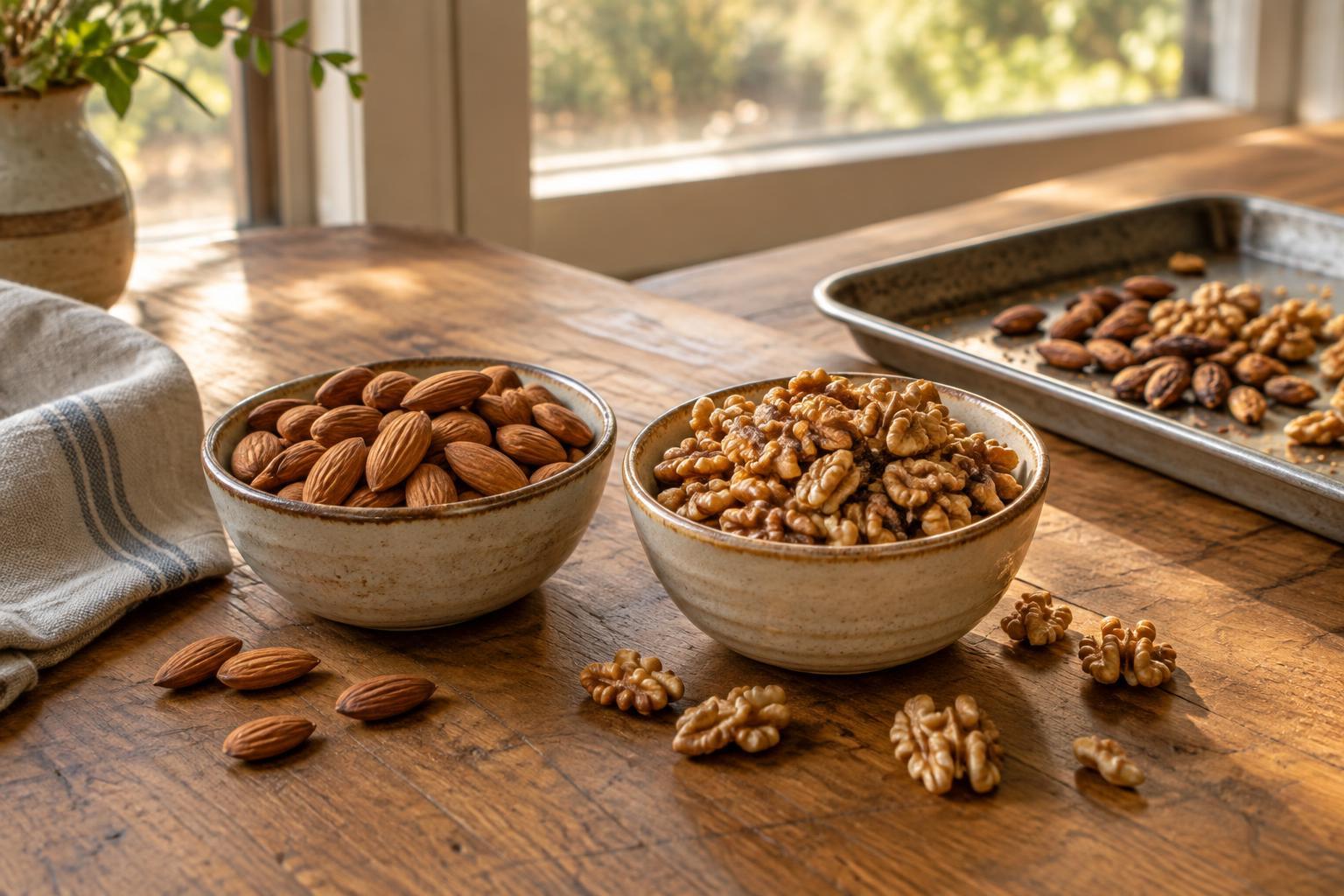
Almonds and walnuts are both useful pantry ingredients, but they rarely make a dish feel exactly the same. Almonds have a mild, gently sweet flavor and a firm bite. Walnuts taste richer and more earthy, sometimes with a slight bitterness from their thin skins. That contrast matters when a recipe uses nuts for more than a finishing sprinkle: swapping one for the other can change the character of a salad, baked good or sauce.
For a Central Valley-inspired kitchen, both fit naturally alongside seasonal fruit, vegetables and simple home cooking. The best choice is usually the one that balances what is already on the plate. Reach for almonds when you want a clean crunch that lets other ingredients lead. Choose walnuts when a dish can welcome a deeper, more noticeable nut flavor.
Flavor and texture: what to expect
Whole almonds are dense and crisp. Sliced almonds add a lighter crunch, while chopped or slivered almonds distribute texture throughout a dish. Their relatively subtle flavor works well with citrus, stone fruit, green vegetables and warm spices. In a simple salad, a handful of toasted almonds can add contrast without competing with a bright dressing.
Walnuts are more tender and irregularly shaped. Their ridges catch dressings and batters, and their softer crunch sits comfortably beside roasted vegetables, leafy greens, apples or pears. They can make a dish taste more robust, especially after toasting. If the slightly bitter edge of walnut skins stands out to you, pair walnuts with something sweet or tangy rather than expecting them to taste like almonds.
When to toast—and when to leave them plain
Toasting brings out aroma and gives either nut a more pronounced flavor. Spread them in a single layer in a dry skillet over low to medium heat, stirring often, or use a moderate oven and check frequently. Almonds tend to become fragrant and golden; walnuts can darken quickly, especially in small pieces. Remove the nuts from the heat as soon as they smell toasted, then let them cool before storing or chopping further.
Raw or untoasted nuts have their place, too. Plain almonds offer a quieter flavor in snacks and fruit bowls. Untoasted walnuts can blend into a soft filling or topping without adding a strong roasted note. If a recipe already includes bold spices or a browned crust, taste it before deciding that the nuts need extra toasting.
Storage habits that protect their flavor
Both nuts contain oils that can develop an unpleasant flavor over time. Buy an amount you expect to use, and keep it sealed away from heat, light and moisture. An airtight container in a cool pantry is convenient for nuts you will use soon. For longer storage, the refrigerator or freezer is a practical choice; label the container so you can tell what is inside and when you put it away.
Chopped and sliced nuts expose more surface to air than whole nuts, so it makes sense to use them sooner. Walnuts may show stale flavors particularly clearly because of their assertive taste. Before adding either nut to a recipe, smell and taste a small piece. If it has a sharp, paint-like or otherwise off flavor, discard it rather than trying to cover the taste with seasoning. Discard nuts that show mold as well.
Easy ways to choose between them
Start with the texture you want. For a crisp topping on yogurt, a grain bowl or roasted green beans, try sliced or chopped almonds. For a more substantial bite in a leafy salad or a crumble over baked fruit, try walnuts. Either can be folded into muffins or quick breads, but walnuts will give the finished bake a more distinctive flavor.
If you are improvising a shared dish, serve the nuts on the side so guests can add the amount they like and anyone avoiding nuts can leave them out. Use separate utensils to help prevent contact with the main dish. Most of all, taste before you commit: a small handful alongside your other ingredients will tell you more than a strict substitution rule.