What “fresh” and “dried” mean for dates
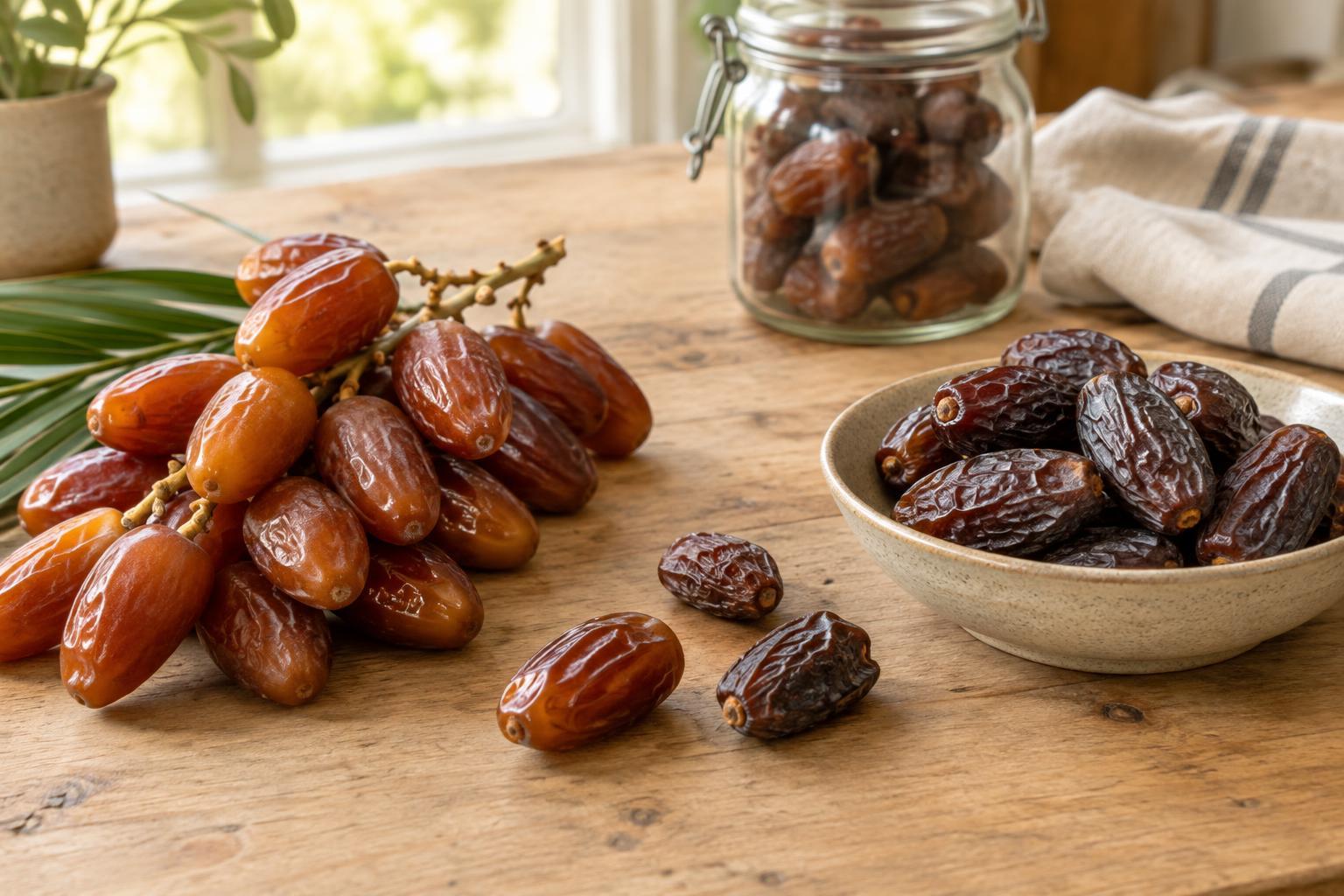
A date can be soft, wrinkled and ready to eat without having gone through the same drying process as a raisin. Dates lose moisture as they ripen, so the words “fresh” and “dried” can describe a range of textures rather than two sharply divided products. Variety, ripeness, processing and storage all affect how a date feels in your hand.
In a produce display, fresh dates may be especially moist and tender, or they may be firm and crisp if sold at an earlier stage of ripeness. Dried dates generally have less moisture and a denser, chewier bite. Some dates sold as dried remain quite soft. When texture matters to a recipe, look at the fruit and the package description instead of relying on one word alone.
How to choose dates at the market
Start with the dish you have in mind. For a platter with nuts or cheese, choose dates that feel supple and hold their shape. For chopping into oatmeal, grain salads or baked goods, a firmer date may be easier to handle. If you plan to blend dates into a sauce or filling, soft ones can be convenient, though firmer dates can usually be softened in warm water first.
Look for fruit that appears intact and smells pleasantly sweet. A little wrinkling is normal; the skin need not be smooth to signal quality. Avoid packages with visible mold, leaking fruit or an unpleasant sour smell. A pale, grainy coating can sometimes be crystallized sugar rather than mold, but if you cannot identify what you are seeing or the fruit smells off, choose another package.
Dates sold in Central Valley markets are not necessarily grown in the Central Valley. If origin matters to you, check the label or ask the seller where the fruit was grown. Also check whether the dates are pitted. Whole dates need a quick pit check before serving or chopping, while pitted dates save a step but can still contain an occasional pit fragment.
Store them according to moisture and time
Moisture is the main reason storage needs differ. Keep especially soft or fresh dates in a covered container in the refrigerator, and follow any storage directions on the package. This helps protect their texture and keeps them away from strong-smelling foods. Check them periodically, particularly after opening the container.
Drier dates can often be kept in an airtight container in a cool, dark cupboard for shorter-term use. A warm kitchen may make refrigeration the better choice, even for dates labeled dried. If you are unsure how quickly you will use a package, refrigerating it is a simple option. Press out excess air or close the container tightly so the fruit does not dry out further or absorb other odors.
For longer storage, portion dates into well-sealed freezer containers or bags. Thaw a portion in the refrigerator before serving, or use it directly in a recipe where the dates will be cooked or blended. Whatever the storage method, discard dates that develop mold, a distinctly fermented smell or an unusually slimy surface.
Put each texture to work
Soft dates make an easy addition to a relaxed snack board: split them, remove the pits and offer them alongside toasted nuts and slices of fruit. Their tender texture also works well mashed into a simple filling for toast or stirred into yogurt. Because dates vary in sweetness and size, taste one before deciding how many to add.
Chewier dates can be sliced into thin pieces for a salad or chopped for a pan of roasted vegetables. If they resist the knife or feel too tough for a recipe, cover the pitted fruit with warm water until it softens, then drain it well. Save a little of the soaking water if you are blending the dates into a spread and need to adjust its consistency.
The most useful distinction is not which type is better, but which texture suits the moment. Buy soft dates when you want a tender bite, choose firmer ones when you want distinct pieces, and store either with its moisture level in mind. That small bit of attention makes dates easier to enjoy in everyday Central Valley home cooking.