Start with the kind of making that sounds fun
You do not need to know whether you are “an artist” before signing up for an art class. A class can be a way to try something with your hands, meet neighbors, or set aside a little time for yourself. Start by choosing one activity that holds your attention: drawing, watercolor, ceramics, printmaking, photography, fiber arts, or another craft. If everything sounds interesting, pick the option with the easiest schedule rather than searching for the perfect medium.
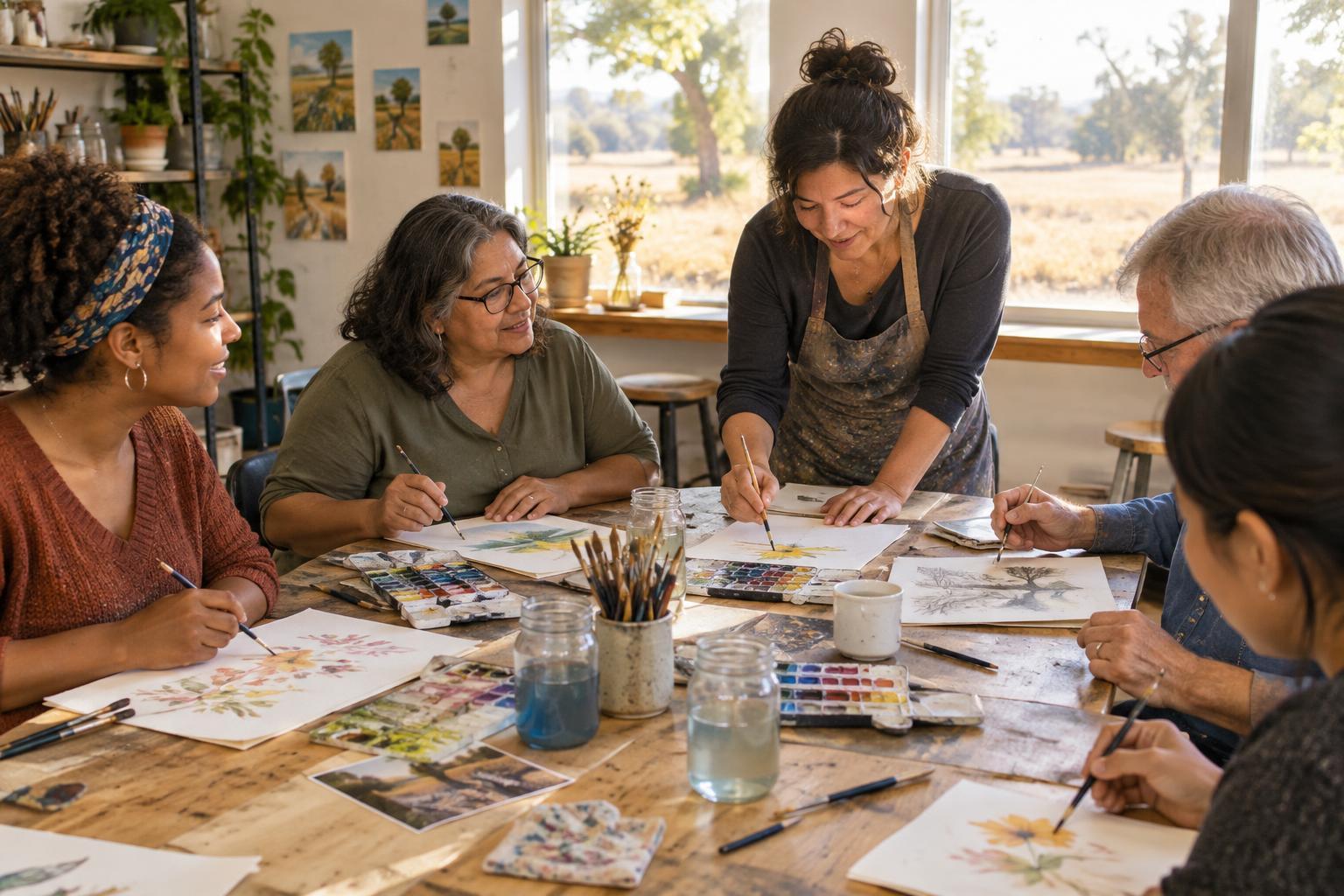
Think about what would make a first class comfortable. Some people like a one-day workshop with a finished project; others prefer a series that allows time to practice and get acquainted with classmates. A demonstration-heavy class may feel different from an open studio where participants work independently. Neither is better, but knowing which experience you want will make class descriptions easier to sort through.
Look in more than one place
Community art opportunities can appear in places that do not have “art school” in their names. Check public libraries, city or county recreation programs, community centers, arts organizations, museums, community colleges, and independent studios in towns you can reasonably reach. Local artists and craft shops may also host workshops. Offerings vary by place and season, so treat these as starting points for a search rather than a promise that every location has classes.
Search using both your town and nearby towns, along with the medium you want to try. Phrases such as “beginner pottery class” or “adult drawing workshop” may surface different options than a broad search for art classes. If an online listing is sparse, contact the organizer to ask whether a class is still scheduled. A short conversation can also reveal upcoming sessions that have not yet been added to a calendar.
Compare the full commitment, not just the class fee
Before registering, check the date, session length, location, age range, and stated experience level. Ask whether materials are included or whether you need to bring supplies. For ceramics or other equipment-based classes, find out whether the fee covers the steps needed to complete your work and when you could collect it. If you are hoping to attend regularly, consider the total cost of a series rather than judging it by the price of its first meeting.
Travel matters in a region where a nearby-sounding class may still require a substantial drive. Consider the route, parking, and whether the meeting time fits your routine. Ask about accessibility needs directly, including entry to the room, seating, or adaptations for a particular activity. If a course is full or beyond your budget, ask whether there is a waitlist, a shorter workshop, or another beginner option. Policies differ, but asking can help you make an informed choice.
Read the description like a beginner
A welcoming beginner class should tell you what you will do and what, if anything, you should already know. “All levels” can be a good sign, but it is worth asking how instruction works when newcomers and experienced participants share a room. Useful questions include: Will the instructor demonstrate each step? Is there time to practice? Can participants ask for help? What should someone expect to take home?
You can also ask about the class size and atmosphere. A small group may offer more individual attention, while a larger workshop might appeal if you want a sociable outing. If you are signing up with a friend, make sure you would still enjoy the activity on your own; classes are often more rewarding when the project, not just the company, interests you.
Give the first session room to be imperfect
For your first visit, bring the requested supplies, clothes you do not mind getting a little messy, and a willingness to ask basic questions. Arriving a few minutes early can make it easier to find the room and settle in. You do not have to produce a display-worthy piece. Learning how a tool feels, noticing a color combination you like, or finishing a rough first attempt are all useful outcomes.
Community grows through repeated, low-pressure encounters. If you enjoy a class, consider returning for another session, attending an open studio, or asking classmates what else they have tried. If it is not a fit, that is useful information too: a different medium, instructor, or format may suit you better. The goal is not to find the Central Valley’s one perfect art class. It is to find an approachable place to begin making things alongside other people.