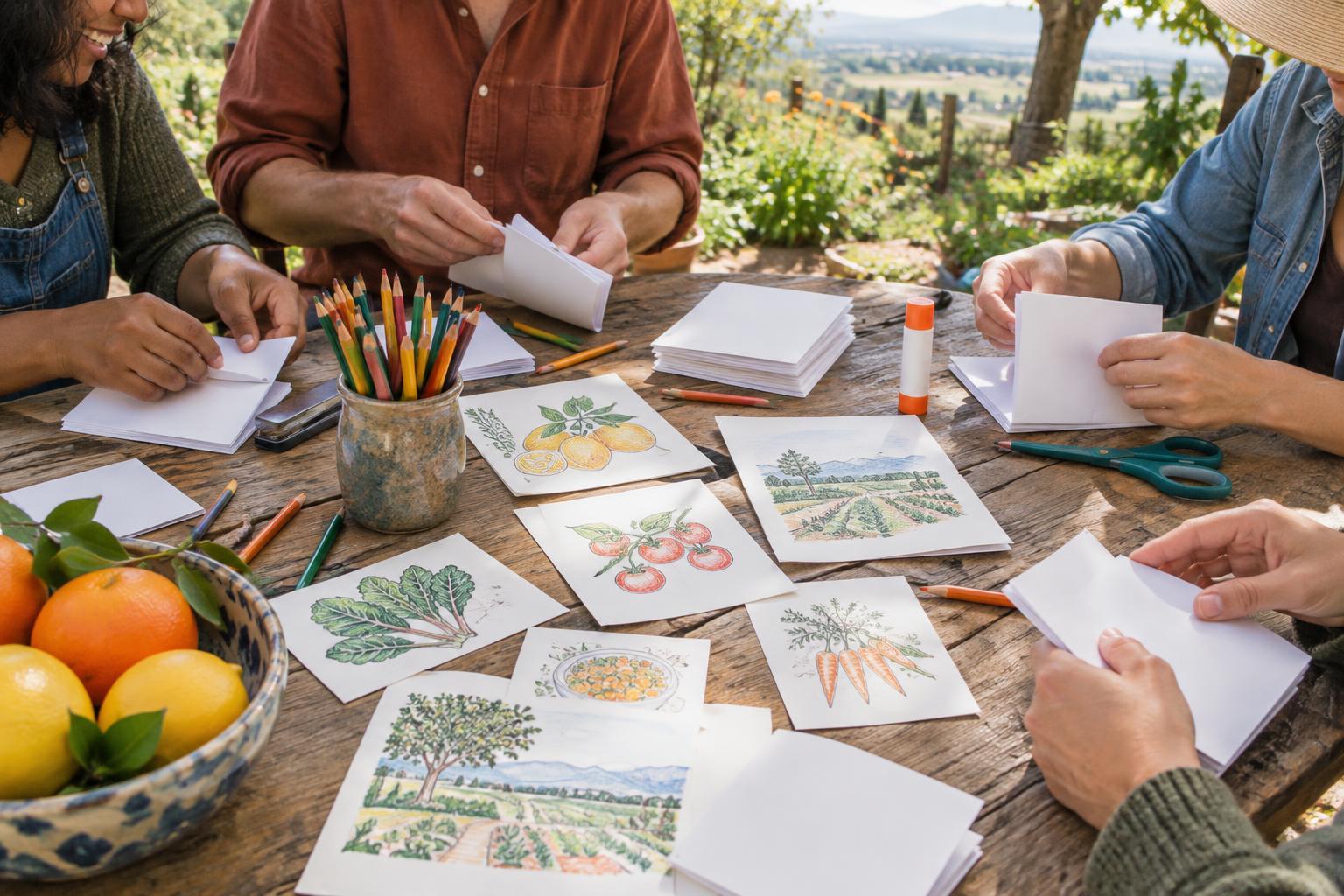
Start small and choose a shared theme
A zine is a small, independently made publication. It might be handwritten, illustrated, typed or assembled from a mix of all three. You do not need a design background or a large group to make one. For a first issue, the most useful starting point is a theme narrow enough to give people ideas and open enough to welcome different voices.
In a Central Valley community, a theme could be the things people grow on a porch, the sounds of a neighborhood, favorite ways to spend a hot afternoon or recipes passed between friends. Ask what your zine is for: recording memories, introducing local makers or simply giving neighbors a reason to create together. That answer will help you decide whom to invite and what kinds of contributions to request.
Invite contributions without making it a big assignment
A personal invitation often works better than a broad call for polished work. Ask a few people if they would like to contribute one small thing: a sketch, a short reflection, a handwritten recipe, a poem or a photograph they took. Give them a clear deadline and an approximate space limit, such as half a page. Let them know that a quick drawing or a few sentences are welcome.
Explain how you plan to print and share the zine before collecting anything. Ask each contributor how they would like to be credited, including whether they would rather remain unnamed. Get permission to use photographs, especially when people are recognizable, and avoid lifting images or writing from elsewhere without permission. If someone shares a personal story, give them a chance to check how it appears before copies go out.
Try not to make one person’s network stand in for the whole community. Inviting people with different ages, interests and experiences can make an issue more engaging, but no single zine has to speak for an entire region. A modest description—“stories and drawings shared by neighbors,” for example—sets a more welcoming tone.
Build a simple paper version first
Before opening a design program, fold a few sheets of paper into a rough booklet. Number the pages and mark where the cover, contents and credits will go. This dummy copy makes it easier to see how much material fits and whether any page feels crowded. A single folded sheet can make a tiny first issue; several folded sheets give you room for more contributors.
Keep the layout easy to read. Leave margins around text, use lettering large enough to survive copying and check that drawings still make sense in black and white if color printing is beyond your budget. If you are working with cutouts and glue, make one clean master copy to duplicate. If you are assembling pages digitally, print a test copy and fold it before making the full batch. Pages can look quite different on paper than they do on a screen.
Add a short note that says who made the zine, how contributors are credited and how someone can ask about a future issue. If you include a contact method, use one you are comfortable making public. There is no need to add anyone’s personal details simply to make the publication feel official.
Share copies thoughtfully
Decide on a first print run you can afford without needing every copy to find a reader. You might hand copies to contributors, bring a small stack to a gathering or ask a community space whether it accepts free publications. Always check before leaving zines at a café, library, shop or event. A short description on the cover can help someone understand what they have picked up.
If printing costs are a concern, keep the issue short, use standard paper and consider a black-and-white edition. A digital version may help people who cannot pick up a copy, but ask contributors before putting their work online: agreeing to a few paper copies is not necessarily agreeing to wider circulation. For either format, clear type and a sensible reading order make the zine easier to enjoy.
Let the next issue grow from the first
Once the zine is out, ask contributors and readers what they enjoyed and what was difficult. Perhaps the deadline was too short, the theme needed more room or people wanted a chance to make pages together. A low-key work session around a table can turn a second issue into a shared activity rather than another task for one editor.
Keep a copy of each finished issue and a record of who contributed, along with any permissions you received. Then allow the project to change. A community zine does not have to become a regular publication to be worthwhile. Even one small booklet can give familiar places and everyday creative work a space of their own.