Start with scraps worth saving
Vegetable stock is a way to give everyday trimmings one more job before they head to the compost. You do not need a precise recipe or a perfectly balanced collection of scraps. Think of the pot as a base for future cooking: the flavor should be pleasant and versatile, not so strong that it takes over a soup or a pot of rice.
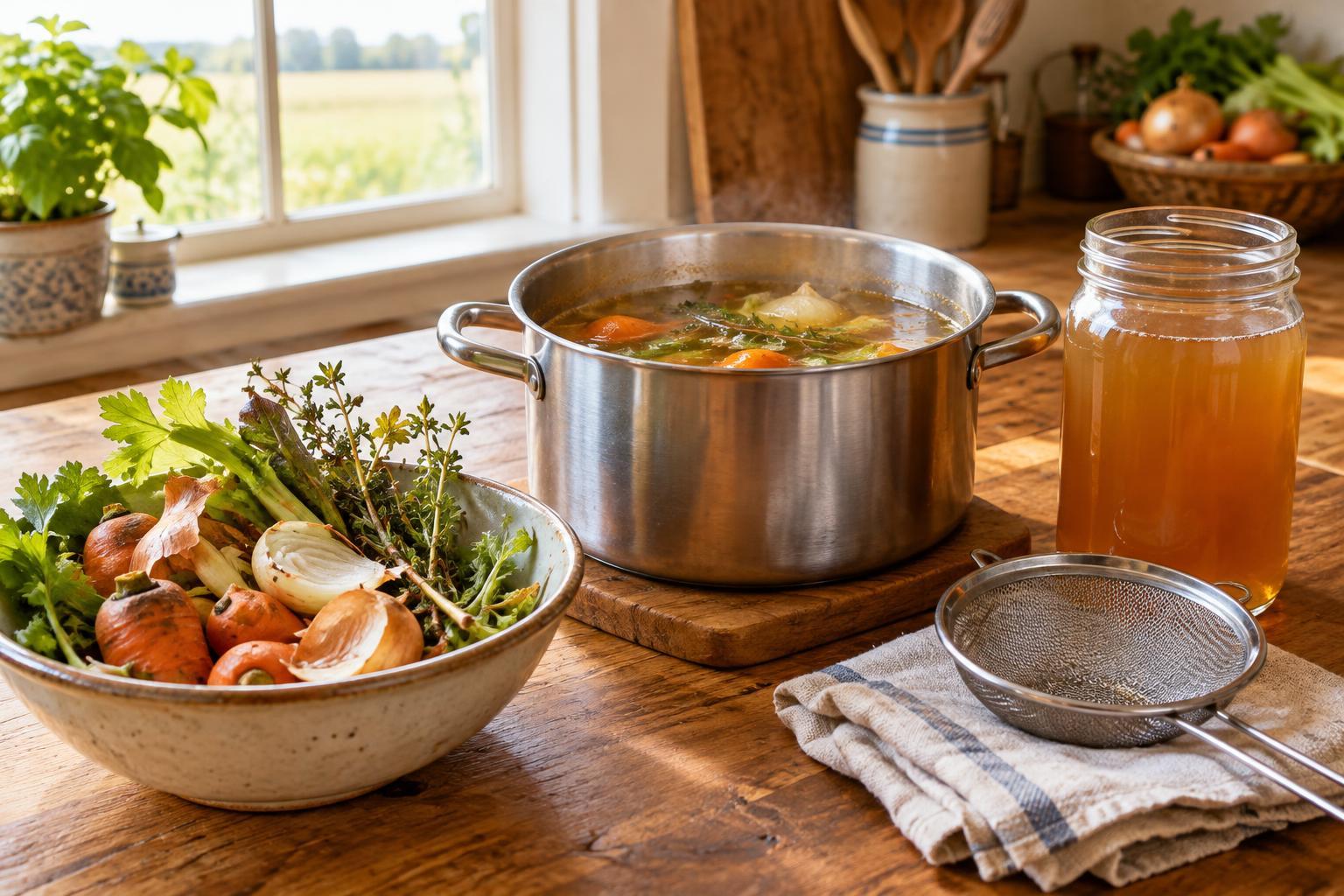
Good starting ingredients include carrot peels and ends, celery leaves and trimmed stalks, onion ends and clean skins, leek greens, mushroom stems, parsley stems and the ends of mild herbs. Keep scraps only from vegetables you would otherwise be comfortable cooking. Wash or scrub produce before trimming it, shake grit out of leek greens, and remove rubber bands, stickers and any other packaging.
Skip anything moldy, slimy or spoiled. Use strongly flavored scraps sparingly: a handful of broccoli stems, cabbage leaves or kale ribs can make a stock taste distinctly like those vegetables. Beet scraps can turn it red, while lots of potato peel may make it cloudy. None of those effects is necessarily wrong, but a mild first batch is easier to use in different dishes.
Build a freezer collection without overthinking it
Most home cooks do not produce enough scraps for a pot of stock in one meal. Keep a labeled, freezer-safe container or bag for clean trimmings and add to it as you cook. Freezing lets you collect a useful mix without leaving damp scraps in the refrigerator for days. Avoid packing in vegetables that are already past their best; freezing preserves their condition rather than improving it.
For a beginner’s batch, aim for a mix with plenty of mild, aromatic vegetables. Carrot, celery and onion make a familiar foundation, while a few mushroom stems add depth. A large quantity of one ingredient will tend to dominate. If your collection is mostly onion skins or celery leaves, wait until you have more variety, or use just part of what you saved.
There is no need to buy extra produce just to fill the container. The point is to make use of what passes through your kitchen. When it is full enough for your pot, you can cook the scraps straight from frozen. Empty and clean the container before starting your next collection.
Simmer gently, then taste
Put the scraps in a pot and add enough cold water to cover them by an inch or so. A bay leaf, a few peppercorns or an extra herb stem are optional, but leave out the salt for now. Unsalted stock is easier to use later because it can reduce in a sauce or join other seasoned ingredients without becoming too salty.
Bring the pot just to a boil, then lower the heat to a gentle simmer. Partially cover it and let it cook for about 30 to 60 minutes. A longer cook is not automatically better: delicate vegetable flavors can become flat, and strong scraps may grow more noticeable. Taste a spoonful after half an hour. If it seems light, give it more time; if it tastes pleasantly savory, it is ready.
Set a strainer over a heat-safe bowl or another pot and carefully pour the stock through it. Let the solids drain, then discard or compost them as appropriate. For a clearer stock, avoid pressing hard on the scraps. If the flavor seems too concentrated, dilute it when you cook with it. If it seems mild, use it where a subtle background flavor is welcome.
Store it safely and put it to work
Do not leave a full pot of stock on the counter overnight. To help it cool, divide it among shallow containers and refrigerate it promptly. Use refrigerated stock within a few days, or freeze portions you will not use soon. Leave room at the top of freezer containers for expansion, and label them so you can tell a mild batch from a strongly flavored one.
Small portions are convenient for loosening a pan sauce or reheating leftovers; larger ones suit soup or a pot of grains. Try stock in lentils, beans, rice or a simple vegetable soup. Because each batch reflects the scraps you saved, taste as you cook and adjust the final dish with salt, acidity or herbs rather than expecting the stock to provide every flavor on its own.
The first batch is also a useful experiment. Notice which scraps you liked and which made the flavor too assertive for your cooking. Next time, save more of the former and less of the latter. That small adjustment is all it takes to turn an occasional kitchen project into an easy habit.