Start with the spears, not the size
At a Central Valley produce stand or grocery display, asparagus can look inviting in bundles of thin, medium, and thick spears. Size is useful for planning a meal, but it is not a reliable freshness test. Thin spears cook quickly and suit a fast sauté; thicker ones are easier to handle on a grill or sheet pan. Either can be tender when fresh and cooked appropriately. Choose a bundle with spears of similar thickness so they finish cooking at about the same time.
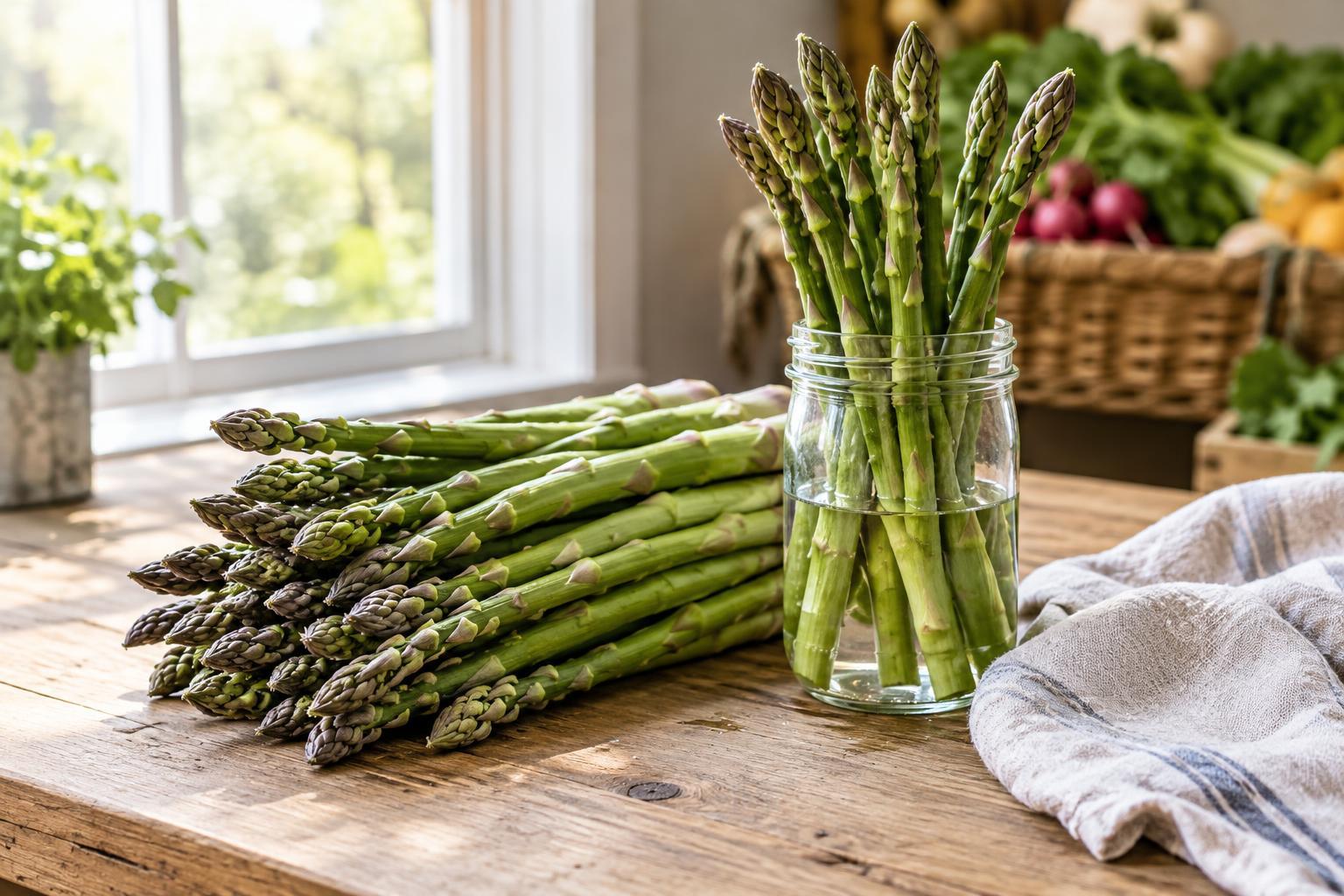
Look for firm stalks with a fresh appearance and tips that are compact rather than loose or mushy. The cut ends should not look deeply dried out, although a little dryness is common once asparagus has been harvested. Pass over spears that feel limp, have slimy patches, or carry a strong unpleasant smell. A few curved stalks are fine; shape matters less than firmness.
Plan the trip home
Asparagus loses moisture after harvest, so a good-looking bundle benefits from prompt, gentle handling. Pick it up toward the end of a shopping trip when practical, and avoid leaving it in a warm car. If the bundle is held together with a tight band, leave it in place for transport but loosen it at home if it is pressing into the stalks.
Buy an amount you can reasonably use soon. One bundle might be enough for a simple side dish, while a larger gathering may call for several; the right quantity depends on the other food on the table and how much asparagus your guests enjoy. If you are comparing bundles, favor the one you expect to cook rather than buying extra simply because it looks plentiful. Good storage helps, but it cannot fully restore spears that have already gone limp.
Keep it cool and lightly hydrated
For short-term storage, stand the stalks cut-end down in a jar or sturdy container with a small amount of water, much as you would with flowers. Cover the tips loosely with a bag and place the container in the refrigerator where it will not tip over. Check the water and change it if it becomes cloudy. The goal is to give the cut ends access to moisture without soaking the entire bundle.
If refrigerator space is tight, wrap the cut ends in a lightly damp towel and place the bundle in a loose bag in the crisper drawer. Avoid sealing wet spears in a tight bag: trapped moisture can leave the tips soggy. Whichever method you use, check the bundle and cook it while the stalks are still firm. Storage time varies with how fresh the asparagus was when you bought it, so appearance and texture are better guides than a fixed deadline.
Trim only what you need to
Wait to wash asparagus until you are ready to prepare it. Rinse the spears under cool running water, paying attention to the tips, where grit can hide, and pat them dry if you plan to roast or sauté them. Remove the tough lower portion of each stalk with a knife. One practical approach is to slice a thin piece from the bottom, then test a bit of the remaining end; trim a little more if it still feels fibrous.
Snapping every spear by hand is convenient, but it may discard more edible stalk than necessary. For thick spears with tough outer skin near the base, peeling a short section of the lower stalk can preserve more of the tender center. Keep the tips intact: they are delicate and cook faster than the bottoms.
Let freshness do the work
Fresh asparagus needs little embellishment. For a quick side dish, toss dry spears with a little oil and cook them in a hot pan or oven until the stalks are tender enough for your taste. Thin spears will generally need less time than thick ones, so begin checking early rather than relying on one cooking time for every bundle. A pinch of salt and a squeeze of lemon can finish the dish without covering its flavor.
If you are preparing a relaxed meal with other regional ingredients, asparagus can sit alongside eggs, grains, or a platter of roasted vegetables. Cook it close to serving time when possible, especially if you like a little bite. Choosing firm spears, storing them thoughtfully, and trimming them carefully are the small steps that make the biggest difference between a crisp market purchase and a tired one.