Start with the flavor you want
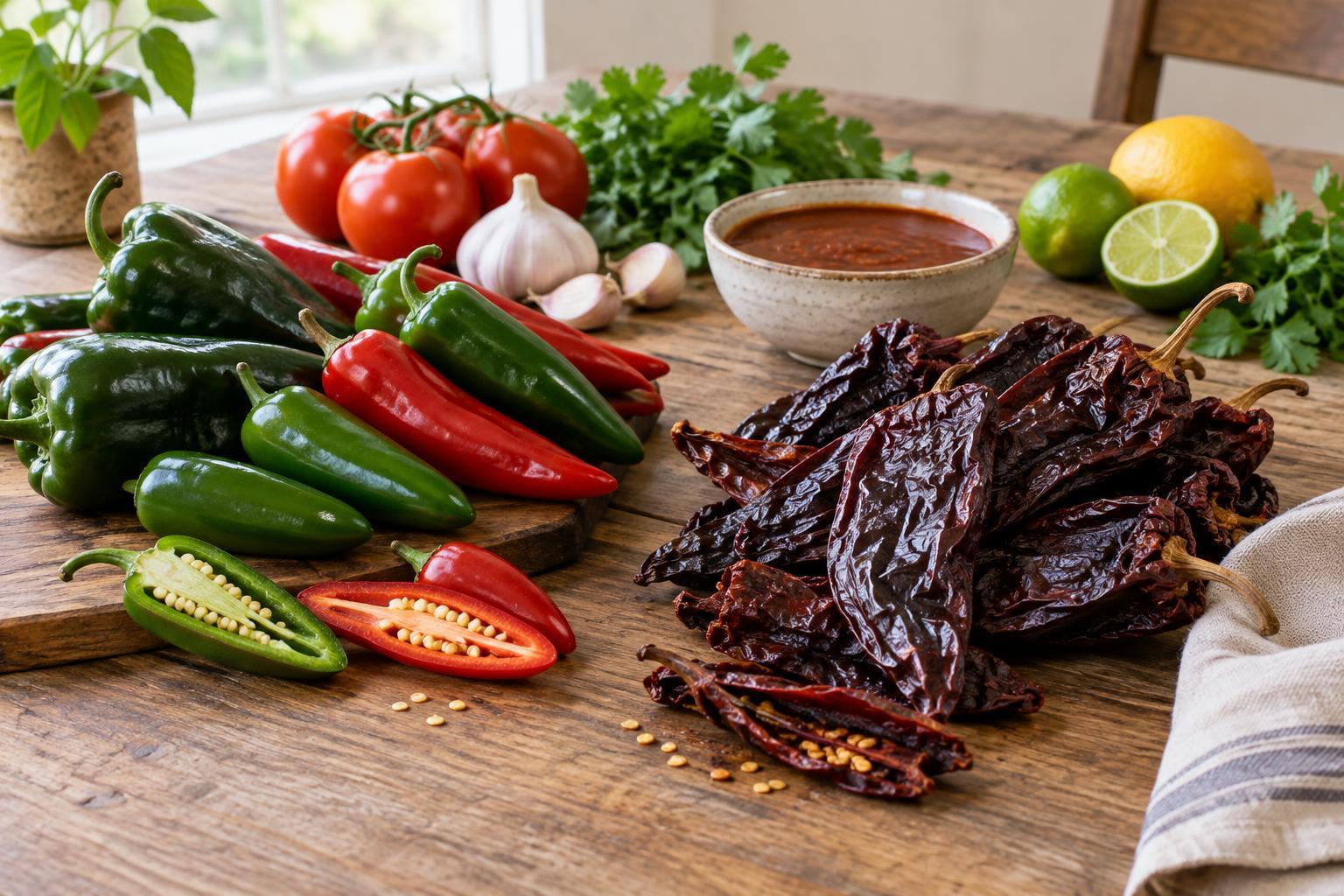
A chile can make a dish taste bright and grassy, deep and earthy, or simply warmer. The first useful choice is not always which variety to buy, but whether to use it fresh or dried. Fresh chiles bring moisture and a sharper flavor. Dried chiles have lost that fresh bite and often offer more concentrated, sometimes fruity or smoky notes. Drying does not make every chile taste alike, though, so a small taste is more useful than an assumption based on color alone.
If you find locally grown chiles at a Central Valley market or farm stand, ask for the variety name when it is available. Two chiles that look similar can differ considerably in heat and flavor. There is no need to learn every name at once: start with one mild chile and one hotter option, then notice what each adds to a familiar dish.
Give fresh chiles room to be fresh
Use a fresh chile when you want its flavor to stand out alongside other crisp or lightly cooked ingredients. Thin slices can add contrast to a tomato salad, a bowl of beans, or a plate of sliced melon and cucumber. A finely chopped chile stirred into a citrus dressing gives you more control over the heat than scattering larger pieces across the finished food.
Cooking changes the effect. A brief sauté can soften a chile’s raw edge while keeping some of its freshness; longer cooking lets its flavor settle into a sauce or pot of vegetables. For a simple starting point, cook chopped chile with onion until both soften, then add tomatoes. Spoon the mixture over eggs, roasted squash, or cooked beans. You can keep the base mild and offer extra chopped chile at the table.
Let dried chiles build depth
Dried chiles are useful when you want flavor woven through a dish rather than a crisp bite on top. Whole dried chiles can be warmed briefly in a dry pan, turning them often so they do not scorch. You can then remove the stems, soak the chiles in hot water until pliable, and blend them with a little soaking liquid into a sauce. Taste the liquid before adding it: if it seems bitter, use fresh water or broth instead.
That sauce can be stirred into simmering beans, brushed onto roasted vegetables, or added a spoonful at a time to a pot of tomato sauce. Dried chile flakes and powders are convenient alternatives when you do not want to make a sauce. Add a small amount early in cooking for an integrated flavor, or sprinkle a little at the end for a more noticeable finish. Check a packaged blend’s ingredients if you want to know whether it contains only chile or added seasonings.
Control heat without losing flavor
Chile heat varies by variety and by individual pepper. Start with less than you think you need, especially when cooking for other people. You can add more chile to a sauce or serving bowl, but it is harder to take it out. Removing the pale inner ribs and seeds from a fresh chile may reduce some heat; the ribs are an important place to check because much of the heat-producing material is concentrated around them.
Keep your hands away from your eyes while preparing hot chiles, and wash your hands, knife, and cutting board afterward. Gloves can help if you are handling a large batch. If a finished dish is hotter than intended, serve smaller portions with plain rice, beans, or another mild accompaniment rather than relying on extra water to change the flavor.
Make a simple pairing your own
A useful way to learn a chile is to try it with ingredients you already cook. Fresh chile and citrus can brighten a salad of tomatoes or stone fruit. A dried chile sauce can give depth to roasted sweet potatoes, onions, or winter squash. With beans, try fresh chile as a topping one day and a little dried chile stirred into the pot another day. The contrast makes the different roles easier to recognize.
Keep notes in ordinary kitchen terms: mild or hot, bright or deep, better raw or cooked. After a few meals, you will have a more dependable guide than a rigid recipe—and a way to make seasonal Valley ingredients taste a little different each time.