Start with the kind of morning you want
Brunch is well suited to a gathering that doesn’t need a formal start or a perfectly timed main course. Guests can arrive, pour a drink and find something to eat while conversation gets going. The host’s goal is not to produce a restaurant-style spread. It is to make the first hour comfortable for everyone, including the person who lives there.
Choose a serving window rather than a moment when every dish must be ready. Then plan around one substantial item that can be finished shortly before guests arrive. A baked egg dish, breakfast casserole or tray of roasted vegetables can provide the center of the meal. Surround it with foods that need little last-minute attention: bread, fruit, yogurt or a simple salad. If you would rather not cook that morning, a mix of good bread, spreads, fruit and a prepared dish can still feel like a complete brunch.
Build a menu with room for choice
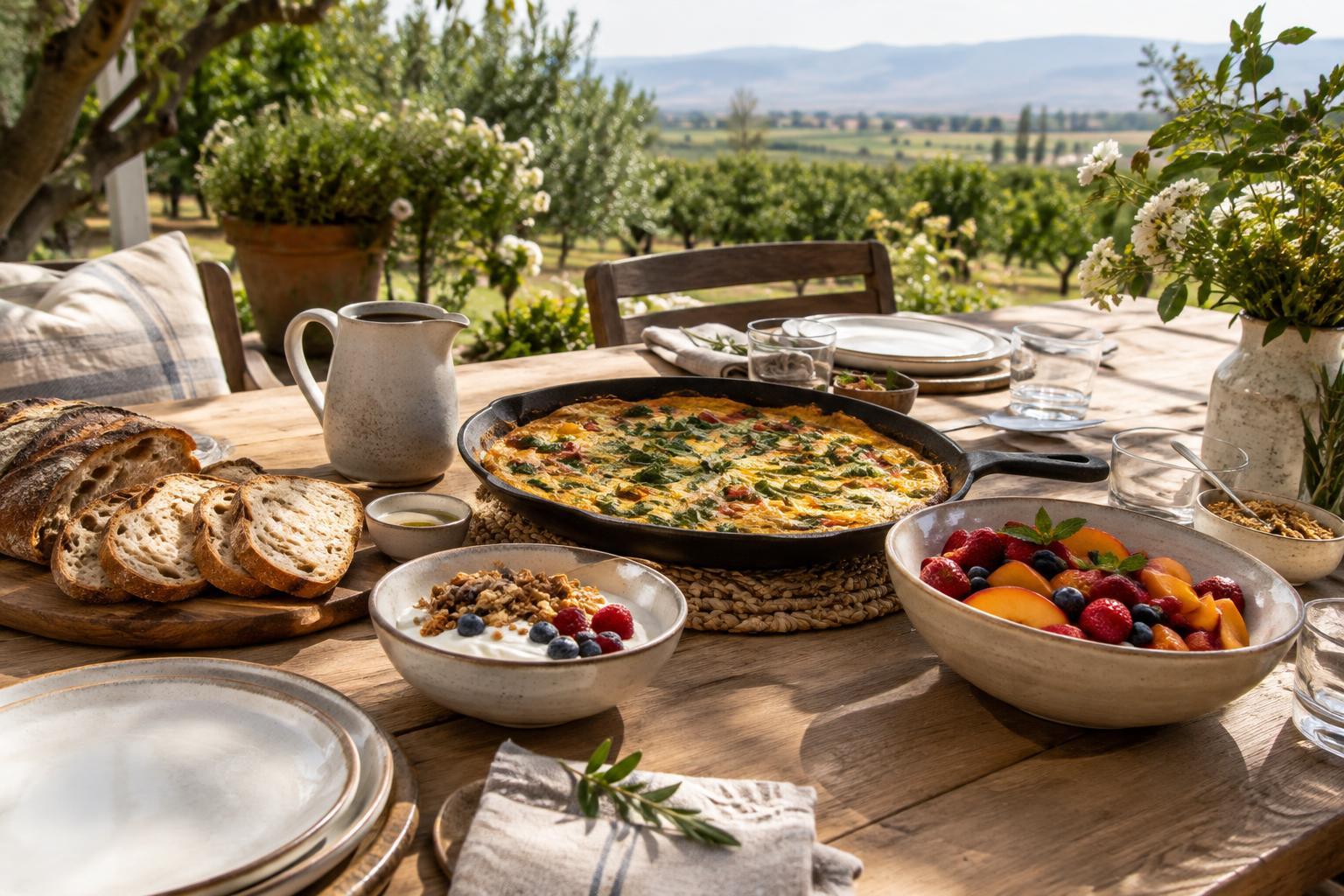
A useful brunch menu has contrasting textures and temperatures, not a long list of recipes. Pair something hearty with something fresh, and add a small extra that makes the table feel inviting. For example, serve a warm savory bake with cut seasonal fruit and toast, then offer jam or a bowl of nuts. Central Valley produce can guide the fresh component, but choose what looks appealing and is practical to prepare rather than building the gathering around a hard-to-find ingredient.
Think about how guests will assemble a plate. A few separate components make it easier for people to take what they like without requiring a different dish for every preference. Keep toppings and dressings on the side when that works for the food. If guests have told you about dietary needs, make sure there is a satisfying option they can identify without having to guess what is in it. A small note beside a dish or a quick explanation when they arrive can help.
Do the quiet work the day before
The best make-ahead tasks are the ones that remove small decisions from the morning. Set out serving plates and utensils, clear a place for drinks, wash produce and check that there is space in the refrigerator for anything that needs chilling. If a recipe allows advance assembly, follow its storage and baking directions. Otherwise, prepare its separate components so the final step is straightforward. Keep perishable foods refrigerated until it is time to serve them.
Give yourself a short morning plan with only a few steps: heat the main dish, finish the fresh item and put out drinks. Avoid trying a complicated new recipe alongside several unfamiliar sides. If you want to experiment, make the new dish a bonus rather than the only substantial food on the table. This leaves you free to answer the door, find another chair or simply enjoy a slow cup of coffee.
Make serving easy on guests and yourself
Put drinks in a spot that guests can reach without crossing the cooking area. Water, coffee or tea and one other option are plenty for a small gathering. Place cups, napkins and a place for used dishes where they are easy to spot. If counter space is tight, bring food out in stages instead of crowding every surface at once. An uncluttered setup makes it easier for guests to help themselves and for you to refresh the table.
Let the meal wind down naturally. You can leave bread and shelf-stable extras available for a while, but return perishable dishes to the refrigerator rather than keeping them out for extended grazing. Cleanup need not interrupt the conversation: collect empty cups as you pass through and save the bigger jobs until after guests leave. A relaxed brunch succeeds when there is enough to eat, a comfortable place to sit and no pressure to make the morning look effortless.