Start with a skillet worth saving
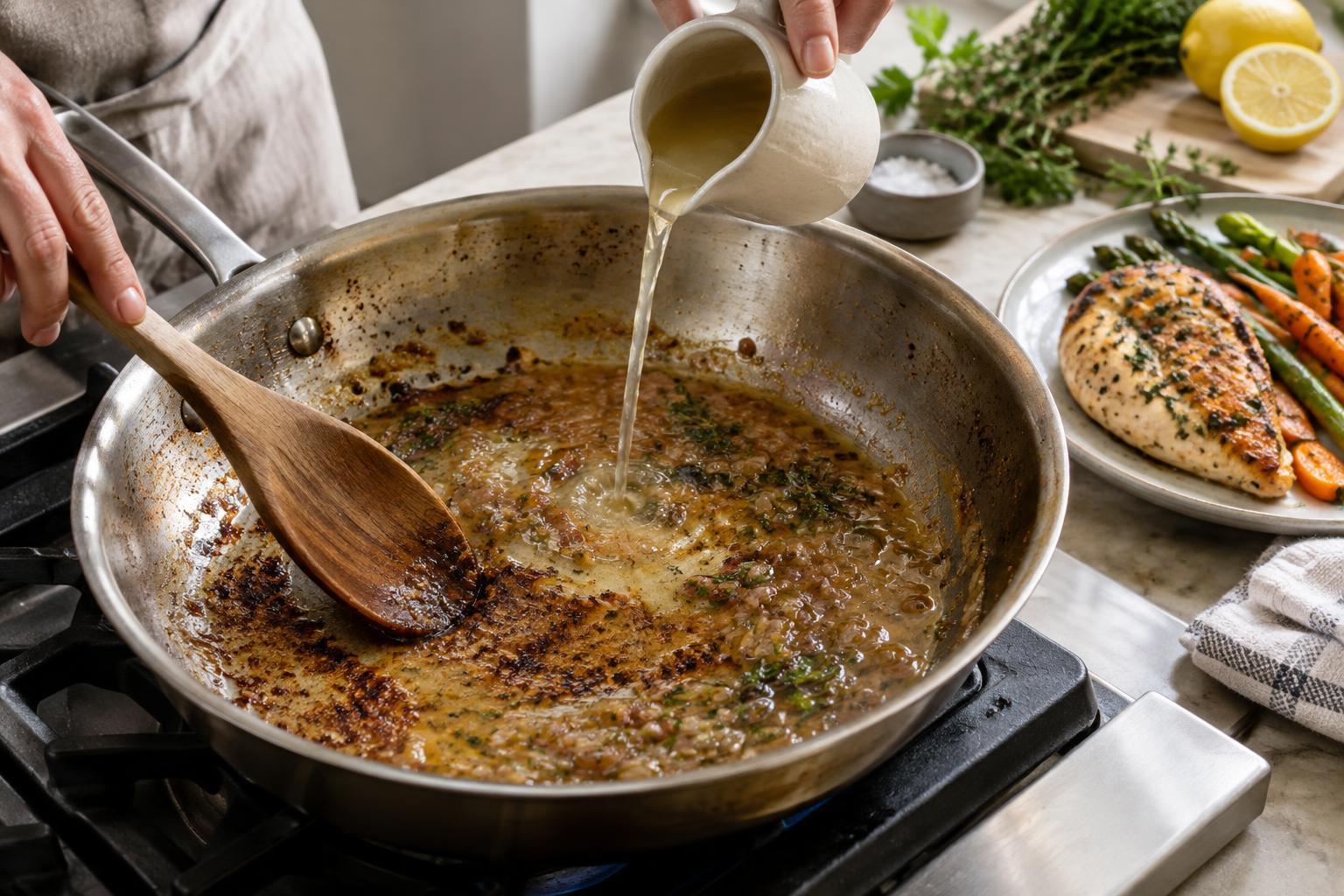
After you cook a cutlet, a pork chop, mushrooms or another skillet-friendly ingredient, look at what remains in the pan. Small brown bits stuck to the surface can bring savory flavor to a sauce. They are different from blackened, bitter residue, which is better wiped away. If there is a lot of oil or rendered fat, pour off most of it before adding liquid; a thin coating is enough.
Move the cooked food to a plate before making the sauce. If you cooked meat, keep the plate and any juices that collect on it separate from uncooked ingredients. Set the skillet over moderate heat. A stainless-steel pan makes browned bits easy to see, but you can make a simple sauce in other suitable skillets too. The goal is not to scrape the surface dry: it is to loosen what tastes good and leave anything burnt behind.
Add liquid and loosen the browned bits
For a modest amount of sauce, begin with a splash of broth, water or a mixture of the two. Add it carefully; liquid can sputter in a hot pan. As it warms, use a wooden spoon or heat-safe spatula to loosen the brown bits. Let the liquid simmer until it tastes more concentrated, then add another splash if it reduces too far. Starting small makes it easier to control both the consistency and the seasoning.
Choose the liquid with the meal in mind. Broth can give a savory base, while water lets the ingredients already in the skillet lead. A little tomato juice can suit cooked peppers or zucchini; citrus juice is often better added near the end so its brightness stays noticeable. If the pan has no browned bits, the method still works: briefly soften a minced shallot or garlic in a little oil, then add liquid and simmer.
Build flavor without overloading the pan
A good pan sauce needs only a few choices. Try a spoonful of mustard for sharpness, a small amount of minced shallot for sweetness, or chopped herbs for a fresh finish. Peaches, tomatoes and peppers can also play a part in a Central Valley-inspired dinner, but add them according to how you want them to taste. Stir in diced ripe tomato near the end for freshness; cook firmer peppers earlier if you want them tender.
Taste before reaching for salt. Broth, mustard and pan drippings may already supply plenty. If the sauce tastes heavy, add a little citrus juice or vinegar. If it tastes too sharp, give it another moment to simmer or round it out with a small piece of butter. Add butter over low heat, stirring until it melts into the liquid. You are looking for a sauce that lightly coats a spoon, not necessarily one as thick as gravy.
Finish, serve and adjust next time
Return the cooked food to the skillet briefly if it needs warming, or spoon the sauce over it on the plate. Pour in any juices collected from cooked meat and bring the sauce back to a simmer before serving. A pan sauce is especially useful when a meal feels nearly complete but needs something to bring its parts together: spoon it over chicken and rice, mushrooms and toast, or a simple plate of sautéed vegetables and grains.
The first attempt may be thinner or more intense than you expected. A thin sauce can simmer a little longer; an overly reduced one can take another splash of water. If it tastes bitter, do not try to rescue it with extra seasoning—start again in a clean pan. Once you get a feel for the process, the useful question becomes less “What recipe should I follow?” and more “What is already in this skillet, and what would make dinner taste complete?”