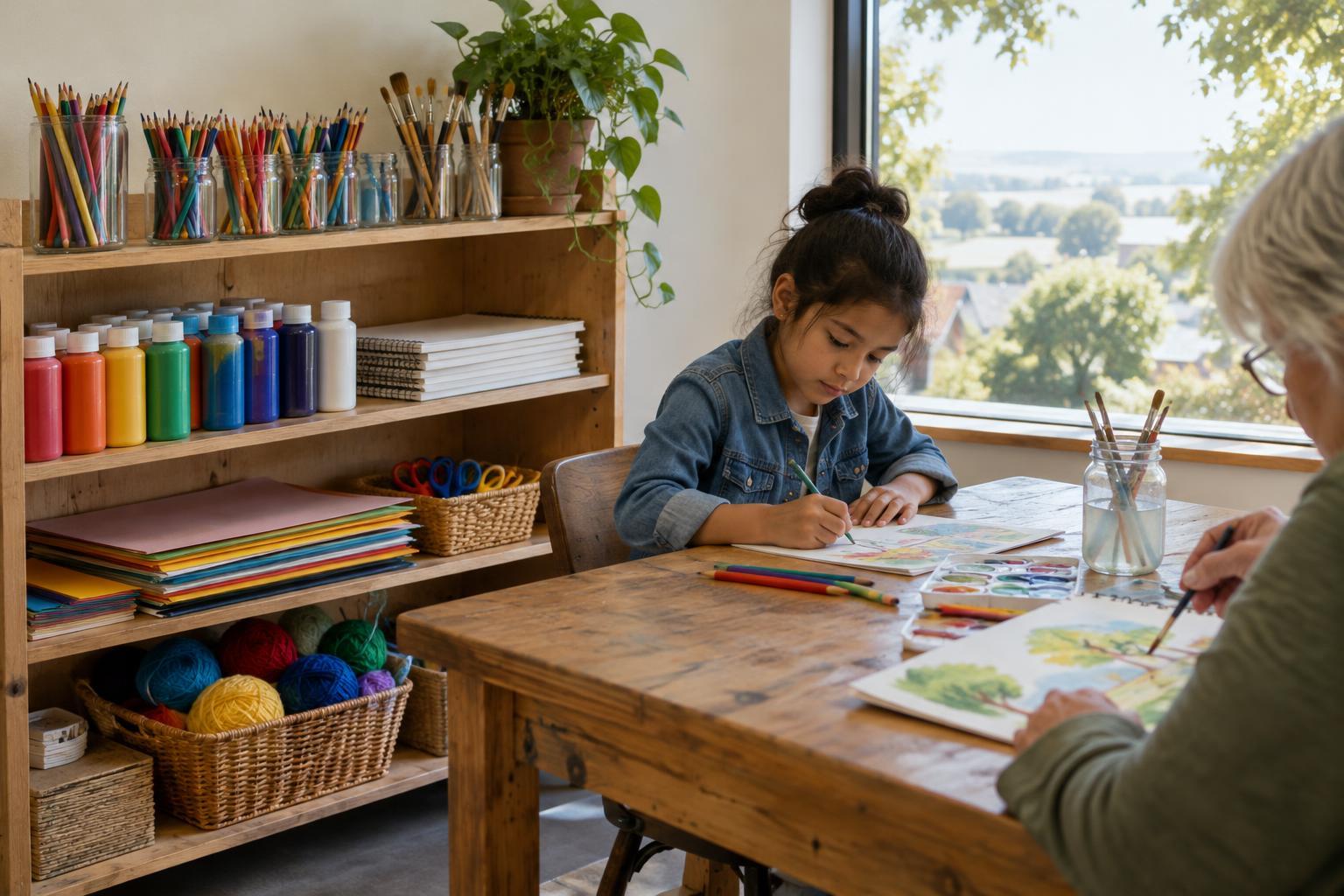
Start with a place and a purpose
A shared art supply shelf gives neighbors a place to offer materials they no longer need and pick up something for a creative project. It might hold spare drawing paper, colored pencils, clean fabric scraps or unopened glue sticks. The idea is simple, but a successful shelf needs someone to decide what it is for and how it will be cared for.
Before collecting anything, choose a location where people already gather, such as a community room or a shared space in a housing complex. Ask the person responsible for that space for permission, including where the shelf may stand and who can access it. A small indoor shelf is often easier to monitor than an outdoor box, where heat, dust or rain can damage supplies. If the space has limited hours, make those hours clear rather than promising open access.
Decide whether the shelf is primarily for exchanging supplies, taking what is needed, or stocking materials for a particular group. Keep that purpose modest at first. One tidy shelf that people understand is more useful than several overflowing bins that no one has agreed to maintain.
Choose supplies people can use right away
Begin with a short list of welcome items: clean paper, notebooks with usable pages, pencils, crayons, markers that still work, brushes in good condition and small quantities of clean craft materials. Sort donations before putting them out. Test pens and markers, remove damaged items and bundle loose pieces so visitors can tell what they are taking. Clear containers or simple labels make browsing easier without requiring anyone to ask for help.
Set boundaries for items that are messy, difficult to store or unsuitable for an unsupervised shelf. Paints, solvents, sharp tools, broken glass and mystery containers are best left out unless the host has a specific plan for handling them. Even ordinary supplies can become clutter if donations arrive faster than they leave. A posted note such as “Please bring only clean, usable items that fit on the shelf” gives donors a useful standard.
Think about different ways people make art. Large-grip drawing tools, high-contrast paper and materials that do not require specialized equipment can make the shelf useful to more people. You do not need to predict every project. The goal is to offer dependable basics and leave room for visitors to use them in their own ways.
Make the invitation clear and welcoming
A short sign can explain the shelf better than a long set of rules. Say who may use it, what visitors may take, what they may leave and whom to contact if something needs attention. If taking supplies does not require leaving a donation, say so plainly. An exchange should not make someone feel they must prove they have contributed before choosing a pencil or a sheet of paper.
Place the shelf where it does not block a walkway or make visitors reach over other activities. Labels in large, readable lettering help people browse independently. If your space serves people who use more than one language, ask someone familiar with those languages to help make the instructions understandable. Avoid collecting names or asking people to describe their projects unless there is a clear reason to do so.
You can invite participation without turning the shelf into a formal program. A small card might suggest drawing something seen on a walk, making a postcard or trying a new material. Keep these prompts optional. Some visitors may want to talk about what they are making; others may simply want to take supplies home and begin.
Give the shelf a light maintenance routine
Agree on a caretaker or a small rotating team before the shelf opens. Check it regularly for dried-out markers, spills, overflowing donations and items that do not match the guidelines. Keep a bag or box nearby for materials that need sorting, rather than letting them pile up in the browsing area. If you cannot maintain a permanent shelf, try a limited collection period and assess whether the idea is manageable.
Notice what actually moves. If paper disappears quickly while jars of buttons remain untouched, make more room for paper and pause button donations. Ask visitors for simple feedback, but do not assume every empty spot is a problem: people using the materials is the point. A shelf can change with the needs of its community, as long as its purpose stays easy to understand.
A shared art supply shelf does not need a grand launch or a perfect inventory. With permission, usable materials and a realistic plan for upkeep, it can become a small, reliable invitation to make something.