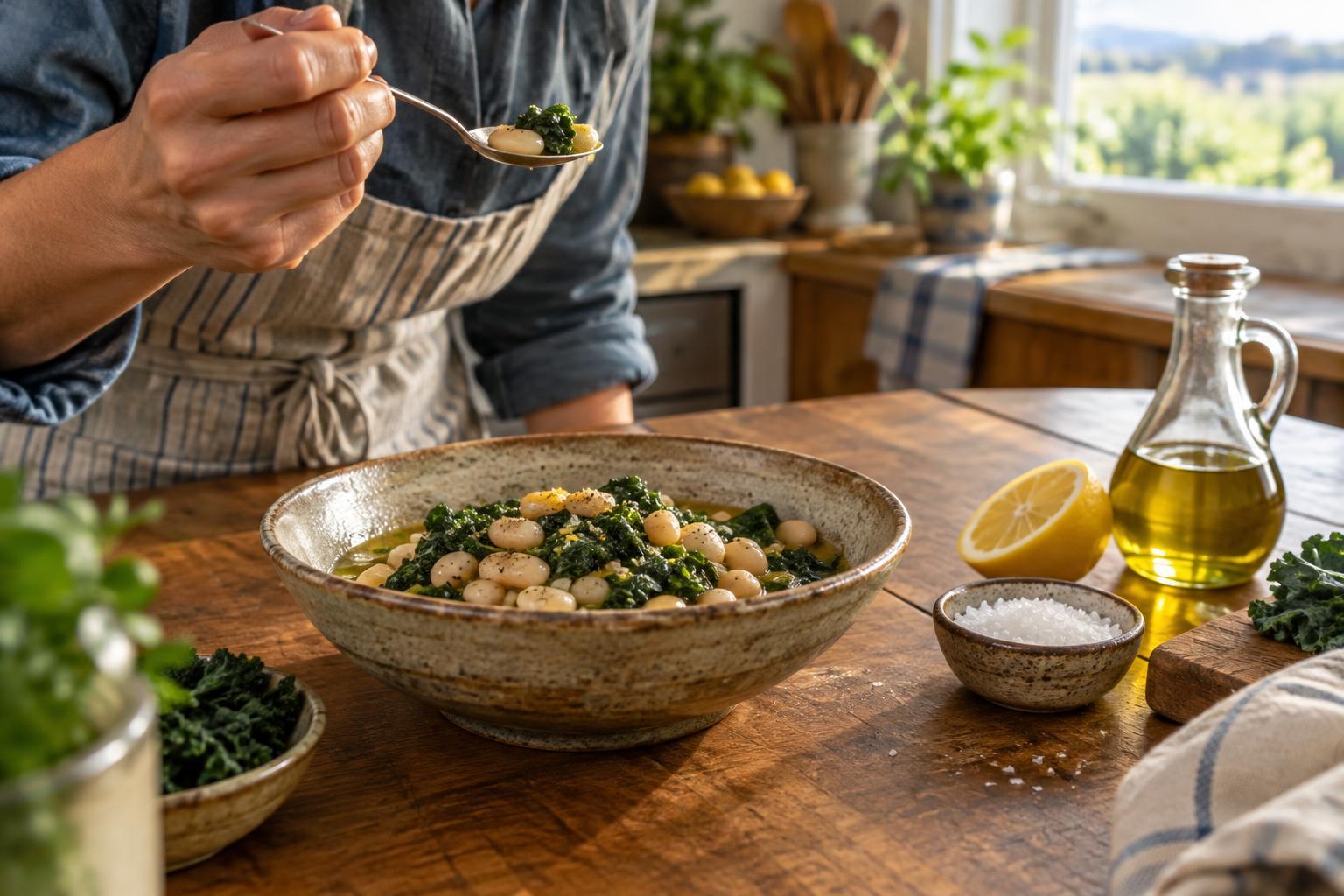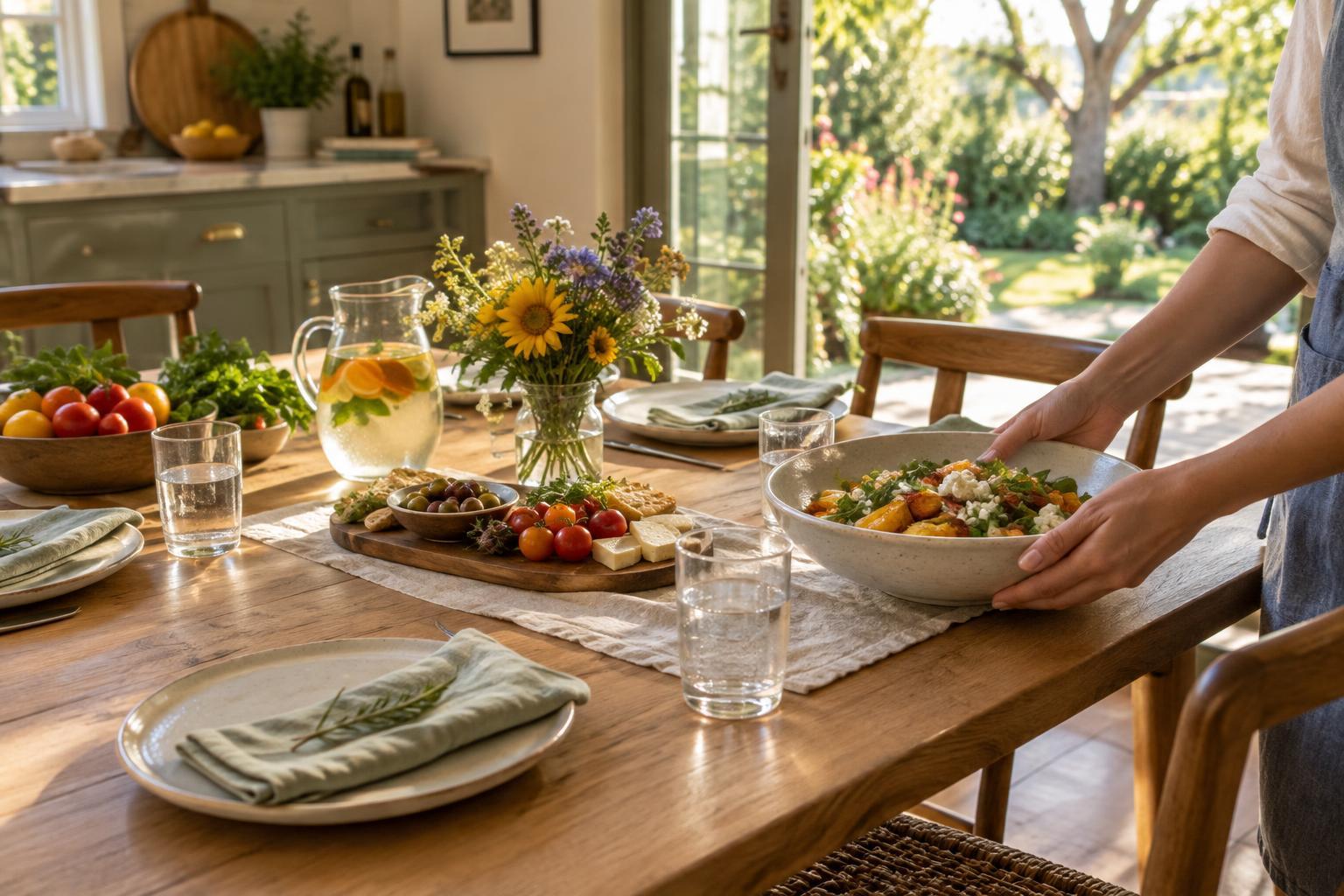
One to two weeks before: Set the shape of the gathering
Start with the kind of time you want to share, not the food you think you ought to serve. A weekend lunch, late-afternoon snack table, or casual dinner each calls for a different amount of preparation. Decide roughly how many people your space can hold comfortably and whether everyone will sit at once or move around. A clear plan helps you make smaller decisions without turning a friendly get-together into a production.
Send invitations with the day, start time, general plan, and anything guests need to know, such as whether the meal will be outdoors. Ask about food needs early enough to plan around them. If people offer to bring something, give them an easy, specific option: bread, a drink, or fruit to share. It is also fine to say that their company is all you need.
Several days before: Build a menu that gives you room to breathe
Choose one main dish you know how to make, then add simple supporting foods. A grain salad, roasted vegetables, sliced fruit, and a bowl of something crunchy can make a generous table without requiring four last-minute cooking projects. For a Central Valley-inspired feel, let appealing produce guide a side dish rather than committing to a particular ingredient before you shop. What looks good and fits your budget is more useful than an ambitious menu.
Consider what guests can serve themselves and what holds up if someone arrives late. Note which dishes need oven space, which can sit at room temperature for a while, and which require attention just before eating. Include water and at least one nonalcoholic drink. Then write a short shopping list grouped by where you will find things. Check your pantry, serving bowls, and chairs before buying extras.
The day before: Do the quiet work
Make anything that benefits from resting or reheats well. Wash sturdy produce, prepare a dressing, chill drinks, and set aside serving utensils for each dish. If you are hosting outside, check that the seating, lighting, and route to the bathroom are straightforward. Have a simple indoor backup plan if weather or comfort changes the plan. You do not need to arrange every detail; you just want to avoid searching for a corkscrew or an extra chair while guests are arriving.
Clear the surfaces people will use most: an entry spot for bags, a place for drinks, and enough room on the table to set down a plate. A quick bathroom refresh and an empty kitchen bin will do more for comfort than an exhaustive housecleaning. Before bed, look over the menu and identify the two or three tasks that truly must happen tomorrow.
The day of: Protect the final hour
Work backward from the time you want to eat. Start the dish with the longest cooking time first, and leave cold dishes or garnishes for later. If possible, finish major cooking before the first guest arrives. An hour ahead, put out glasses, water, and a small snack; check that serving dishes have a place; and give yourself time to change or sit down. A host who has a moment to greet people sets a warmer tone than a perfectly arranged platter does.
When guests arrive, point them toward drinks and invite them to make themselves comfortable. If you are finishing something, a brief explanation is enough. There is no need to apologize for every unfinished detail. Serve when the food is ready, and let guests help themselves where that makes sense. A relaxed meal has room for conversation, second helpings, and a pause before dessert.
Afterward: Make cleanup small and manageable
As the gathering winds down, put away food that needs refrigeration and collect stray dishes in one place. If guests ask to help, offer a contained task, such as carrying glasses to the kitchen or packing leftovers. Otherwise, enjoy the last conversation. You do not have to wash every pan before anyone leaves.
Once the door closes, do a short reset: store leftovers, soak anything stubborn, wipe food surfaces, and take care of the trash if needed. The rest can wait until morning. Notice what made the gathering easy and what felt like too much work; that small memory will help you plan the next one. Hosting becomes simpler when the goal is not a flawless evening, but a welcoming place to spend time together.