Start with the kind of persimmon
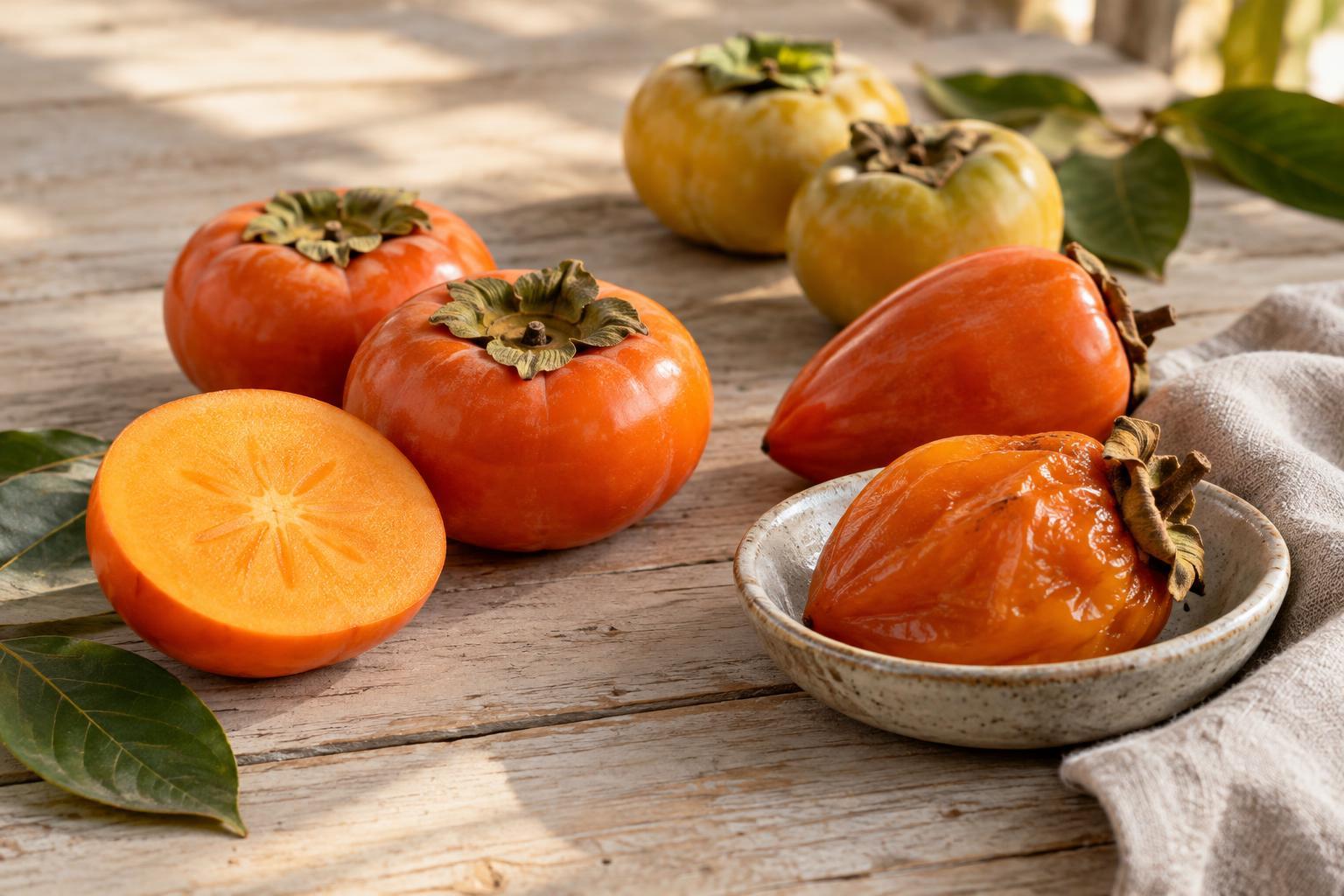
A bowl of orange persimmons can be puzzling: one fruit may be delicious while still crisp, and another may need to become almost jelly-soft before it tastes pleasant. The key is to find out which kind you have before judging ripeness by touch. Two commonly encountered types are Fuyu, usually eaten firm, and Hachiya, usually eaten fully soft.
Fuyu persimmons are generally squat and rounded, somewhat like a flattened tomato. Hachiya persimmons are often longer and pointed at the bottom. Shape is a helpful clue, not a guarantee: other varieties exist, and labels may be more reliable than appearance. If you buy fruit directly from a grower or market stall, asking whether it is meant to be eaten firm or soft can save an unpleasant first bite.
For Fuyu, look for color and a comfortable firmness
A Fuyu is ready to eat when its skin has developed a rich orange color and the fruit feels firm but not rock-hard. A little give is fine, but you do not need to wait for it to turn mushy. Cut one into wedges and taste it: a ready Fuyu should be pleasantly sweet, with a texture that can range from crisp to tender depending on how long it has ripened.
If the fruit is pale and tastes bland, leave the rest on the counter and check them over the next few days. If a Fuyu becomes quite soft, it is not automatically wasted. Use a clean, sound fruit in a smoothie, spoon it over yogurt, or fold the flesh into a simple dessert. The best eating stage is partly a matter of preference: some people want a snap in every slice, while others prefer a softer bite.
For Hachiya, wait until it feels very soft
Hachiya requires a different test. An unripe Hachiya can leave your mouth feeling dry and puckered because of its astringency. Bright orange skin alone does not mean it is ready. Let the fruit ripen until it yields easily all over and feels almost like a small water balloon. At that point, the flesh should be soft enough to scoop with a spoon.
Handle a ripe Hachiya gently; its tender skin can split. Set it on a plate when checking it, and look for an even softness rather than one isolated squishy patch. If you are unsure, open one and sample a small spoonful. If it still has that drying, puckering effect, give the remaining fruit more time. For an unidentified persimmon, waiting for softness is the more cautious choice than biting into it while firm.
Give unripe fruit time, then store it thoughtfully
Persimmons can continue to soften at room temperature. Place them in a single layer where you will notice them, away from direct heat, and check them regularly. A paper bag with an apple or banana may help encourage softening, but check the fruit often: a Hachiya can go from nearly ready to extremely delicate. A bag is useful only if you remember what is inside it.
Once a persimmon reaches the texture you like, refrigerating it can help slow further softening. Keep very ripe fruit in a container to catch any leaks, and use it soon. Discard fruit with visible mold or an off smell. A small bruise is different from widespread spoilage; if the rest of the fruit looks and smells sound, you can cut away the damaged portion.
Put each texture to work
Persimmons fit easily into a relaxed Central Valley table. Wash the fruit before eating it, remove the leafy top, and choose a preparation that suits its texture. Slice a firm Fuyu into a green salad, serve wedges beside cheese and nuts, or add it to a grain bowl for sweetness and crunch. Its skin is edible, though you can peel it if you prefer.
A fully soft Hachiya is better scooped than sliced. Spoon its pulp over oatmeal, swirl it into plain yogurt, or use it in a recipe that calls for persimmon pulp. If you have more ripe fruit than you can use promptly, portion the pulp and freeze it for later cooking. The simplest rule to remember is also the most useful: a firm Fuyu can be ready, but a Hachiya should feel thoroughly soft before you eat it.