Start with the skin
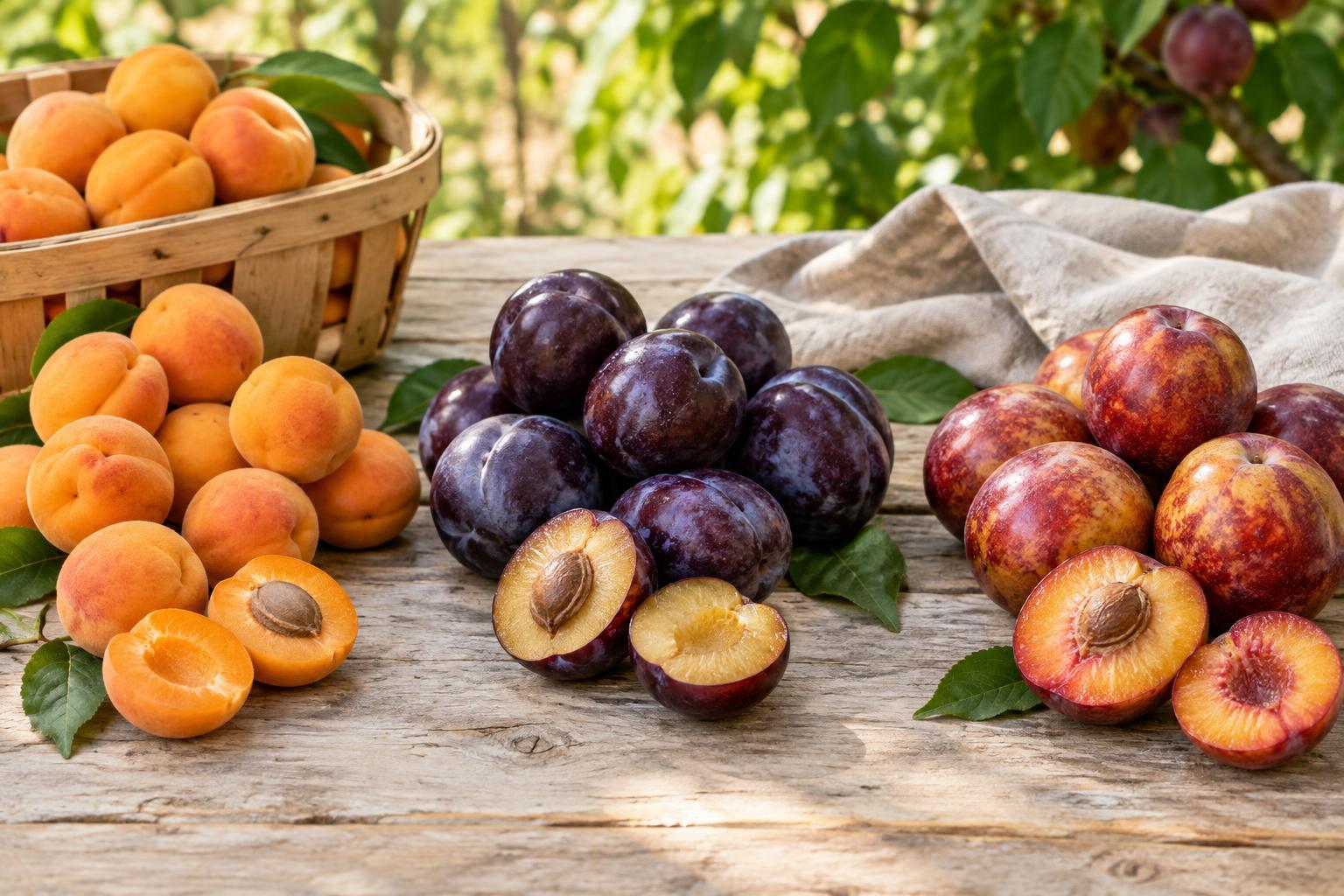
A basket of Central Valley stone fruit can hold a surprising range of colors, sizes and flavors. Apricots, plums and pluots all have a single hard pit, but the skin is often the quickest way to begin telling them apart. Run a clean fingertip gently over the fruit: an apricot typically has a soft, velvety surface, while a plum or pluot usually feels smooth.
Apricots are often small and round, with golden-orange skin that may carry a rosy blush. Plums come in a much wider range of appearances, from yellow and red to deep purple, and may be round or oval. Many have a pale, powdery coating called bloom. It is a natural feature of the skin, not a sign that the fruit needs scrubbing. A gentle rinse before eating is enough.
A pluot is a plum-apricot hybrid, and many look more like plums than apricots. Expect smooth skin, but do not expect one dependable pluot color or shape. Varieties differ enough that a market sign may be more useful than appearance alone.
Let flavor help, but leave room for variety
The first bite can offer another clue. A ripe apricot often tastes fragrant and gently tangy, with soft, dense flesh. Plums can be juicy and sweet, tart near the skin, or both at once. Pluots also vary: some taste richly sweet, while others have a noticeable tang. Because growing conditions and ripeness affect flavor, these descriptions are starting points rather than firm rules.
Color inside the fruit is not a reliable test. A plum may have pale or red flesh, and pluots can be similarly varied. Nor will the pit settle the question: in any of these fruits, the flesh may release easily from the pit or hold on to it, depending on the variety. If you are shopping and want to know exactly what you have, ask the grower or check the label.
Choose fruit for when you plan to eat it
For eating today, look for fruit that feels heavy for its size and yields slightly to gentle pressure. A ripe apricot may have a pleasant aroma near the stem. A plum or pluot might offer a similar scent, though some varieties are less aromatic. Avoid relying on color alone: a deep-colored plum can still be firm, and a lighter-colored one may be ready to eat.
If the fruit is firm, leave it at room temperature and check it daily. Give pieces some space so they are less likely to bruise. Fruit picked very early may soften without developing the full flavor you hoped for, so it helps to buy one piece to taste when possible. Once fruit is ripe, refrigeration can give you a little more time. Bring it back toward room temperature before serving if you prefer a fuller aroma and softer texture.
Stone fruit bruises easily. Carry it on top of heavier groceries, and wash it just before eating or preparing it rather than before storage.
Match the fruit to the dish
Apricots are handy when you want a fruit that can bring gentle tartness without much juice. Halve them for a simple baked dessert, chop them into a grain salad, or serve them with yogurt. Their size also makes them easy to set out whole for a casual gathering.
Plums are useful when juiciness is part of the appeal. Slice ripe ones over toast or greens, or cook firmer ones until they soften into a topping for pancakes or ice cream. Pluots work in many of the same ways. Taste one first: a sweet pluot might need little more than a squeeze of citrus in a fruit salad, while a tangier one can balance a rich dessert.
For cooking, choose fruit that is ripe enough to have flavor but still firm enough to cut neatly. Very soft pieces need not go to waste; trim away any damaged spots and use sound fruit in a sauce or compote. Discard fruit with mold or an off smell.
Use the name as a guide, not a promise
At a farm stand or grocery store, variety names can be an invitation to try something new rather than a test you need to pass. The simple guide is this: velvety skin points toward apricot; smooth skin points toward plum or pluot; and a label is the best way to distinguish those last two. When there is a sample available, taste can help you decide what belongs in your basket.
Bring home a few different pieces and serve them side by side. Notice the aroma, texture, sweetness and tartness of each. That small comparison is more useful for planning your next fruit salad or dessert than trying to memorize every variety—and it is a relaxed way to enjoy the range of stone fruit associated with the Central Valley.