Choose by feel, not color alone
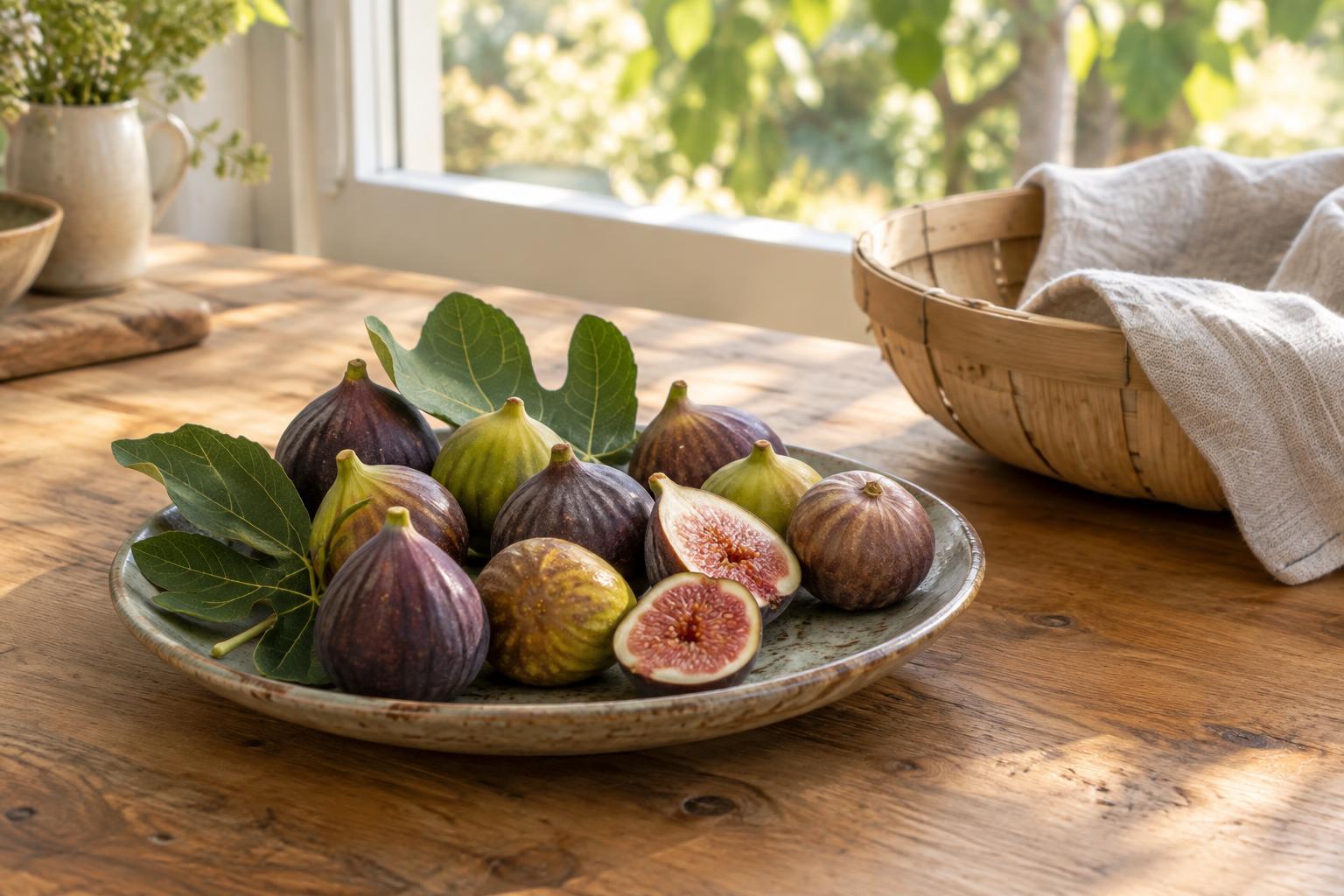
Fresh figs are one of the Central Valley’s most inviting ingredients, but their soft skin makes them less forgiving than sturdier fruit. At a market or farm stand, look for figs that feel plump and yield slightly to gentle pressure. A ripe fig may have a relaxed shape rather than a perfectly round one. It should smell pleasantly fruity or mild, not sharp or fermented. Handle only the fruit you intend to buy, and use a light touch when checking it.
Color depends on the variety. Some figs remain green or yellow-green when ripe, while others deepen to purple, brown or nearly black. Instead of looking for one ideal shade, seek fairly even color for the variety on offer and skin that looks intact. Small surface marks or a slight split can be normal on a ripe fig. Pass over fruit with fuzzy mold, extensive leaking, badly crushed areas or an unpleasant smell. If you are unsure whether a pale fig is ready, ask the grower or seller what ripeness looks like for that batch.
Buy for when you plan to eat them
A fig that is ready to eat today is a good choice for a snack, salad or dessert that evening. If you need the fruit to last a little longer, choose figs that are gently firm rather than very soft, while avoiding hard, dry-feeling fruit. Figs may soften after picking, but they do not reliably develop the same sweetness they would have gained on the tree. Buying underripe fruit with the expectation that it will become rich and jammy on the counter can be disappointing.
Consider buying fewer figs more often if that fits your routine. Their appeal lies in their tender texture, which is also what makes them easy to bruise. Set them on top of heavier groceries for the trip home, preferably in a shallow container rather than a tightly packed bag. If a container includes both firm and very soft figs, plan to eat the softest ones first.
Store them gently at home
For figs you will eat soon, a cool spot out of direct sun can work for a short wait. Check them regularly, especially in a warm kitchen. For longer storage, refrigeration is the more dependable choice. Arrange the figs in a single layer in a shallow container lined with a clean, dry paper towel. Cover them loosely so they are protected without being pressed together or trapped in excess moisture.
Wait to wash figs until just before serving. Water left on their delicate skins can make them deteriorate faster in storage. Check refrigerated fruit each day and remove any fig that begins to spoil so it does not affect its neighbors. Fresh figs are best treated as a short-term ingredient, not something to tuck away and forget. Before eating, let chilled figs sit briefly at room temperature if you prefer a softer texture and fuller flavor.
Put ripe figs to work
The simplest way to enjoy a good fig is to rinse it gently, pat it dry and eat it as it is. The skin is edible, so peeling is a matter of preference. For a relaxed platter, halve the figs and pair them with yogurt, soft cheese or toasted nuts. Their sweetness also works alongside peppery greens and a tangy dressing. Add cut figs just before serving so they keep their shape and do not release too much juice onto the plate.
Very soft figs that are still sound can go into quick preparations rather than a fruit bowl. Spoon them over oatmeal, fold them into a simple compote or roast them briefly until they slump and turn syrupy. Trim and discard any genuinely spoiled portion; if a fig has mold or an off smell, discard the whole fruit. Ripe figs need little embellishment, which makes them especially useful for casual meals when the ingredient itself can do most of the work.
Save extras before they fade
If you have more ripe figs than you can eat, freezing is an option for fruit you plan to cook or blend later. Rinse and dry them thoroughly, remove the stems, and freeze them in a single layer before transferring them to a freezer-safe container. You can leave small figs whole or halve larger ones. Once thawed, they will be softer than fresh figs, so use them in smoothies, sauces or baked dishes rather than expecting them to hold a neat shape on a platter.
The best storage plan begins at the point of purchase: choose sound fruit, protect it on the way home and decide which figs to enjoy first. With that little bit of attention, fresh Valley figs can move easily from a market basket to an afternoon snack or an unfussy shared meal.