Start with what you plan to make
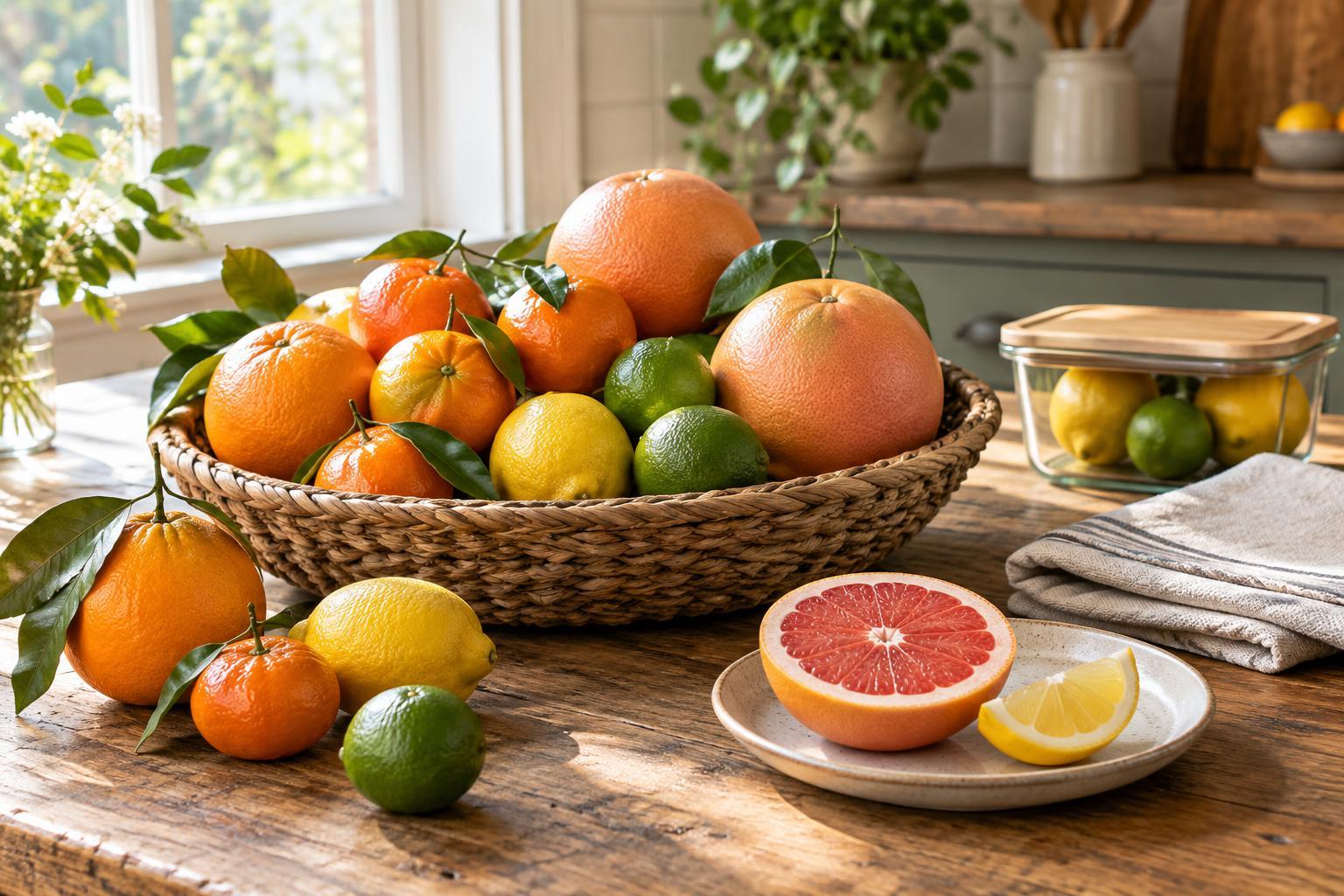
A basket of citrus can serve several purposes in a home kitchen: mandarins for easy snacks, oranges or grapefruit for breakfast, and lemons or limes for cooking. Before you shop, think about whether you want fruit to peel, juice, slice or zest. That small decision helps you buy an amount you can use and choose fruit suited to the job.
Selection changes through the growing season and from one market to another, so let what looks good guide you rather than relying on a rigid shopping list. If a seller offers more than one variety, ask whether it is especially sweet, tart, easy to peel or good for juice. Those qualities may be more useful than the variety name alone.
Choose by feel as well as appearance
Pick up a few pieces of the same type and compare them. Citrus that feels heavy for its size often has plenty of juice. Look for skin that is intact and fruit that feels firm, with a little give rather than a soft spot. A few superficial marks are usually less concerning than a bruised, leaking or moldy area. If you plan to use the zest, choose fruit with a peel you can clean easily.
Color is helpful, but it does not tell the whole story. Shades vary by variety and growing conditions, and a slight green tint does not necessarily mean a piece of citrus is unusable. For fruit you will eat out of hand, peeling ease and flavor matter most; for juicing, weight and firmness are useful clues. When possible, buy one or two unfamiliar varieties to try before bringing home a large bag.
Match storage to your timeline
If you expect to use whole citrus soon, keep it in a cool spot out of direct sun where air can circulate around it. A bowl on the counter makes fruit easy to remember, but check it regularly: one damaged piece can deteriorate while the rest still looks fine. Separate any fruit with a soft or moldy area rather than leaving it in the bowl.
For longer storage, use the refrigerator. A produce drawer or a loosely closed bag helps keep fruit from drying out while avoiding trapped moisture. Put citrus away dry, and inspect it occasionally so you can use pieces that are starting to soften first. Storage time varies with the fruit’s condition when purchased and with your kitchen and refrigerator, so let its texture and appearance guide you.
Handle cut fruit and zest with care
Wash citrus under running water before cutting or zesting it, even if you will discard the peel; the knife can carry what is on the outside into the fruit. Dry it with a clean towel. For zest, remove only the colorful outer layer when you can, since the white pith underneath can taste bitter. Zest before squeezing to make the task easier.
Once citrus is cut, cover it and refrigerate it promptly. Store wedges, segments or squeezed halves in a clean, airtight container and use them within a few days for the best flavor and texture. If you have more juice than you need, freezing it in small portions can make it easier to add a little to a dressing or sauce later.
Use the whole purchase thoughtfully
A good citrus habit is to sort your fruit when you get home: keep a few pieces handy for the next meal and refrigerate the rest. Put any fruit that needs using first where you will see it. A softer orange may still be excellent squeezed into a glass, while a firm lemon can wait for a weeknight marinade or a squeeze over roasted vegetables.
Citrus is useful beyond juice. Add segments to a salad, stir zest into a simple yogurt sauce, or brighten a pot of cooked beans with lemon just before serving. Taste before adding more: sweetness and acidity differ from fruit to fruit. Choosing carefully, storing according to your plans and using what you have on hand are the simplest ways to make a market bag of Central Valley citrus go further.