One fruit, three different goals
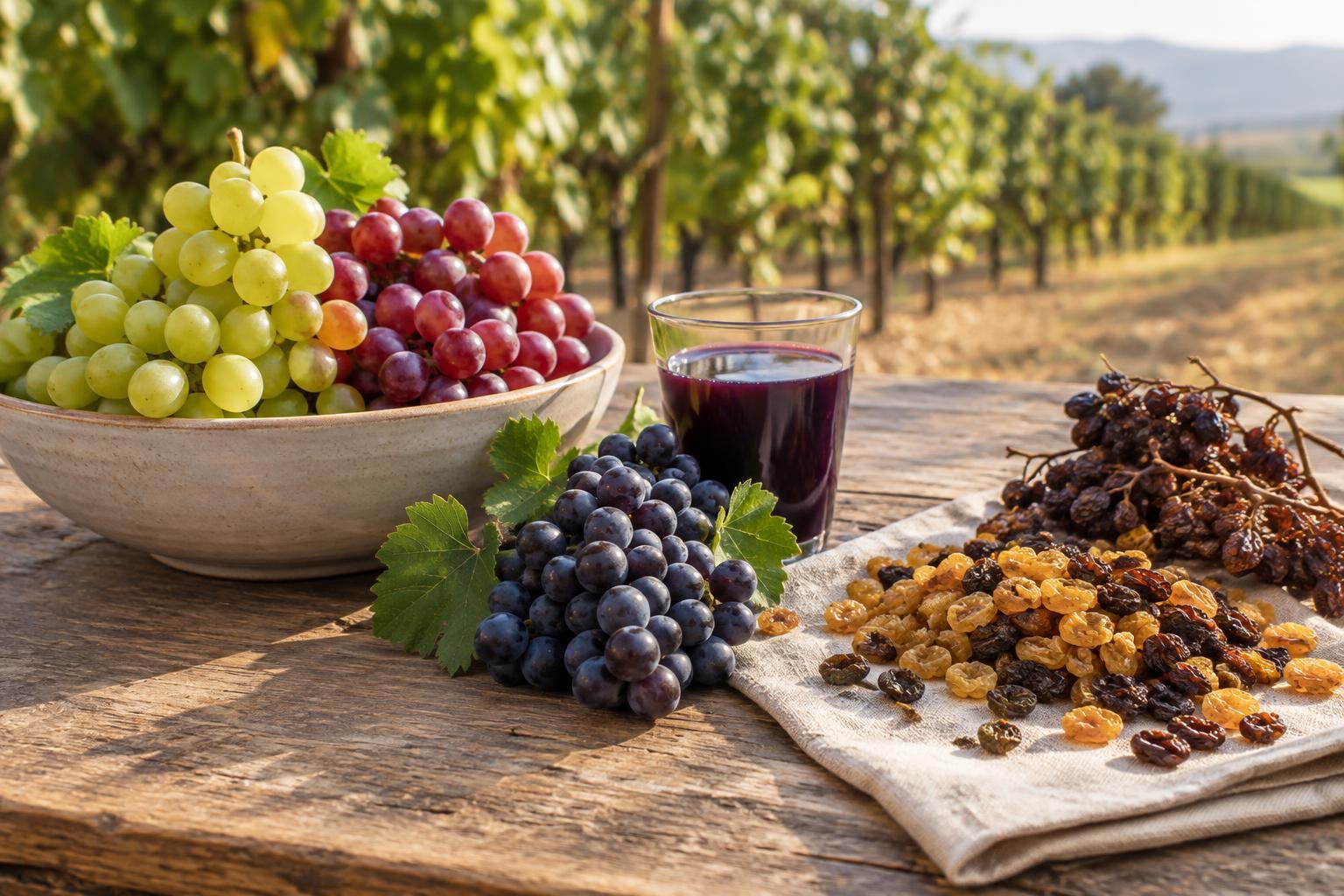
In California’s Central Valley, grapes can turn up in a fruit bowl, a glass or a bag of raisins. Those destinations help explain the familiar labels “table grape,” “wine grape” and “raisin grape.” They describe how grapes are selected and used, not three entirely separate kinds of fruit.
Grape varieties differ, and growers also make choices about how to tend and harvest them. A grape meant to be eaten fresh needs to hold up well from vine to hand. One meant for wine is valued for what it contributes after crushing and fermentation. A raisin grape needs to dry into a pleasant, usable fruit. The categories can overlap: some seedless varieties are eaten fresh and dried as raisins.
Table grapes: made for eating fresh
Table grapes are the grapes you’re most likely to serve in a bowl or pack for a picnic. They’re generally chosen for an appealing fresh texture, a balance of sweetness and tartness, and a skin that makes them enjoyable to bite into. Many popular table grapes are seedless, though seeded ones are available too. Colors and flavors vary by variety; color alone won’t tell you whether a grape is sweet.
Because they’re meant to be eaten whole, appearance and firmness matter. When shopping, look for grapes that seem plump and are still firmly attached to their stems. A pale, powdery-looking coating on the skin can be the grape’s natural bloom; it isn’t necessarily a sign that anything is wrong. Refrigerate grapes and rinse them just before serving so they stay fresh longer.
Fresh grapes work beyond the snack bowl. Halve them for a grain salad, add them to a cheese plate or roast them briefly for a soft, juicy topping. Cut grapes appropriately when serving young children, since whole grapes can be a choking hazard.
Wine grapes: valued for juice, skins and structure
Wine grapes are grown for fermentation rather than easy snacking. Compared with many table grapes, they tend to be smaller and often have seeds. Their juice, skins and sometimes seeds all influence the finished wine. Depending on the variety and how it’s processed, a winemaker may be looking for particular levels of sweetness and acidity, aromas, color or tannins—the compounds that can give wine a drying sensation in the mouth.
You can eat a wine grape, but it may feel different from a crisp table grape. Its skin can be more noticeable, and seeds may interrupt the bite. Likewise, a supermarket table grape could be fermented, but it may not produce the flavors or structure a winemaker wants. The distinction is about suitability for a purpose, not whether one grape is inherently better than another.
The way the fruit is handled matters as much as the label. For many wines, harvested grapes are crushed or pressed, and yeast converts sugars in the juice into alcohol. Choices about contact with skins help shape the result, particularly for color and texture.
Raisin grapes: chosen to dry well
Raisins begin as fresh grapes. Many are made from seedless varieties, which give you a convenient dried fruit without seeds in every bite. Grapes may be dried using sunlight or controlled drying methods. As water leaves the fruit, it shrinks and its sweetness becomes more concentrated in each bite.
That change in moisture explains why a raisin doesn’t taste or behave like a small table grape. It is chewy rather than juicy, travels well in a snack mix and can add sweetness to dishes without adding much liquid. A grape suited to raisin production needs to yield a dried fruit with a useful texture and flavor; not every fresh grape will dry in the same way.
Raisin color isn’t a simple guide to the fresh grape’s color. Drying and handling methods can affect the final appearance. For home cooking, the more useful distinction is texture: plump raisins are welcome in oatmeal and baked goods, while a brief soak can soften firmer ones before they go into a salad or stuffing.
How to choose the right grape for your table
Start with what you want to make. For a fresh platter or a crisp contrast in a salad, choose table grapes you enjoy eating out of hand. For baking, trail mix or a pantry-friendly addition to a rice dish, reach for raisins. If a recipe calls for wine, use a wine you would choose for that dish rather than assuming fresh grapes will provide the same result.
These labels are useful shortcuts, but they leave room for variety. A seedless grape can be delightful fresh and also make a good raisin; a wine grape can be tasted right off the vine. Thinking about the desired texture and use is the simplest way to tell the three apart—and to put each one to work in a relaxed Central Valley kitchen.