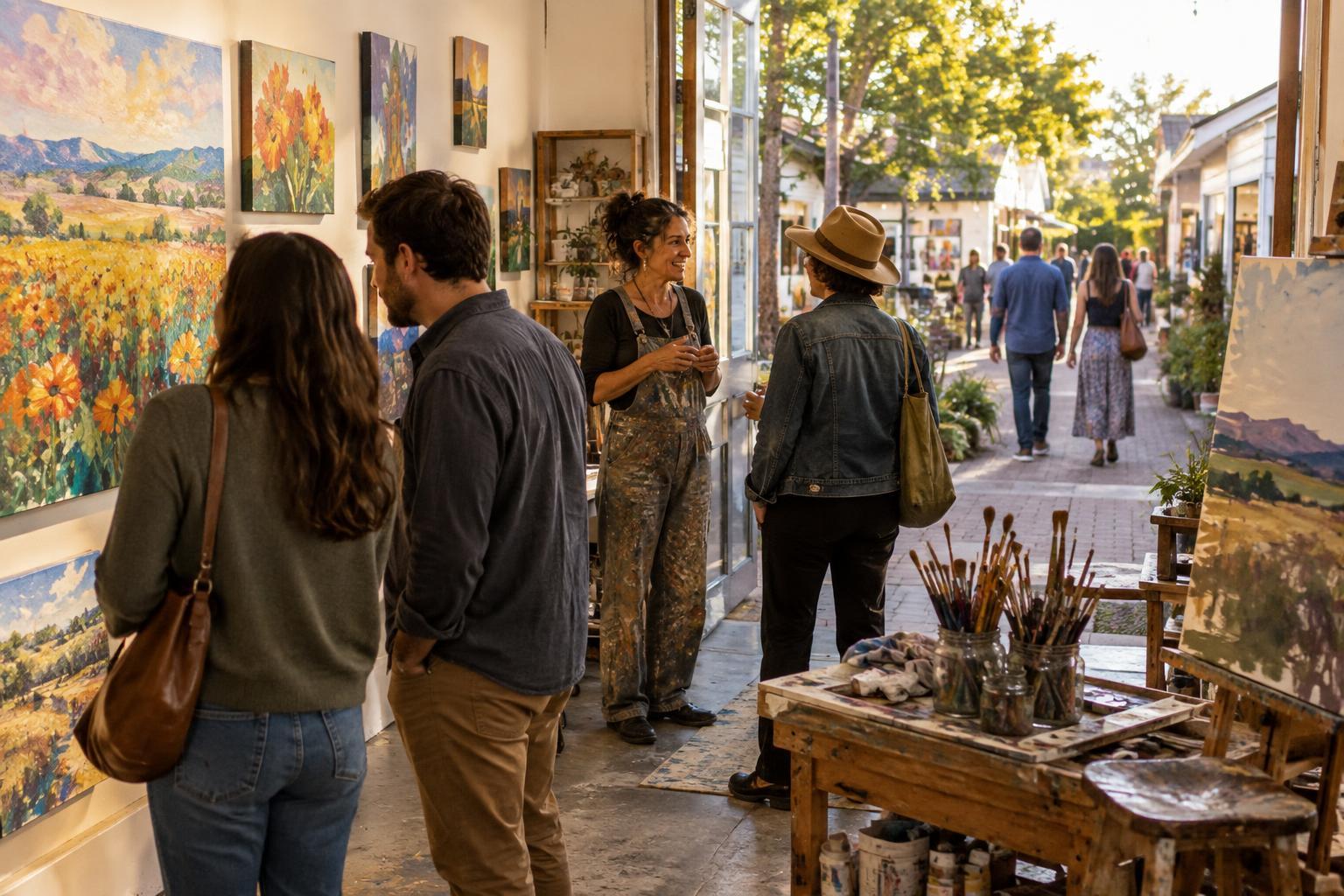
Two ways into a local art scene
You do not need to know much about art to enjoy an outing built around it. You might notice a color that reminds you of a valley sunset, recognize a familiar landscape in a photograph, or simply enjoy seeing what a neighbor has made. Art walks and open studios both make room for that kind of curiosity, but they offer different experiences.
An art walk usually links several public-facing stops, such as galleries, shops, community spaces or temporary exhibits, within an area you can explore at your own pace. An open-studio event invites visitors into artists’ working spaces, sometimes spread across a wider area. Details vary by organizer, so treat those as starting points rather than guarantees. For a first outing, the best choice is the one that matches how you like to spend your time.
Choose an art walk for variety and flexibility
An art walk is a good fit if you want a casual introduction with plenty of options. You can step into one space, stay for a few minutes, then move on. A single route may bring together painting, photography, ceramics or other work, giving you a feel for different artists without asking you to commit to one stop. If you are going with friends, the changing scenery can keep the conversation moving.
Before you go, look for an organizer’s map or list of participating spaces. Check the hours, the distance between stops and whether you will need to drive between them. In Central Valley communities, a route that looks short on a map may feel different in summer heat or after dark. Comfortable shoes, water and a simple plan for getting home can make the outing more enjoyable. You can also pick just two or three stops; there is no need to complete the whole route.
Choose open studios for a closer look at the process
Open studios may appeal more if you like seeing where and how things are made. A working space can offer clues that a finished piece cannot: sketches nearby, materials on a table or several works at different stages. Some artists welcome questions about their process, while others may be busy speaking with visitors. Follow the host’s cues, respect any marked boundaries and ask before photographing the space or the art.
Studios may be in homes, shared workspaces or other locations, and their accessibility and amenities can differ. Check the event information for addresses, parking, entry instructions and any access details that matter to you. If the studios are spread out, choose a small cluster instead of trying to see everything. Allow time to pause and look closely. The pleasure of this outing is often in slowing down, not in collecting the most stops.
Make conversation feel easy
You are allowed to look quietly. You are also allowed to ask a simple question, even if you cannot name a technique or style. “What drew you to this subject?” or “How did you choose these materials?” can open a conversation without asking the artist to give a formal explanation. You can share what caught your eye, too. Specific observations tend to be more useful than worrying about saying the ‘right’ thing.
Neither outing requires a purchase. If work is for sale and you are interested, it is fine to ask about the price or how a piece should be cared for. If you are only browsing, a thank-you before you leave is enough. For families, discuss looking with your eyes and asking before touching; then give younger visitors a small prompt, such as finding a favorite shape or color. It can help everyone engage without turning the visit into a test.
Pick a first stop, not a perfect itinerary
If you prefer a lively, mix-and-match outing, try an art walk. If you would rather spend longer with a few artists and their working spaces, try open studios. Unsure? Choose whichever event has the clearest information about hours, location and access, then plan a manageable visit. Going alone can make it easier to follow your curiosity; bringing a friend can make an unfamiliar setting feel more comfortable.
The Central Valley’s towns and neighborhoods offer many possible settings for creative gatherings, from downtown blocks to quieter workspaces. Rather than setting out to judge everything you see, notice what stays with you afterward. A texture, a story about a material or a conversation at one stop is enough to make the outing worthwhile. You can always explore another route or studio on a different day.