Choose for the hour, not just the season
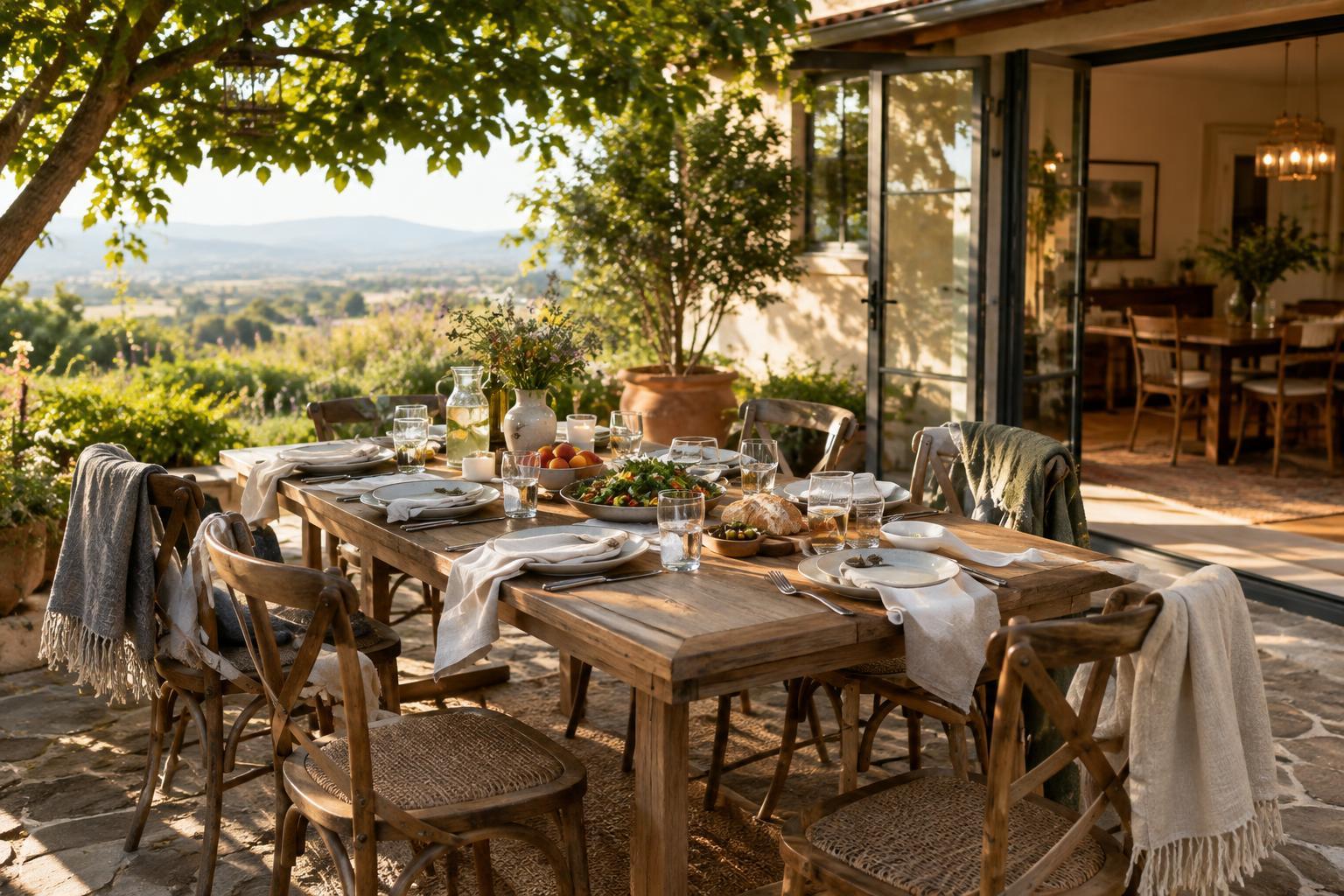
A backyard table can feel inviting when the light is soft and the air is comfortable. The same spot may be too exposed earlier in the day or chilly after sunset. Before deciding where to put the chairs, think through the full span of your gathering: when guests will arrive, when food will be served and when people are likely to linger.
Walk through your space at roughly those times if you can. Notice where shade falls, whether pavement gives off heat and which seats catch a breeze. Central Valley conditions vary by place and day, so a forecast and a quick look outside are more useful than a rule based on the calendar. If the outdoor setup works well for only part of the evening, plan around that part rather than asking guests to endure the rest.
Make comfort the deciding factor
An outdoor gathering needs more than a table that fits everyone. Guests should have a comfortable place to sit, drinks within reach and a clear route to the restroom. For a warm afternoon, prioritize reliable shade and plenty of water. For a cooler evening, consider whether people can move away from a draft or reach for an extra layer. If you cannot offer those basics outdoors, an indoor dinner may be the more generous choice.
Wind deserves its own check. A light breeze can be pleasant, but stronger gusts can scatter napkins, cool food quickly and make conversation harder. Keep table settings simple, use sturdy serving pieces and skip decorations that need to be rescued. If smoke, dust or other air conditions make being outside uncomfortable, move the gathering indoors rather than treating the backyard plan as a commitment.
Let the meal help choose the room
A casual menu often travels well between spaces. A platter of sliced seasonal fruit, a bowl of beans or grains, and dishes that taste good warm or at room temperature can be served at a backyard table or carried inside without much fuss. Keep foods that need chilling cool until serving, and avoid leaving perishable dishes out for an extended stretch.
The cooking plan matters, too. If you expect to make several last-minute trips between the kitchen and the table, an indoor meal may leave you more time with your guests. If most of the food can be prepared ahead and brought out at once, the backyard becomes easier to enjoy. Choose serving dishes, not just recipes, with the possible move in mind: a few portable platters are simpler to relocate than a crowded buffet.
Build a backup that feels intentional
A flexible plan does not require setting two elaborate tables. Clear an indoor surface, make sure there are enough seats and decide where serving dishes will go if you move in. Keep glasses, utensils and a few extra napkins easy to reach. Then you can start outside when conditions are pleasant without turning a change of plans into a scramble.
Tell guests the plan in plain terms: you hope to eat outdoors, but you may move inside for comfort. That small expectation makes the transition feel natural. You can also split the gathering deliberately, offering a drink or snack outside before sitting down to dinner indoors. It gives everyone a chance to enjoy the evening air without depending on it for the entire meal.
Keep the setup relaxed
The best choice is not necessarily the most picturesque one. It is the setup that lets people settle in, reach the food and talk without constantly adjusting to the conditions. A shaded backyard table may be perfect for an early meal; an indoor table with the door open may suit a changeable evening. Let the space serve the gathering, not the other way around.
Once you have chosen, leave yourself room to adapt. Put water in an easy-to-find spot, keep the menu manageable and ask for a hand carrying dishes if the group moves. Valley hosting can be wonderfully informal: good food, a comfortable seat and the freedom to change rooms are enough to make people feel welcome.