Start with the experience you want
A first art workshop does not have to reveal a hidden talent or launch a new hobby. It can simply be an afternoon spent trying something unfamiliar alongside other people. Across the Central Valley, making things by hand can offer a welcome change of pace from work, errands and screens. The best starting point is not the medium that looks most impressive. It is the one whose process sounds enjoyable to you.
Before comparing classes, ask yourself a few questions. Do you want to shape an object, build an image or work with color and texture? Would you rather repeat a small action until it feels comfortable, or experiment freely and see what happens? Think, too, about what you would like to bring home: a useful piece, a series of prints, or something you can wear or display. Your answers will help narrow the choices without turning a creative outing into a test.
Ceramics: a slow conversation with clay
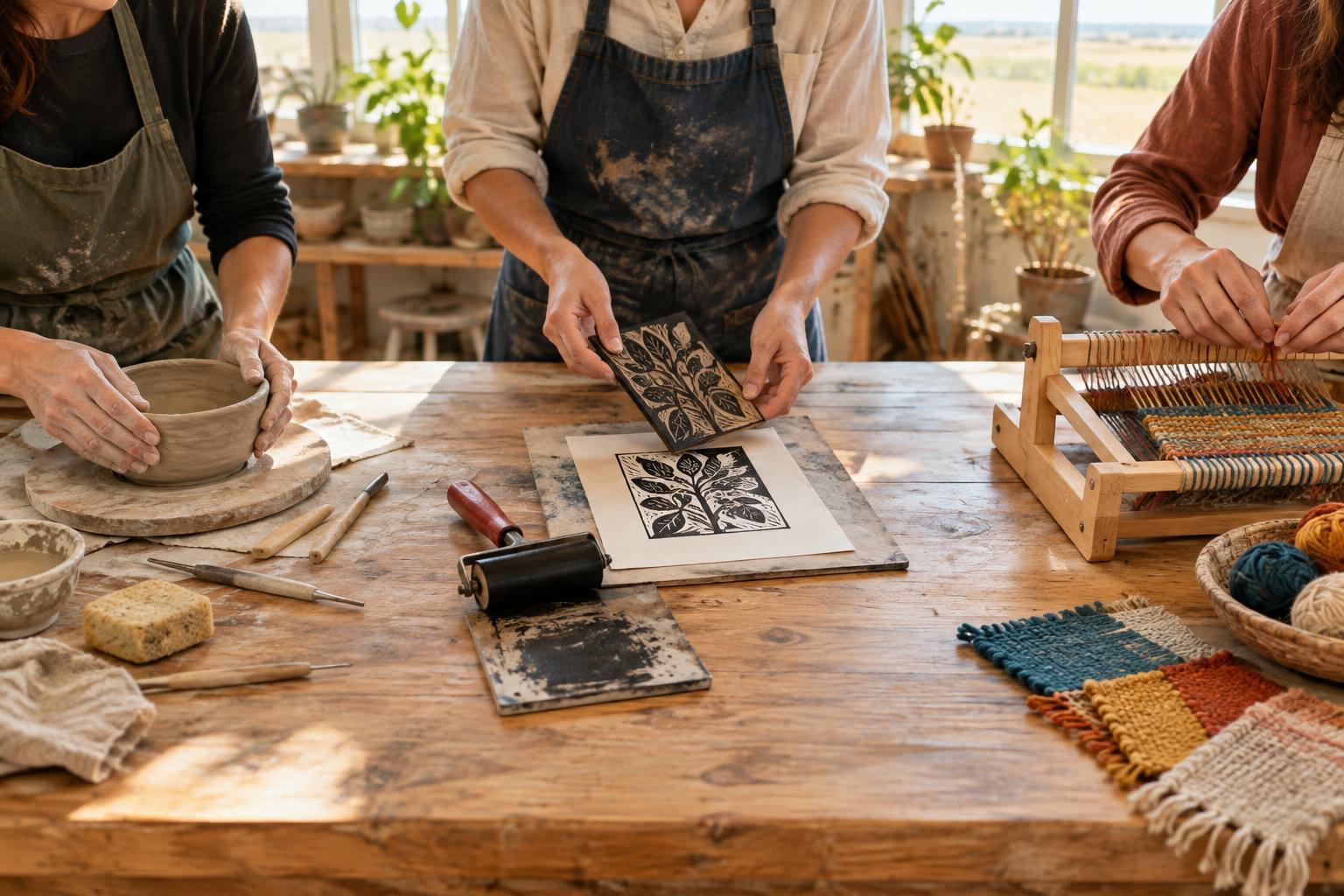
Ceramics workshops invite you to work with a material that responds to pressure, moisture and time. A beginner class might focus on hand-building, such as pinching a small bowl or joining flat pieces of clay. Another might introduce the pottery wheel. Hand-building often allows more room to pause and adjust; the wheel tends to involve a distinct physical rhythm and plenty of practice. If you have a preference, check which approach the class actually teaches.
Clay can be messy and forgiving in some moments, stubborn in others. Wear clothes you do not mind getting dusty or splashed, and keep your expectations flexible. Ask when finished pieces will be ready and whether glazing or firing is included. Ceramic work often needs to dry and be fired after the workshop, so taking a completed piece home the same day may not be possible. Choose ceramics if you enjoy learning through touch and can appreciate a process that does not reveal its final result immediately.
Printmaking: make an image, then make it again
Printmaking is a good fit for people who like patterns, bold shapes or the surprise of lifting a finished impression. Depending on the workshop, you might carve a small block, arrange shapes for a simple stamp, or use a prepared screen or plate. The basic pleasure is similar: create a surface, apply ink and transfer an image onto paper or fabric. Small changes in pressure, placement or color can give each print its own character.
A class description should tell you which technique is involved. Carving tools, inks and shared equipment vary, so it is worth checking whether the workshop is designed for complete beginners and what materials are provided. If you feel unsure about drawing, look for a session built around simple shapes or repeated patterns. Printmaking can be especially satisfying when you want to leave with several related pieces rather than one precious object. It also gives you something to trade or share with a friend after class.
Textiles: explore color, texture and repetition
Textile workshops can mean many different things: visible mending, embroidery, weaving, dyeing or simple sewing, among others. Read beyond the word “textiles” to learn what you will actually do. A small embroidery project may suit someone who wants a portable skill to practice later. Weaving may appeal if you enjoy watching a pattern develop row by row. Mending can feel rewarding when you would like to give an existing garment or household item more life.
Textile work often involves repeated motions and choices about color and texture. That can feel calming, though some techniques demand close attention or fine hand movements. Ask whether tools and fabric are supplied, whether you should bring an item, and whether beginners can finish a project during the session. If handwork is difficult for you, contact the organizer to ask about the tools, pace and possible alternatives. A welcoming class should make its expectations clear before you arrive.
Choose the class, not just the craft
Once a medium catches your interest, the workshop details matter as much as the finished project. Look for a beginner label, a clear description of what is included, and a realistic account of what you will make. Consider the session length, group size, cost and location. If the listing leaves you wondering whether you need supplies or prior experience, ask before booking. You can also ask about seating, breaks and accessibility needs rather than guessing how the space will work.
Going with a friend can make the first step easier, but attending alone gives you a natural reason to meet someone at the table beside you. Either way, give yourself permission to make an imperfect first piece. A workshop is a chance to notice how a material feels in your hands, learn from a teacher and share space with other curious people. If you leave knowing which part you would like to try again, you have already made something valuable.