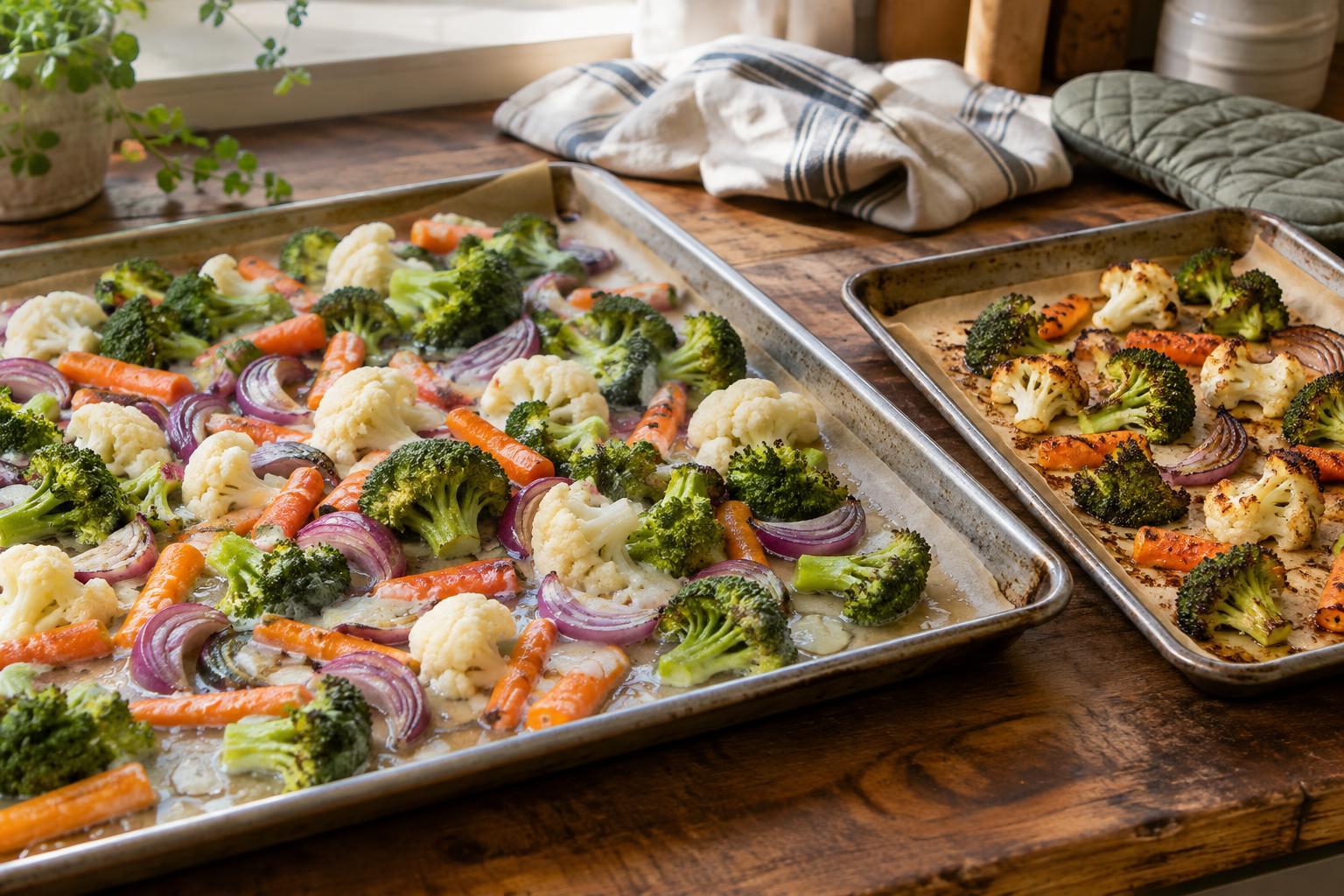
Mistake 1: Putting wet vegetables on the pan
Roasting works best when moisture can leave the surface of the vegetables. Water left after washing has to evaporate before those surfaces can brown. Rinse produce ahead of time if you can, then drain it well and pat it dry with a clean towel. Pay particular attention to cauliflower florets, broccoli crowns and leafy vegetables, where droplets can hide in crevices.
Frozen vegetables need a slightly different approach. They may release a lot of water as they heat, so avoid thawing them into a puddle and then transferring that liquid to the pan. Spread them out while still frozen, and expect their texture to differ from fresh vegetables. Very juicy produce, such as tomatoes, can be delicious roasted without ever developing a crisp exterior.
Mistake 2: Crowding everything onto one sheet
A packed pan traps moisture around the vegetables. Instead of sitting in hot, relatively dry air, the pieces steam against one another. Give them room: aim for a single layer with visible space between pieces. If a batch will not fit comfortably, use two pans or roast it in rounds. A second pan is more useful than stacking vegetables higher on the first one.
The pan itself matters, too. A rimmed metal sheet pan gives you a broad surface for spreading food. A deep baking dish holds the vegetables closer together and can collect their juices, which is useful for some recipes but less helpful when you want browned edges. If you use two oven racks, switch the pans’ positions partway through cooking so they heat more evenly.
Mistake 3: Mixing pieces that cook at different speeds
Evenly sized pieces finish at roughly the same time. If a tray holds tiny carrot coins beside thick potato wedges, the carrots may soften long before the potatoes brown. Cut each type of vegetable into reasonably consistent pieces, keeping in mind that dense roots generally need more time than tender zucchini or asparagus.
You do not have to roast every vegetable separately. Start slower-cooking pieces first, then add quicker-cooking ones later. For a relaxed weeknight pan, try potatoes and carrots together before adding broccoli near the end. This lets you use one pan without leaving the tender pieces in the oven until they collapse. When combining vegetables, judge doneness by texture as well as color: a browned edge does not always mean the center is tender.
Mistake 4: Using too much oil or too cool an oven
Oil helps vegetables make good contact with the pan and encourages an appealing finish, but they do not need to sit in a pool of it. Toss pieces until lightly coated; if oil gathers at the bottom of the bowl, you may have added more than you need. Add more only if dry patches remain. A modest coating also helps seasonings cling without turning the pan greasy.
Give the oven time to preheat. A moderately hot oven, around 400 to 425°F, is a useful starting point for many sturdy vegetables, though delicate ones may do better with less heat or a shorter cooking time. Putting the pan into an oven that is still warming can leave vegetables softening slowly while they release moisture. If your oven browns food unevenly, rotate the pan rather than assuming every piece needs more time.
Mistake 5: Forgetting what happens after roasting
Check the pan during the final stretch. Some pieces may be ready before others, and a crowded or unevenly cut batch will make that more noticeable. Turn vegetables once if the undersides are browning much faster than the tops, but avoid constant stirring; leaving them in contact with the hot pan gives those surfaces a chance to color.
When the vegetables are done, do not leave them heaped together on the hot sheet under foil. Steam can soften the edges you just worked to brown. Serve them soon, or spread them out briefly while you finish the meal. Add juicy finishes, such as a squeeze of citrus or a spoonful of dressing, just before serving. Soggy vegetables are not ruined, either: fold them into a grain bowl, soup or frittata, and give the next batch a little more room.