Mistake 1: Treating the Studio Like a Drop-In Shop
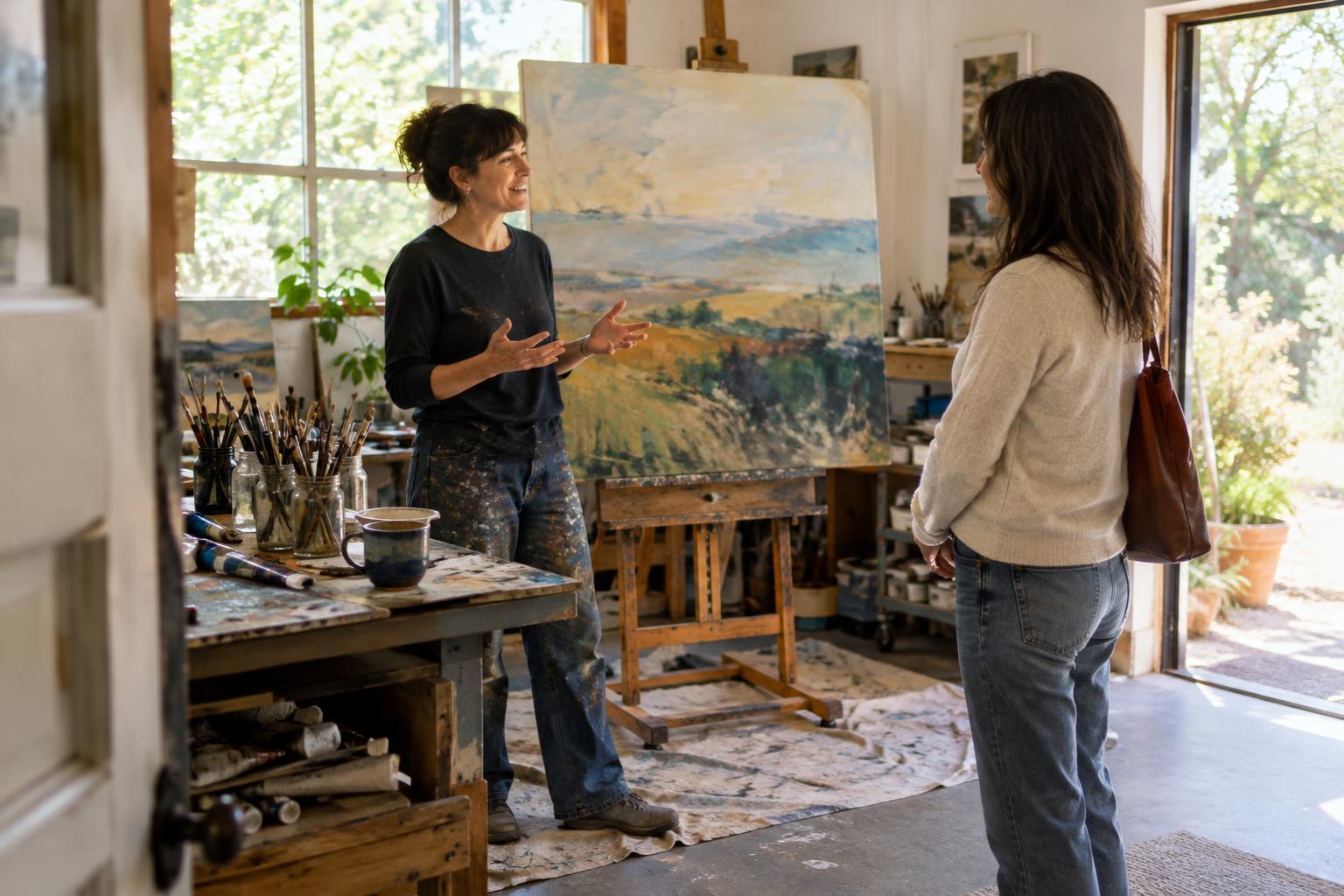
A studio may contain finished pieces, but it is first a place where someone works. Even during an open-studio event, an artist might be demonstrating a process, speaking with several visitors or trying to keep a clear path around tools and materials. Outside a public event, do not assume you can stop by because you saw an address on a flyer or social post. Check the stated visiting hours, make an appointment when requested and arrive within the agreed window.
If you are exploring a Central Valley arts event with friends, read each stop’s details before setting out. Studios may differ from galleries in their available space and accessibility. Ask ahead if you need step-free access, plan to bring a group or hope to visit with a child. When you arrive, take a moment to notice where guests are invited to stand and where work is still in progress.
Mistake 2: Handling Materials Without Asking
An unfinished piece can look sturdy while still being wet, fragile or carefully arranged. Sketchbooks, fabric samples, tools and works in progress may be part of the artist’s process rather than objects set out for visitors to explore. The simplest rule is to look first and ask before touching anything, including items that appear to be on a display table.
Give the artist room to move around an easel, workbench or kiln area, and keep bags and drinks close to you. If you are visiting with children, explain the look-with-your-eyes rule before entering and stay near them. Accidents can happen in any shared space; if one does, tell the artist promptly rather than trying to fix or move the object yourself. Respect for the workspace makes it easier for everyone to relax and talk.
Mistake 3: Assuming Photos and Posts Are Always Welcome
It is tempting to photograph a wall full of color or a table covered in intriguing materials. Yet a studio visit may reveal unfinished work, personal notes or techniques the artist is not ready to share. Ask before taking photographs or video, and listen for any limits on what may be captured. Permission to take a picture does not necessarily mean permission to post it online.
If you would like to share your visit, ask whether the artist prefers a particular name or account credit and whether a specific finished work is suitable to feature. Avoid including other visitors in a photo without their consent. You can also support an artist without a camera: remember the conversation, take a business card if offered or tell a friend what you appreciated about the visit.
Mistake 4: Turning Curiosity Into an Interrogation
Thoughtful questions can open up a memorable conversation. “What drew you to this material?” or “Is there a part of your process you enjoy showing visitors?” gives an artist room to answer at their own pace. A rapid string of questions about income, production time or the price of every object can feel less like curiosity and more like an examination. Some artists may enjoy discussing technique in detail; others may prefer to keep parts of their process private.
Notice the rhythm of the room. If several people are waiting to speak, keep your exchange brief and return later if the visit allows. Avoid comparing the work to a cheaper item or asking the artist to explain why art costs what it does. If you are genuinely interested in buying something, it is fine to ask what is available, how prices are listed and whether the artist has a preferred way to handle a purchase.
Mistake 5: Feeling You Must Buy, or Staying Too Long
A studio visit does not require a purchase unless the event says otherwise. You can look closely, ask a few respectful questions and leave with a sincere thank-you. That is more considerate than offering exaggerated praise or making a promise to buy later when you do not intend to. If you do want a piece but need time to think, ask whether there is a way to follow up; do not assume an item can be held.
Watch for signs that the visit is winding down, such as posted closing hours or the artist beginning to reset the space. Before leaving, make sure you have your belongings and have not blocked the doorway for the next guests. The best studio visits leave space for both discovery and work. Approach the artist’s space with curiosity, follow the boundaries they set and let a genuine conversation be enough.