Start with ripeness, not a rigid rule
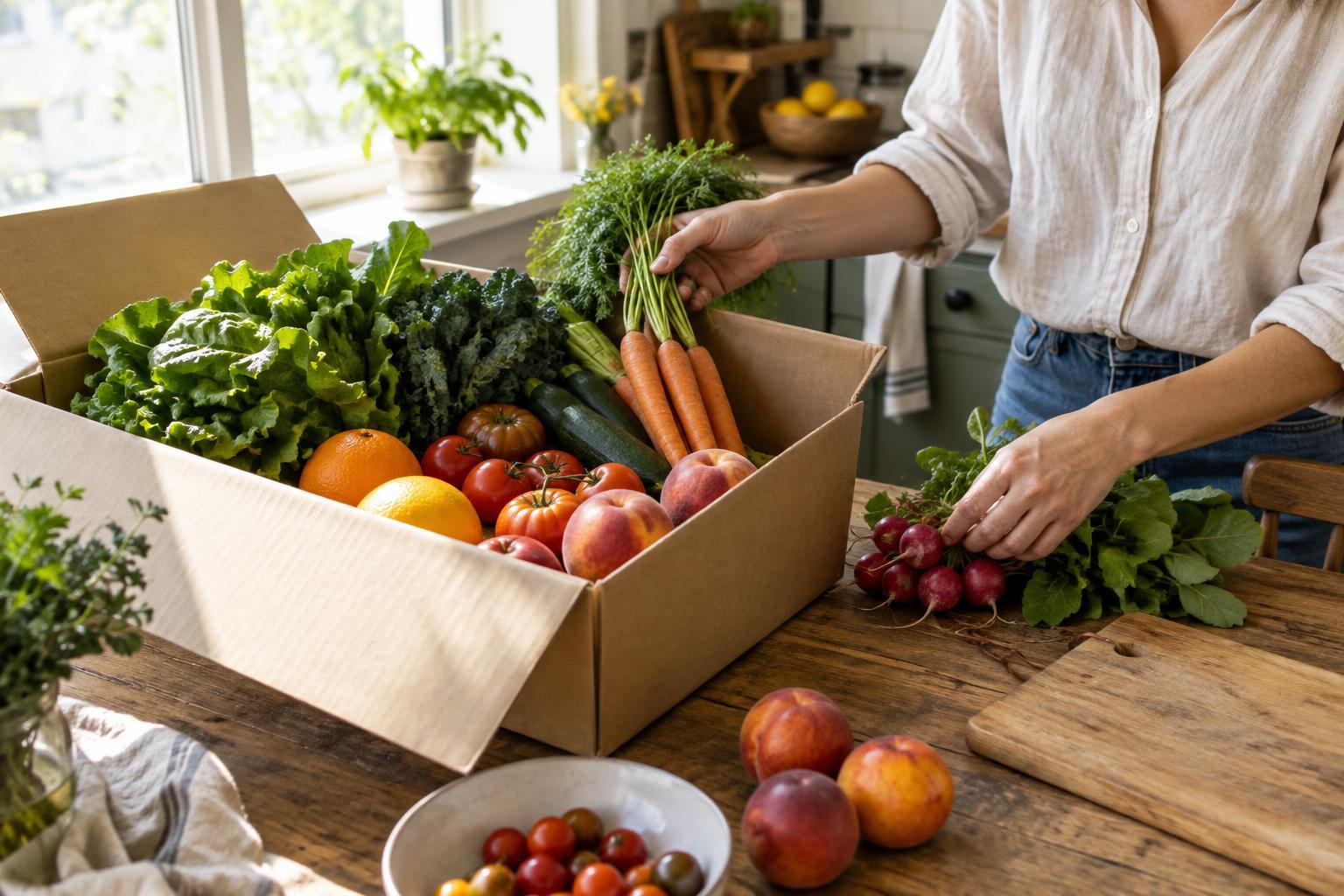
A bag of Central Valley produce might hold peaches ready for breakfast, firm tomatoes for later in the week and greens that need attention tonight. Before putting everything away, take a minute to sort it by ripeness and condition. Keep bruised or very ripe items where you will see and use them soon. Remove anything showing signs of spoilage so it does not sit against sound produce.
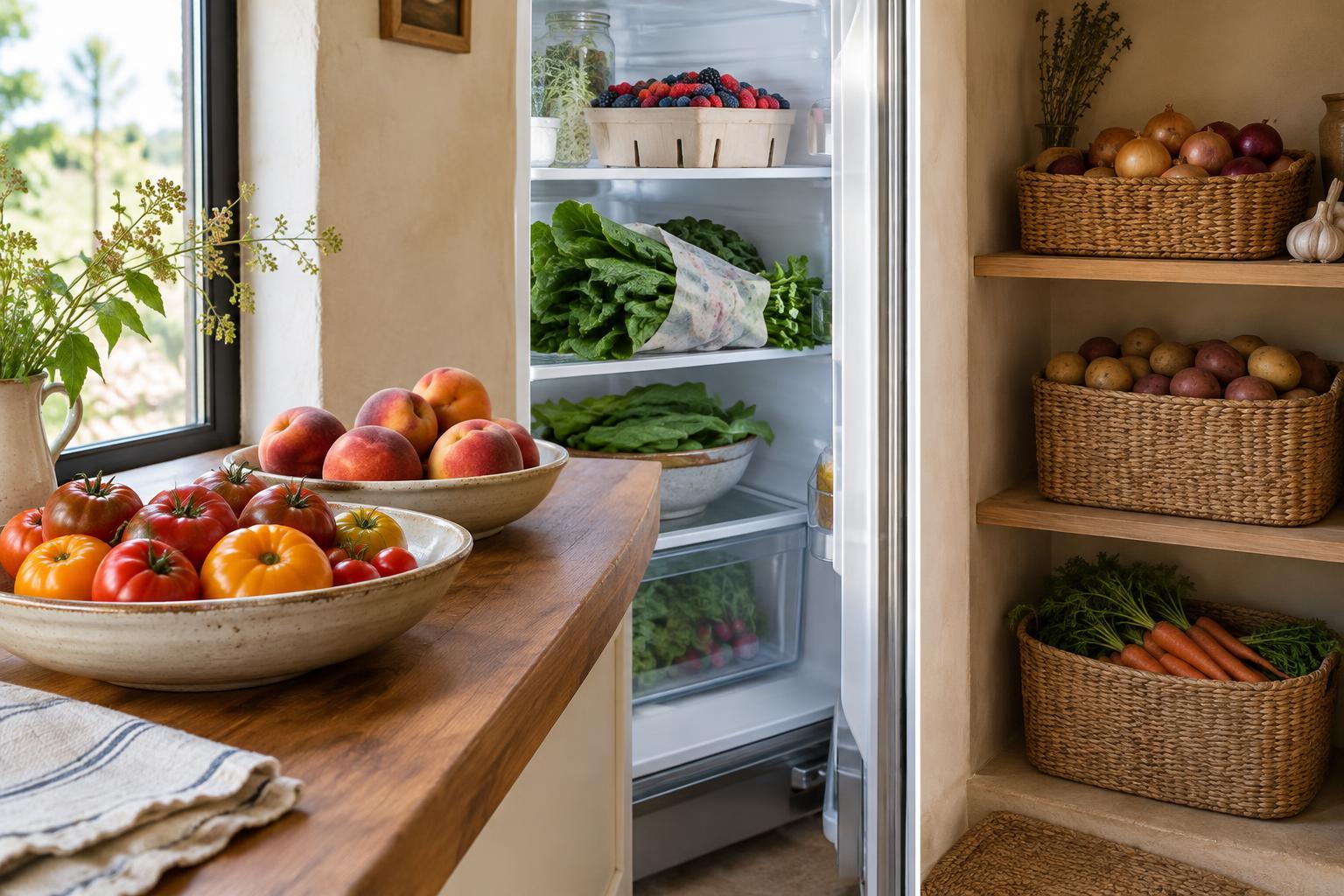
The counter, refrigerator and pantry each do a different job. The counter gives some fruit time to ripen. The refrigerator slows deterioration for delicate or already-ripe produce. A cool, dry, ventilated pantry suits certain bulbs and sturdy vegetables. These are starting points rather than promises about how long something will last: temperature, ripeness at purchase and handling all matter.
Use the counter for fruit that still needs time
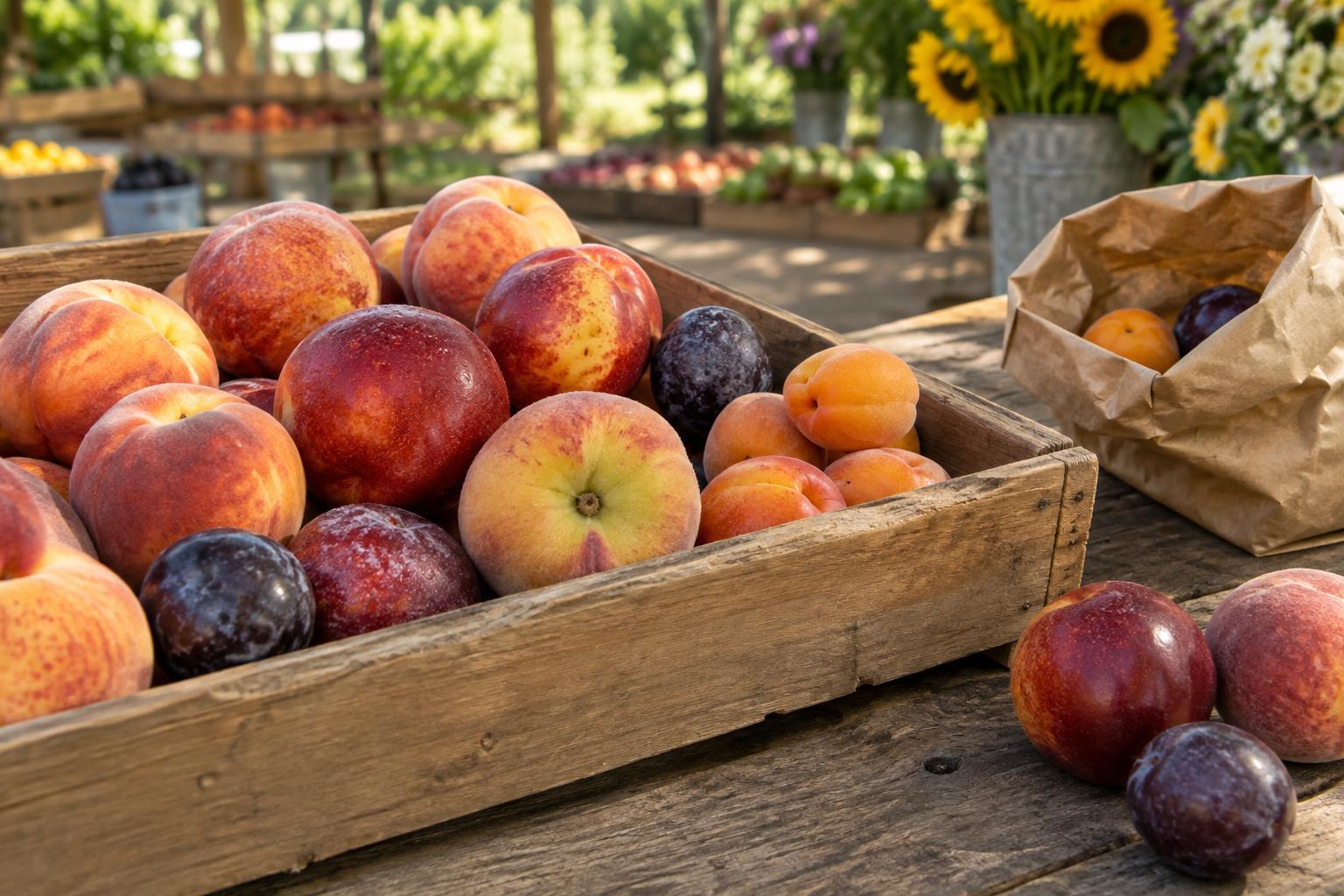
Firm peaches, nectarines, plums and apricots can sit at room temperature until they yield slightly to gentle pressure and smell fragrant. Check them daily rather than stacking them deep in a bowl, where soft spots are easy to miss. Once ripe, move them to the refrigerator if you are not eating them right away. Let chilled stone fruit warm a little before serving if you prefer its flavor and texture closer to room temperature.
Whole tomatoes are generally best kept on the counter while they ripen. Set them out of direct sun, with room around them, and use ripe ones promptly. Avocados can ripen there too, then move to the refrigerator when ready. An uncut melon may stay at room temperature while it finishes ripening; refrigerate it once cut. For anything cut or peeled, the counter is a serving spot, not a storage spot.
Give delicate produce space in the refrigerator
Berries need a different approach from stone fruit. Refrigerate them in a shallow, breathable container, and pick out damaged berries before storage. Washing just before eating helps avoid leaving them damp in the container. If you do wash ahead, dry them thoroughly. Ripe grapes also belong in the refrigerator; wash them when you are ready to use them. Citrus can sit out for a short stretch, but refrigeration is useful when you need to keep it longer.
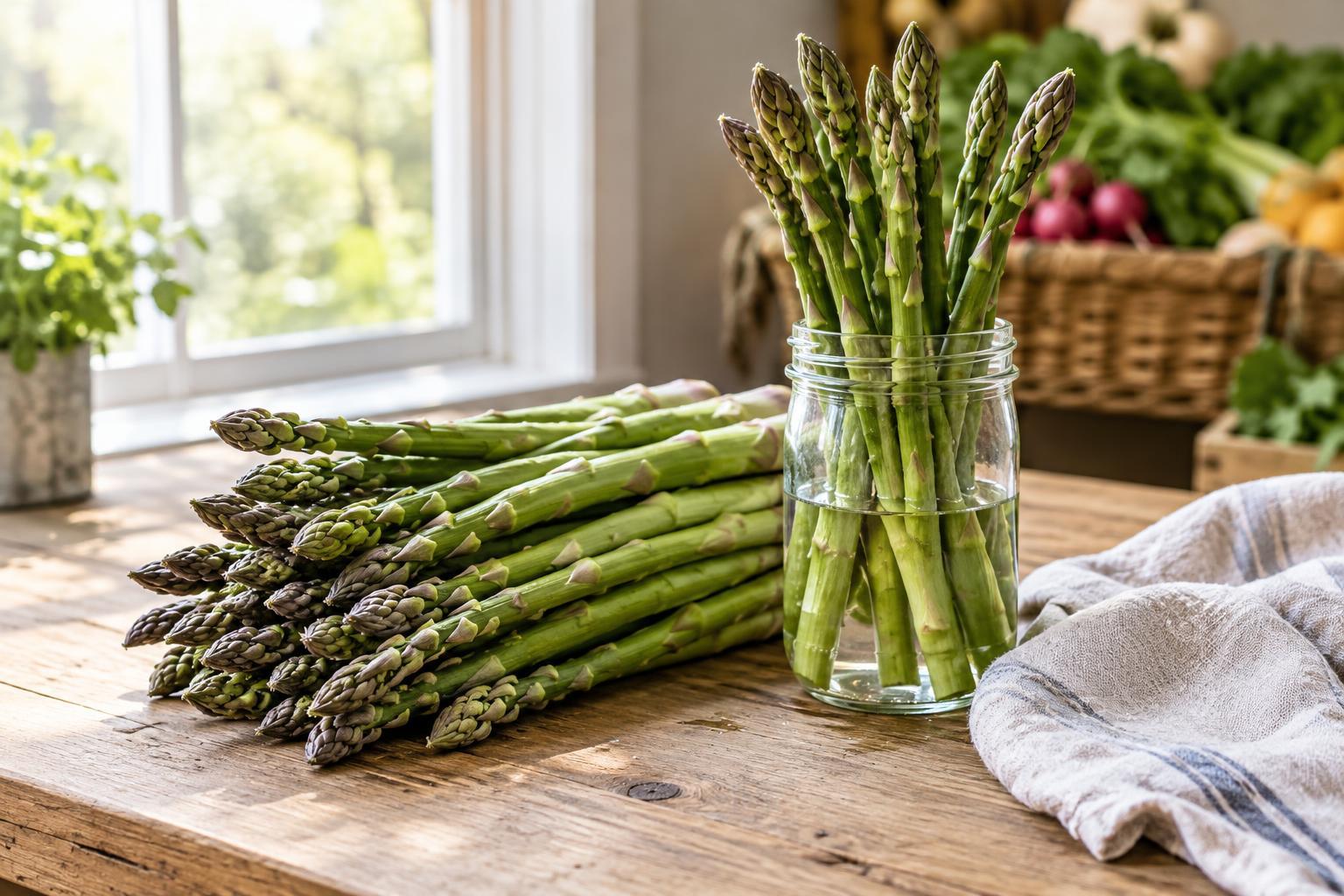
Leafy greens, carrots, radishes, peppers and many fresh herbs benefit from refrigeration. Keep greens in a bag or container with a towel to absorb excess moisture, without packing them tightly. Trim leafy tops from carrots and radishes before storing the roots, and use the tops separately if they are in good condition. Parsley and cilantro can stand with their stems in a little water, loosely covered in the refrigerator. Basil is an exception: it often fares better at room temperature, away from direct sun.
Use the crisper drawer to keep produce organized, but check inside packages for trapped moisture. The goal is not to dry everything out; it is to avoid soggy leaves and forgotten fruit. Refrigerate cut produce promptly in a covered container, and discard anything that smells off, feels slimy or shows mold.
Save a dry, airy pantry spot for sturdy staples
Whole onions and garlic prefer a dry place with airflow, away from direct sunlight. Potatoes do best in a cool, dark, ventilated spot rather than beside a sunny window or in a sealed plastic bag. Keep onions and potatoes in separate containers, and look through both regularly for soft or sprouting pieces. If a potato has developed green areas or tastes bitter, do not use it.
Whole winter squash also appreciates a dry, ventilated place. Set it where you can inspect the skin instead of burying it behind pantry staples. Once you cut a squash, wrap or cover the remainder and refrigerate it. A pantry that runs warm may shorten the useful life of all these items, so buy quantities that fit both your storage space and your cooking plans.
Make storage part of the cooking routine
A quick produce check can shape the next meal. Use tender greens and ripe berries first; plan tomatoes and stone fruit around when they soften; leave sturdy pantry vegetables for later. A bowl of sliced peaches, a tomato salad or greens folded into a simple supper can make good use of produce without turning storage into a complicated project.
Wash produce under running water before preparing or eating it, even when you plan to peel it. Keep cut fruits and vegetables covered and refrigerated, and use your senses and judgment when checking quality. The best system is one you can maintain: a visible counter bowl, an uncrowded crisper and a pantry shelf you remember to inspect.