Start with the job the herb needs to do
A handful of herbs can make a simple meal feel complete, whether it is a pot of beans, a tray of roasted vegetables or sliced tomatoes for the table. Fresh and dried herbs are not competing versions of the same ingredient. Drying changes their texture and often concentrates some flavors while softening others. The useful question is not which kind is better, but what you want the herb to contribute.
Choose fresh herbs when you want a bright aroma, a leafy texture or a finishing note that stands apart from the rest of the dish. Choose dried herbs when you want flavor to settle into a sauce, soup, braise or seasoning mix. Either can work in everyday cooking, but they usually belong at different points in the process.
Use fresh herbs for brightness and texture
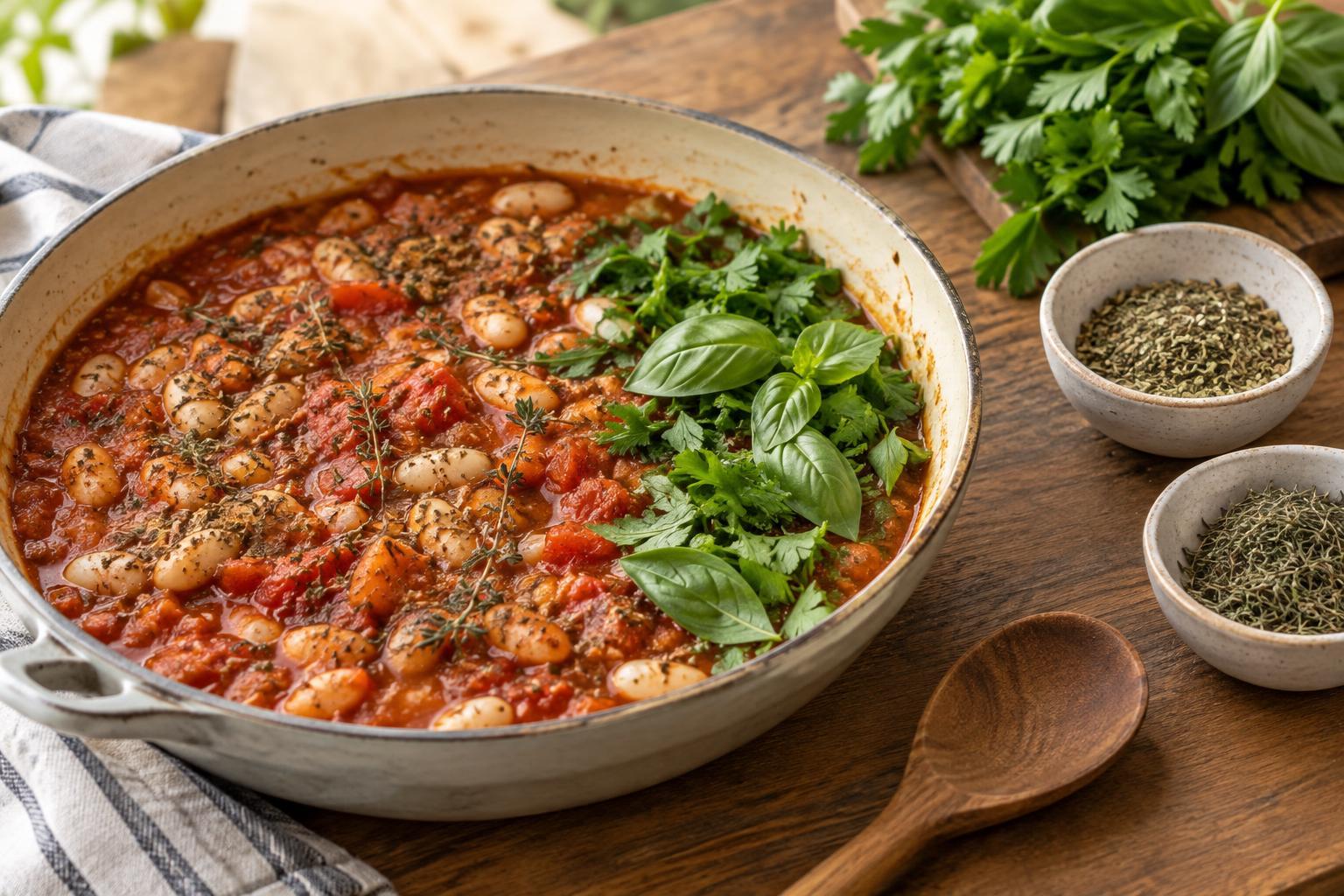
Tender herbs such as cilantro, parsley, basil, dill and mint often shine when added near the end of cooking or just before serving. Long heat can dull their aroma and turn their leaves limp. Stir chopped parsley into cooked beans, scatter basil over a tomato dish after it comes off the heat, or add cilantro to a bowl of soup at the table. A final squeeze of citrus can help those fresh flavors feel especially lively.
Fresh does not always mean last-minute. Sturdier herbs, including rosemary, thyme and sage, can flavor food while it cooks. A sprig of thyme in a pot of beans or a little rosemary alongside roasting potatoes has time to release its aroma. If you cook with whole woody stems, remove them before serving. Leaves added as a garnish should be tender enough to enjoy in a bite.
Wash fresh herbs when you are ready to use them, then dry them well, especially if they are going into oil or onto a finished dish. Water clinging to the leaves can dilute a dressing or make a garnish slump. For a relaxed meal, you can set out a small bowl of chopped herbs and let everyone add their own.
Let dried herbs spend time in the pan
Dried herbs are well suited to foods that cook long enough for their flavor to spread. Oregano can season a tomato sauce, dried thyme can round out a vegetable soup, and a pinch of dried rosemary can work its way into roasted vegetables. Add dried herbs early enough to soften and mingle with the other ingredients. Rubbing them briefly between your fingers as you add them can help release their aroma.
For a quick dish, dried herbs can still be useful. Add them to warm oil with garlic for a short moment before adding other ingredients, taking care not to scorch them. Or whisk them into a dressing and give it a little time to stand before tasting. Dried herbs sprinkled over a finished plate may taste dusty or uneven unless they have a chance to absorb some moisture.
Keep dried herbs sealed away from heat, light and steam. If a jar smells faint when opened and tastes flat in food, it may be time to replace it. Fresh herbs, meanwhile, are best used while their leaves are lively; storage can buy you time, but it will not restore flavor to a wilted bunch.
Substitute by tasting, not by matching handfuls
If a recipe calls for fresh herbs and you only have dried, start with less. One teaspoon of dried herbs for one tablespoon of chopped fresh herbs is a common starting point, not a rule: the strength of a herb depends on its type, age and how it was dried. Add a modest amount, let the dish cook or rest, and taste before adding more. When replacing dried herbs with fresh, begin with a little more and add them later in the cooking process.
Some swaps change the character of a dish more than others. Dried oregano or thyme can stand in comfortably when their fresh counterparts are unavailable. Dried basil may help season a sauce, but it will not give a finished plate the soft, fragrant quality of fresh basil leaves. Dried parsley often has a quieter presence than fresh parsley. If the herb is meant to be the main feature of a salad or sauce, it may be better to choose a different dish than to rely on a direct substitution.
Keep both kinds within reach
There is no need to stock every herb in both forms. Keep a few dried herbs you regularly use for pantry meals, then buy or pick fresh herbs when a dish calls for their distinctive lift. A week of home cooking might use dried oregano in a pot of sauce, fresh cilantro with tacos, and thyme in either form for roasted carrots.
When deciding at the stove, consider time and texture. Will the herb have time to mingle with the food, or should it remain noticeable in the final bite? That simple distinction makes it easier to season confidently, waste less of a fresh bunch and get more from the jars already in your cupboard.