Start with the kind of gathering
Before counting portions, decide what guests will reasonably expect to eat. An afternoon visit between meals can be built around snacks. A gathering that starts near dinnertime calls for a more substantial spread, even if the invitation says “casual.” Duration matters, too: people may return for another plate if they stay for several hours.
Make a guest list with a little flexibility. If ten people have confirmed, planning for roughly ten to twelve is a reasonable way to allow for an extra guest or a few larger appetites. You do not need to prepare every dish for twelve full servings. Instead, give yourself a cushion through foods that are easy to store or bring out as needed, such as crackers, whole fruit or an extra loaf of bread.
Estimate the food by its role
For a snack-focused get-together, begin with several different things to nibble on rather than a large amount of one item. As a starting point, plan around four to six small bites per person for a short visit, and more if snacks are the only food offered over a longer stretch. A bowl of nuts, cut vegetables, dip and something more filling can give guests choices without requiring a complicated menu.
For a meal, count one main-dish serving per guest, then add a modest buffer. Build the rest of the table around it: one or two sides, a fresh element and bread or another easy filler if it suits the menu. A platter of sandwiches, a pot of beans or a tray of roasted vegetables is easier to scale than individually plated food. If you are serving several hearty dishes, guests will likely take smaller portions of each.
Dessert can be simple. One portion per person is a useful starting point if you expect most guests to have some, with a few extra pieces if it keeps well. Sliced seasonal fruit alongside cookies or a cake gives people the option of a lighter finish.
Plan drinks for the weather and the length of the visit
Make water easy to find and refill before deciding how many other drinks to buy. For a short gathering, having enough for each person to enjoy one or two drinks beyond water is a practical starting point; for a long, warm afternoon, allow more. These are planning estimates, not rules. A group coming in from a walk may drink differently from one gathered for a brief evening meal.
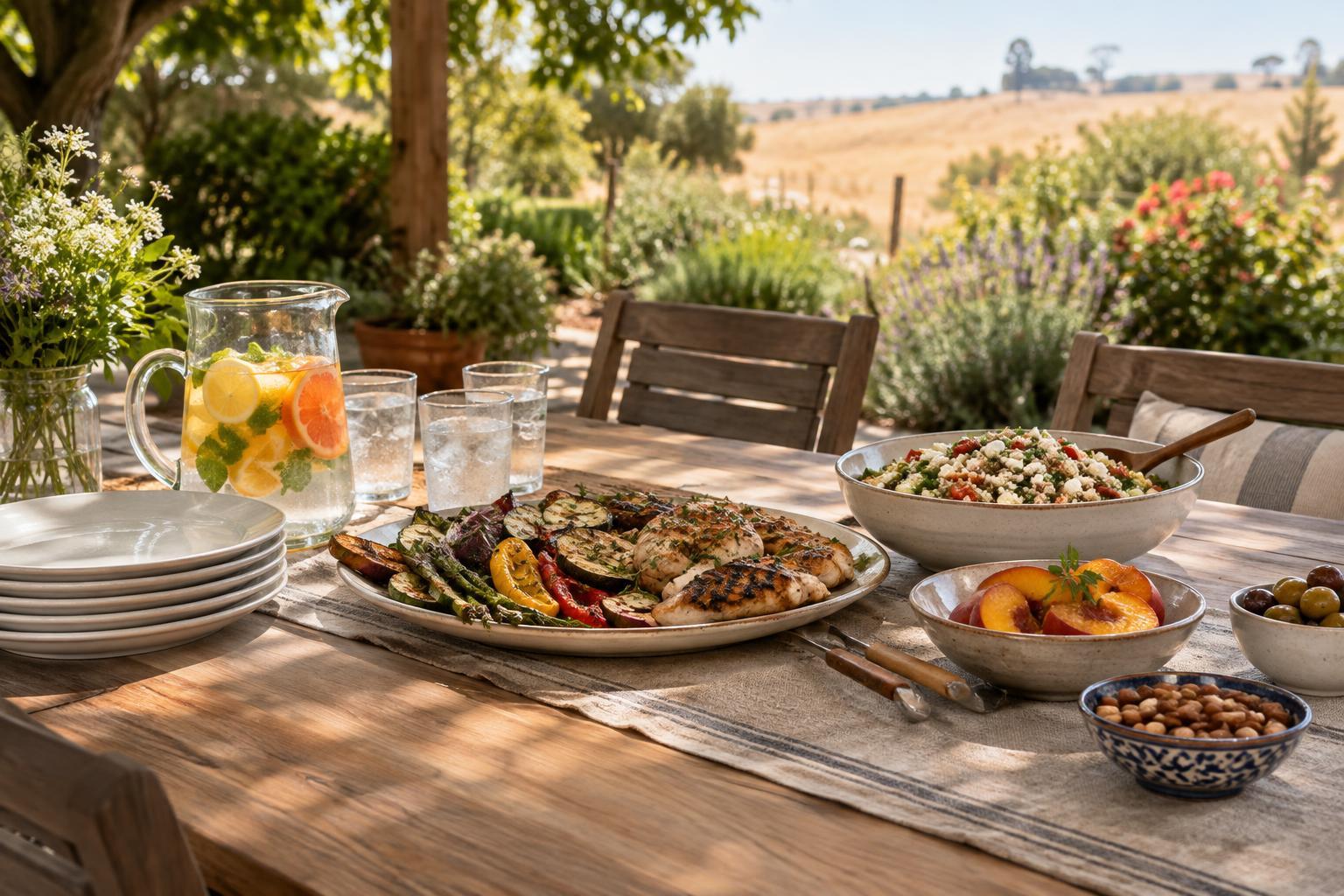
Offer at least one appealing alcohol-free choice, such as chilled tea, sparkling water or fruit-infused water. If you serve alcohol, keep the nonalcoholic options equally visible and plentiful. For an outdoor Central Valley-style afternoon, set drinks in the shade when possible and keep a separate pitcher or dispenser of water so guests can help themselves. Ice can disappear quickly in warm weather, so it is worth thinking of it as part of the drink plan rather than a last-minute extra.
Leave room for different appetites
A quick question before shopping can prevent both shortages and waste: ask guests whether they have dietary needs you should plan around. You do not need a separate menu for every preference, but it helps to include a substantial option that a guest can confidently eat. Keep toppings, sauces or cheese on the side when that makes the meal easier to adapt.
Think about the balance of the spread as well as the number of portions. If everything is rich or salty, guests may welcome crisp vegetables, fruit or a simple salad. If the gathering includes children, a few familiar foods can be helpful, but do not assume every child will eat the same amount. Put out an initial round of food and hold back anything that can stay properly stored until it is needed.
Make leftovers part of the plan
The most forgiving menus use ingredients that still have a purpose after guests leave. Extra bread can become toast, washed fruit can be eaten over the next few days, and cooked grains can form the base of another meal. Choose a few foods you would be happy to have left over, rather than increasing every dish “just in case.”
As you host, replenish smaller platters instead of setting out all the food at once. Keep perishable items appropriately chilled or hot, especially during an outdoor gathering, and put leftovers away promptly when serving is over. The goal is not an exact calculation. It is a table that feels generous, gives guests choices and lets you spend less time worrying about what might run out.