Start with the tomatoes you have
Tomato sauce is a useful home-cooking staple because the same basic method works with a basket of ripe tomatoes or a can from the pantry. The results will differ: fresh tomatoes can make a lighter sauce, while canned tomatoes offer a more consistent starting point. Neither is automatically better. Choose fresh tomatoes when they smell good and feel ripe; choose canned when fresh ones are firm, pale or simply unavailable.
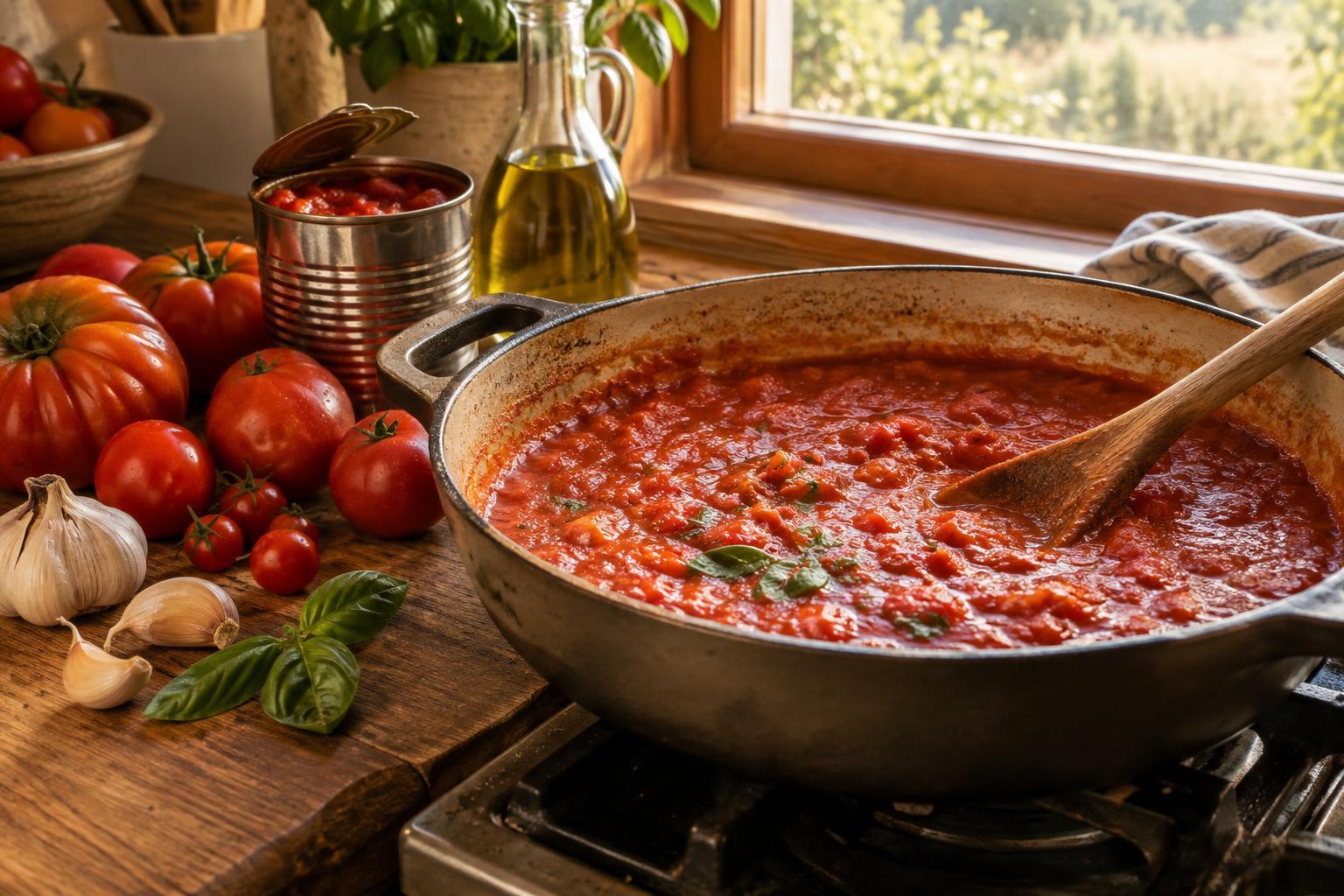
For a modest batch, use about 2 pounds of fresh tomatoes or one 28-ounce can of whole or crushed tomatoes. Add 2 tablespoons of olive oil, one small onion, 2 or 3 garlic cloves and salt. That is enough to make a sauce for roughly 12 ounces of pasta, with the exact yield depending on how long you simmer it. Basil, oregano, a pinch of chile flakes or a little butter can wait until you know what the tomatoes need.
Prepare fresh tomatoes without making it a project
For a rustic sauce, core fresh tomatoes and chop them. Leave the skins on if you do not mind a little texture; they will be more noticeable in a briefly cooked sauce. If you prefer a smoother finish, cut a shallow X in the bottom of each tomato, lower them into boiling water until the skins loosen, then transfer them to cool water and peel. You can also cook chopped tomatoes with their skins and pass the finished sauce through a food mill.
Seed removal is optional. Seeds and their surrounding juices bring flavor, but very watery tomatoes may need extra simmering. If you are using canned whole tomatoes, crush them by hand in a bowl or break them up with a spoon in the pan. Crushed canned tomatoes can go straight in. Keep any juices: they are part of the sauce, and you can reduce excess liquid as it cooks.
Build flavor in one pan
Warm the olive oil in a wide pan over medium heat. Add finely chopped onion and a small pinch of salt, then cook, stirring now and then, until the onion softens without browning deeply, about 5 to 8 minutes. Add minced or thinly sliced garlic and stir for about a minute, just until fragrant. If the pan seems too hot or the garlic starts to color quickly, lower the heat before adding the tomatoes.
Stir in the tomatoes and their juices. Bring them to a gentle bubble, then reduce the heat so the sauce simmers rather than splatters. A wide pan helps moisture evaporate. Stir occasionally, paying particular attention to the edges and bottom as the sauce thickens. Fresh tomatoes may take longer than canned ones because their water content varies. Start tasting after about 20 minutes, and continue cooking until the sauce has a texture and flavor you like.
Adjust the sauce, not the recipe
Taste before adding more salt. If the sauce seems thin, simmer it uncovered a little longer. If it becomes too thick, stir in a splash of water or pasta cooking water. For a chunky sauce, leave it as it is; for a smoother one, use an immersion blender carefully, keeping the blade below the surface to avoid hot splashes. A few torn basil leaves stirred in near the end give a different effect from dried oregano, which can be added earlier to soften in the simmer.
Tomatoes vary in sweetness and sharpness, so there is no single seasoning that fixes every batch. If the sauce tastes flat, try another small pinch of salt first. A spoonful of olive oil or a little butter can round out a sharp edge. If it still tastes unusually tart, a small pinch of sugar may help, but add it gradually. The goal is a sauce that tastes like tomatoes, not one that follows an exact formula.
Put it to work and save the rest
Toss sauce with hot pasta and a splash of pasta cooking water so it coats the noodles rather than sitting underneath them. The same batch can be spooned over baked vegetables, spread in a thin layer on pizza dough or used as the base for eggs gently cooked in a skillet. Keep the sauce simple if you plan to use it in several ways; you can add herbs, cheese or chile at the table.
Let leftovers cool promptly, then transfer them to a covered container and refrigerate. Use refrigerated sauce within a few days, or freeze it in portions that suit a weeknight meal. Labeling each container with what is inside makes it easier to reach for later. Whether the tomatoes came from a summer kitchen counter or a pantry shelf, a small batch of sauce turns a few familiar ingredients into a practical starting point for dinner.