Start with the art you want to live with
Buying directly from an artist can turn a familiar place, color or idea into something you enjoy seeing every day. In the Central Valley, that might mean a drawing of a backyard citrus tree, a photograph of an open landscape or a ceramic piece that makes an ordinary table feel personal. You do not need to know art terminology to begin. Notice what catches your eye and where it might fit in your home.
Set a comfortable total budget before you browse. Include possible costs beyond the artwork, such as a frame, hanging hardware or transportation. A smaller piece you can display now may bring you more pleasure than a larger one that needs an expensive custom frame. Leave yourself permission to look without buying: getting to know an artist’s work is also a worthwhile part of the experience.
Find artists in places where you can talk
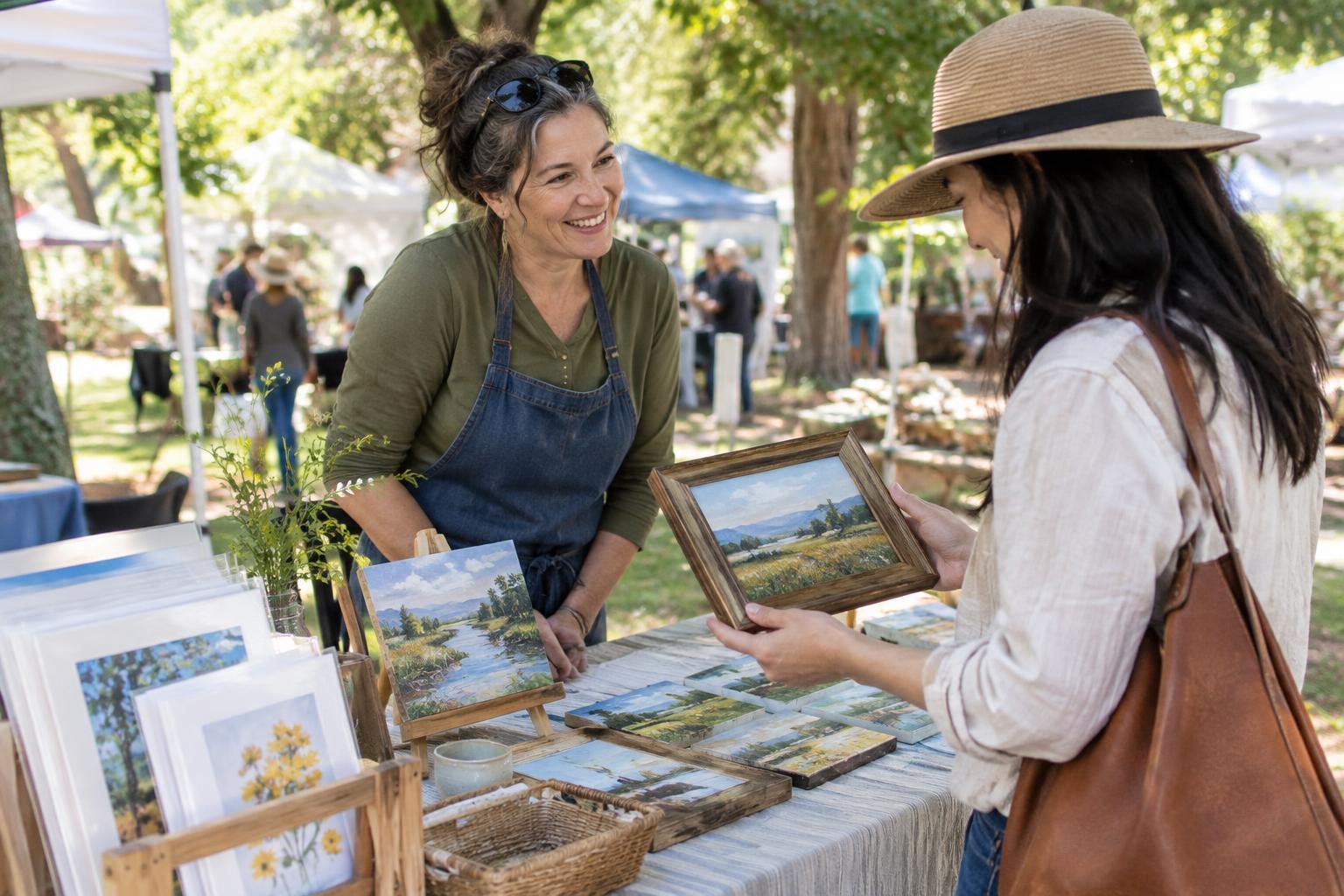
Community art walks, makers’ markets, small exhibitions, workshops and open studios can offer a relaxed way to meet artists. You can also follow artists’ own pages to learn when they share new work or take part in local events. If you see something you like, ask who made it rather than assuming the person staffing a booth is the artist.
A conversation does not have to be a sales pitch. Mention a piece that interests you and ask about its medium, size and price. If it is beyond your budget, it is fine to say, “I really like this work. Do you have anything in a smaller size or at a lower price point?” Some artists offer a range of work; others may not. Either answer is useful, and a clear question respects both their time and yours.
Look beyond large original pieces
An original painting is only one way to buy directly. Artists may offer drawings, small studies, ceramics, zines or prints of their work. A print can be a good choice when you love an image but cannot purchase the original. Ask whether it comes signed, numbered or with information about the paper and printing method if those details matter to you. Avoid assuming every print is a limited edition.
Commissions are another possibility, but they are not always the budget option. Custom work takes planning and may cost more than a finished piece of similar size. If you are interested, describe your idea, share your budget and ask what the artist offers before expecting a proposal. Be open to their style and process; buying directly is a chance to value the choices that make their work distinctive.
Make the practical details clear
Before paying, confirm exactly what you are purchasing. Check the dimensions, materials, condition and whether a frame, stand or other display piece is included. For three-dimensional work, ask how to care for and transport it. If the artwork will be shipped, ask how it will be packed and what the full delivered price will be. These simple questions can prevent a surprise without making the exchange feel formal.
Use the payment method the artist offers, and keep a record of the agreed price and what is included. For a commission, clarify the scope, timing, payment schedule and how much input you will have along the way before work begins. If you are not ready to decide, say so. A polite “Thank you, I’m going to think about it” is better than asking for a hold you may not need.
Display it well and keep the connection
You can make a modest purchase feel intentional without spending much more. Try a simple ready-made frame for a standard-size print, or place a small ceramic piece where you will notice it during breakfast. Keep artwork out of spots where direct sun, moisture or frequent bumps could cause problems, and ask the artist if a particular material needs special care.
After you bring the piece home, keep the artist’s name and any care information with your records. If you share a photo online, credit the artist and follow any preferences they have expressed about photographing or posting their work. A thoughtful purchase is not measured by size or price. It begins with curiosity, clear communication and choosing something you will be glad to make room for.