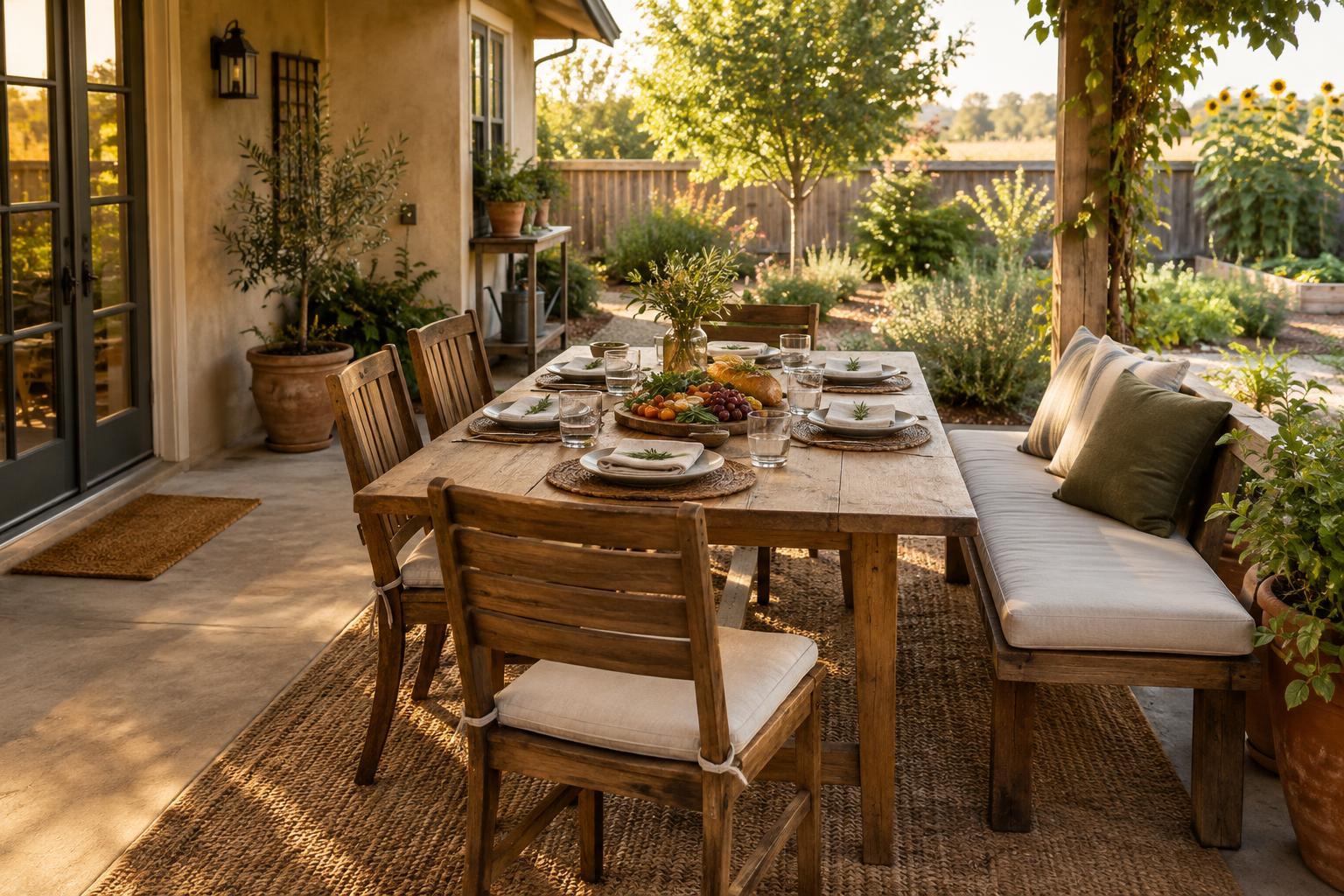
Start with the space people can actually use
Before choosing a number, picture guests arriving, setting down a bag and finding somewhere to talk. The usable area is often smaller than the room itself. A sideboard may hold serving dishes, a door needs room to open, and people need a clear path to the kitchen or restroom. Walk those routes rather than estimating capacity from floor space alone. If several guests would have to stand aside whenever someone gets up, a smaller group may feel more generous.
Think about the setting as well as its size. A backyard can suit a relaxed Central Valley-inspired supper, but an outdoor invitation should have a workable indoor alternative if the weather changes. Count only the places you can comfortably offer under that backup plan. This keeps the guest list from depending on a patio or lawn being available.
Count comfortable seats, not just chairs
Make a quick inventory of dining chairs, stools, benches and other stable seats you would genuinely offer a guest. Then note where each one would go. A folding chair can work well at a table; a low sofa may be pleasant for conversation but awkward for a meal that needs a plate and utensils. If a bench seats three only when everyone sits close together, count it more conservatively for a long dinner.
The type of meal sets the seating limit. For a plated dinner, aim to give everyone a place at a table with enough room for a plate and drink. For a snack-focused open house, guests may be happy to move among chairs and standing spots, provided no one is expected to stand for the entire visit. A picnic-style gathering can be flexible, too, but it is worth offering regular seating for anyone who would prefer not to sit on the ground.
Build the list around the gathering you want
Once you know the comfortable capacity, decide what kind of time together you are planning. A small dinner encourages one shared conversation. A larger, informal afternoon gives people room to catch up in smaller groups. Neither format is better; the useful question is whether the number of invitees supports the experience you hope to host without making the room difficult to navigate.
Draft a list in circles: the people at the heart of the occasion, those you would also love to include, and those better suited to another gathering. This is a planning tool, not a measure of anyone's importance. Account for partners, children or other household members when an invitation would reasonably include them. If you are unsure, specify who is invited rather than leaving guests to guess. For a tight space, one well-paced gathering is usually kinder than inviting extra people and hoping several cannot come.
Match the menu to the seating plan
Food can make a limited space easier or harder to use. A bowl of pasta that calls for a steady surface is better served where everyone can sit at a table. Handheld bites, sliced fruit and a simple drink station suit a more flexible arrangement. For a casual evening, you might set out seasonal produce with dips and a few substantial dishes that guests can serve themselves. Choose foods you enjoy preparing and that fit the way people will eat.
Place serving dishes where guests can reach them without blocking the main walkway. Keep drinks separate if one crowded counter would otherwise become the only place to gather. If seating is mixed, consider how guests will hold a plate, glass and napkin at once. Trying that yourself before the first arrival can reveal an awkward setup while there is still time to move a table.
Invite clearly, then leave a little breathing room
An invitation can set helpful expectations without sounding formal. Tell guests whether you are planning a seated meal, a drop-in afternoon or a backyard get-together. Ask for a reply by a date that leaves you time to arrange seats and food. If the gathering will be outdoors, mention the plan briefly so guests can dress comfortably. Clear details let people decide whether the occasion works for them.
Before sending invitations, check your count one last time against your seats, table space and weather backup. You do not need to fill every available chair. An open seat can give guests room to shift conversations, and extra floor space makes serving and clearing easier. The goal is not to fit the most people possible into your home; it is to make the people you invite feel at ease once they are there.