Start with fruit you want to eat
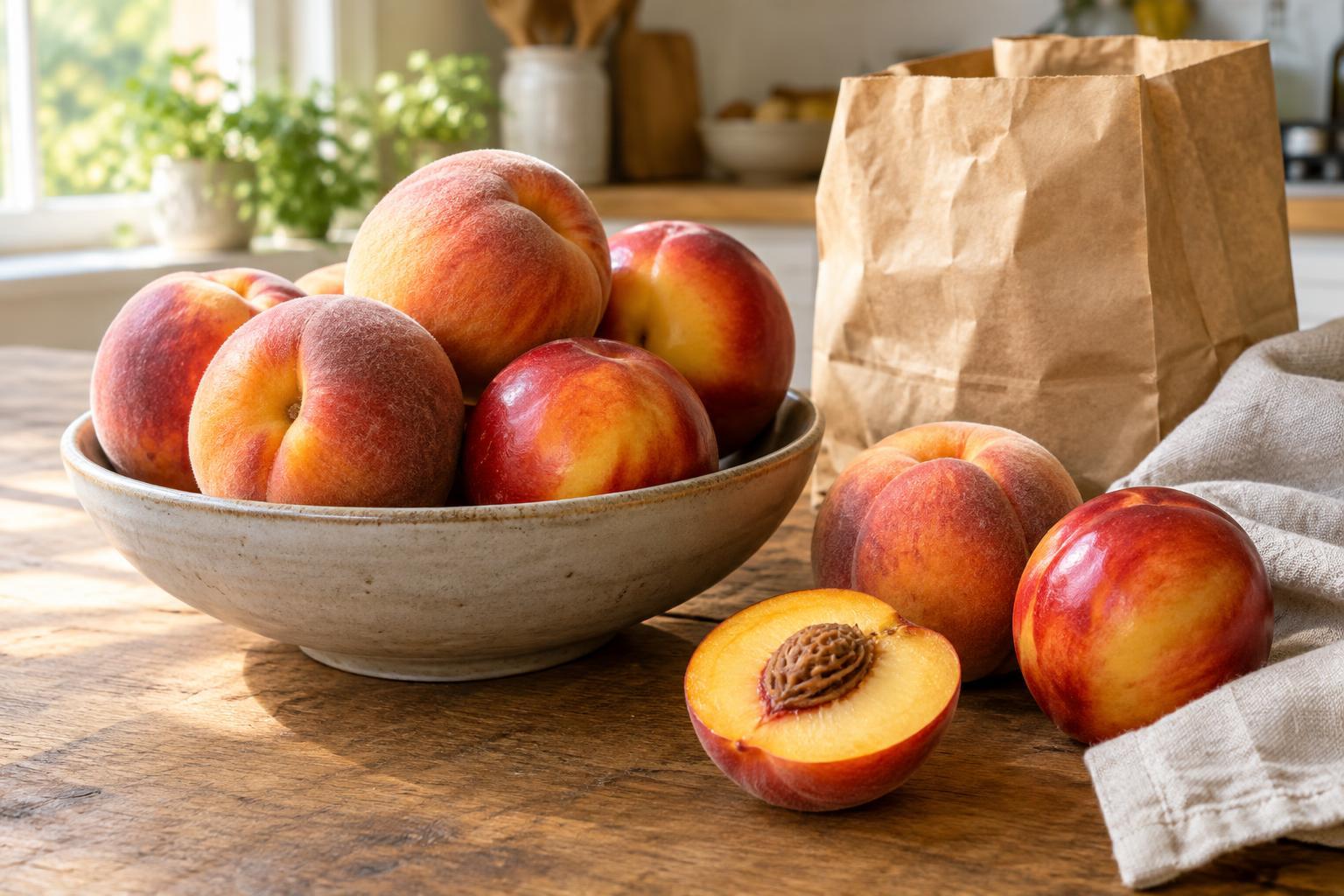
Peaches and nectarines are close relatives: peaches have fuzzy skin, while nectarines have smooth skin. Both can be wonderful eaten out of hand, sliced over breakfast, or served with a casual meal. When you shop for fruit from California’s Central Valley, begin by thinking about timing. Choose a peach or nectarine with a little give if you plan to eat it soon; choose a firmer one if it needs a day or two on the counter.
Look for fruit that feels heavy for its size and has skin free of large bruises, leaking spots, or visible mold. A small surface mark is not necessarily a problem, but a deeply soft patch may mean the flesh beneath is damaged. Handle fruit gently while checking it. Pressing hard with a thumb can leave a bruise on a peach that was perfectly good when you found it.
Use color and aroma as clues, not guarantees
The red blush on a peach or nectarine is appealing, but it is not a reliable measure of ripeness. Some varieties color up more than others, and the side that faced the sun may be much redder than the rest. Instead, look at the background color beneath the blush. Yellow-fleshed varieties generally have a warm yellow background as they mature; white-fleshed varieties may remain pale or creamy. Greenish background color can suggest the fruit was picked before it was fully mature.
Smell the fruit near the stem. A pleasant peachy fragrance is a good sign, especially when paired with a little give around the shoulders. Still, aroma varies by variety and by how cool the fruit is. If you are unsure, ask which pieces are ready for today and which are better for later. A vendor who has handled that particular fruit may offer more useful guidance than color alone.
Ripen firm fruit on the counter
Set firm peaches and nectarines in a single layer at room temperature, away from direct sun. A bowl works if the fruit is not piled high; a clean towel on the counter makes it easy to keep pieces from pressing into one another. Check them daily. As they ripen, they should develop more fragrance and yield slightly to gentle pressure near the stem or along a shoulder. They should not feel mushy.
For fruit that needs a little help, place it in a loosely folded paper bag and check it often. The bag holds some of the ethylene gas fruit naturally releases, which can encourage ripening. Skip sealed plastic bags, which can trap moisture. Countertop ripening can soften fruit and develop its aroma, but it cannot fully make up for fruit picked too early. Peaches and nectarines do not gain much additional sugar after harvest, so choosing well-matured fruit matters.
Move ripe fruit to the refrigerator
Once a peach or nectarine smells inviting and yields gently, eat it or refrigerate it to slow further softening. Keep ripe fruit in a shallow container where it will not be crushed, and check it regularly; delicate fruit can decline quickly. For the best eating experience, let a chilled peach or nectarine sit at room temperature briefly before serving so its aroma is easier to notice.
Avoid refrigerating very firm fruit before it has a chance to ripen. Cold storage may interfere with the texture and flavor of some peaches and nectarines. Wash fruit under running water just before eating or cutting it, then dry it gently. Even if you plan to peel it, rinsing first helps keep what is on the skin from reaching the flesh as you cut.
Match each piece to a simple use
The ripest fruit needs very little preparation. Slice it over yogurt, serve it beside cheese, or add it to a bowl of tomatoes and tender herbs. Slightly firmer pieces hold their shape more easily in a salad or on the grill. Soft but sound fruit can go into a quick sauce or be spooned over toast after a short simmer. Discard fruit with mold rather than trying to rescue the unaffected-looking portion.
If you are planning to halve several fruits, remember that some varieties release easily from the pit while others cling to it. Ripeness helps, but the variety also matters. When the pit will not budge, cut slices away from it instead of forcing the halves apart. That small adjustment keeps the fruit presentable and lets you enjoy what makes a good Central Valley peach or nectarine so appealing: sweet juice, bright aroma, and a place at the table with very little fuss.