Start with the paths you actually walk
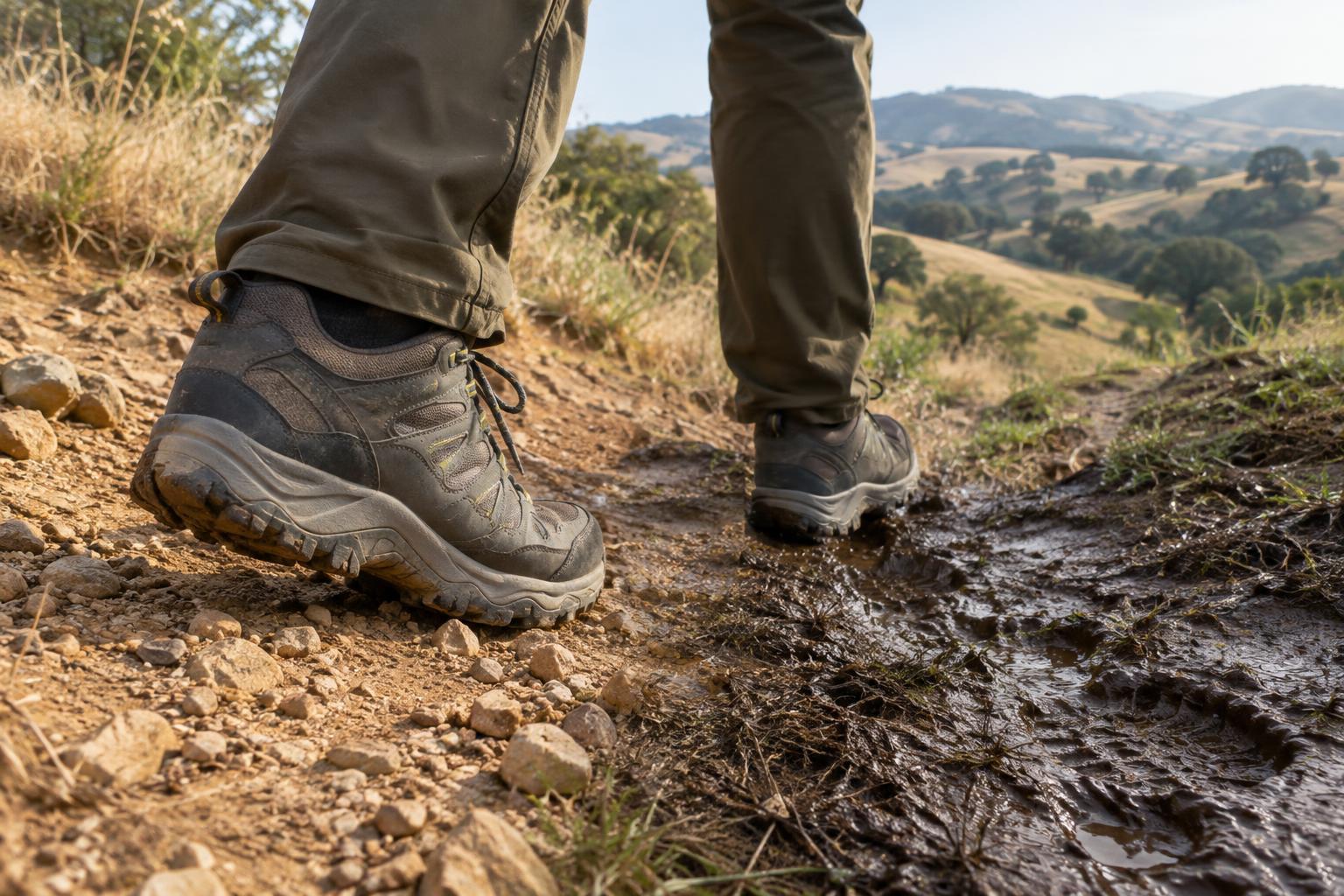
A dry trail and a muddy path ask different things of your footwear. Firm, dusty ground may feel straightforward until loose gravel shifts underfoot. Mud can make a gentle path slippery, cling to the soles or leave shallow puddles where you would normally step. Before shopping, picture the routes you take most often, the conditions in which you are willing to walk and the weight you usually carry.
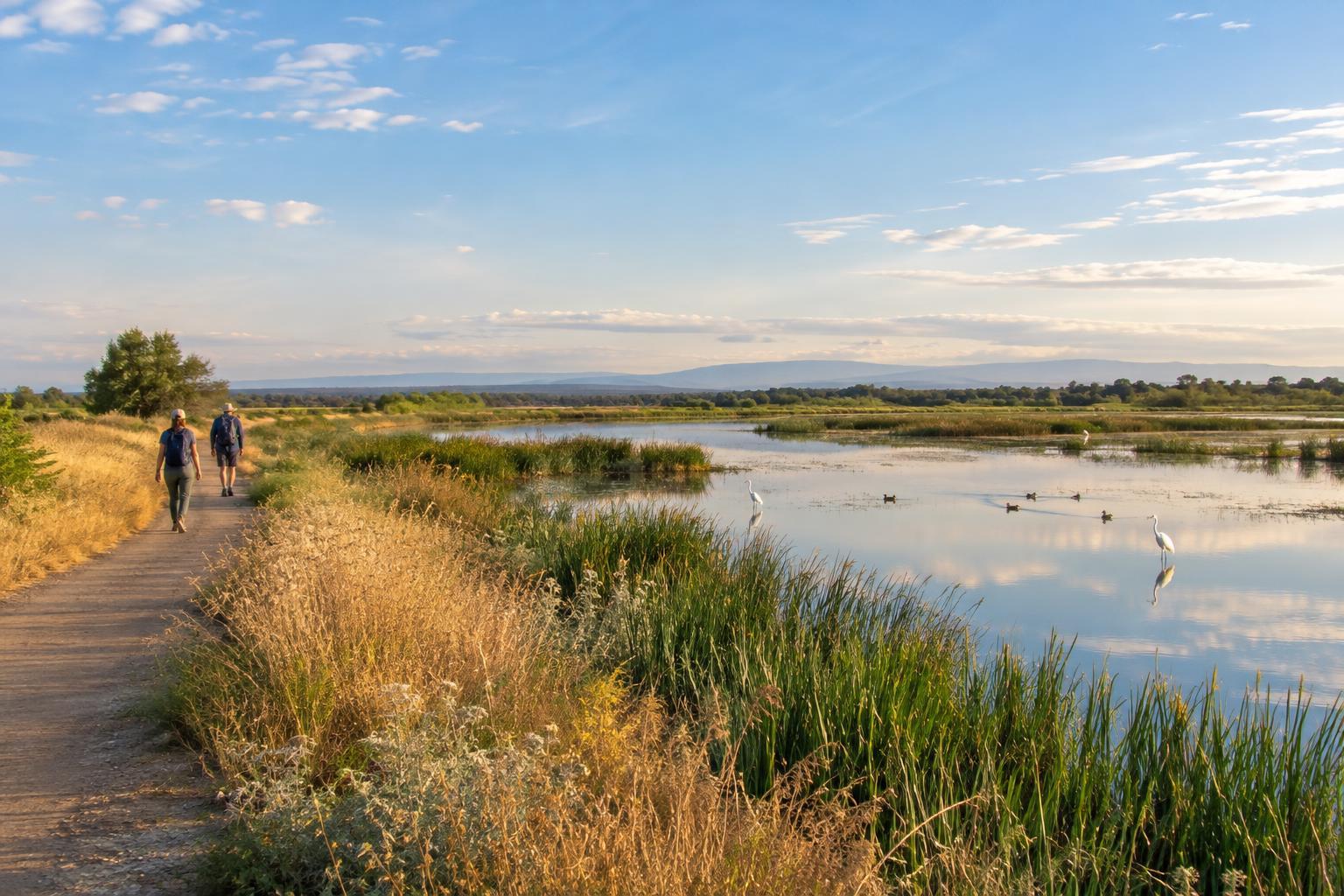
For short walks on maintained paths, a comfortable trail shoe may be enough. A rougher route or a heavier pack may make a sturdier shoe or boot more appealing. You do not need to buy for the most demanding hike you can imagine if most of your outings are easy. Around the Central Valley, conditions can change between a dry outing and a wet one, so aim for footwear that handles your usual ground well while leaving room for the occasional surprise.
Treat fit as the first requirement
Try on footwear with the socks you plan to wear outdoors. Your toes should have room to spread and should not strike the front when you walk downhill. Your heel should feel reasonably secure, without persistent rubbing, while the middle of the shoe should hold your foot without pinching it. If a pair feels painful in the shop, do not count on a break-in period to fix it.
Walk on an incline or stairs if you can, and notice what happens when you turn and descend. A little movement is normal; sliding forward or lifting sharply at the heel is less promising. Foot shape varies, so a highly recommended model may still be wrong for you. If your feet are different sizes, fit the larger foot and check that lacing adjustments keep the smaller one comfortable. Comfort on a brief try-on is not proof of all-day comfort, but it is a useful starting point.
Look closely at the sole
The patterned rubber on the bottom of a hiking shoe is designed to meet uneven ground. More pronounced, spaced-out tread can help a sole bite into soft dirt and shed some mud as you walk. On compact dry trails, a sole with moderate tread may feel smoother underfoot. No tread pattern grips every surface: wet stone, slick clay and loose dust can all call for a slower pace and shorter steps.
Pick up the footwear and flex it gently. A sole that feels stable under your foot can be welcome on rocky ground, while a more flexible shoe may feel natural on easier paths. Neither choice is automatically safer. Think about how confidently you can place your feet, especially when stepping across ruts or around puddles. Tread also wears down over time, so check older shoes before assuming they still offer the grip they once did.
Balance breathability and water protection
On warm, dry walks, breathable uppers can make a shoe feel less stuffy. A waterproof lining may help with damp grass, light rain or brief contact with shallow mud, but it can also feel warmer and may dry slowly if water comes in over the top. Water-resistant materials and waterproof footwear are not the same thing, and neither makes a deep puddle a good shortcut.
Boot height is another tradeoff. A higher collar can help keep out some splashes and trail debris, particularly when paired with gaiters, but it does not guarantee ankle support or a dry foot. Low shoes may feel lighter and easier to wear for casual walks. Choose the combination you are likely to use comfortably, rather than treating the tallest, heaviest option as the default.
Test your choice before a longer outing
Give new footwear a few short walks close to home before taking it on a longer trail. Try the laces at different tensions, check for rubbing and note whether your socks bunch up. If you expect both dry and muddy conditions, test the shoes on ordinary uneven ground first; do not wait for a remote walk to discover that the fit changes on descents.
After a muddy outing, remove clumps of dirt, let the footwear dry away from direct heat and check the maker’s care guidance before applying cleaners or treatments. Keep an eye on worn tread, loose stitching and persistent pressure points. The best pair is not the one with the longest list of features. It is the pair that fits your feet, suits your regular paths and helps you feel ready to head out again.