Begin with a place you can visit comfortably
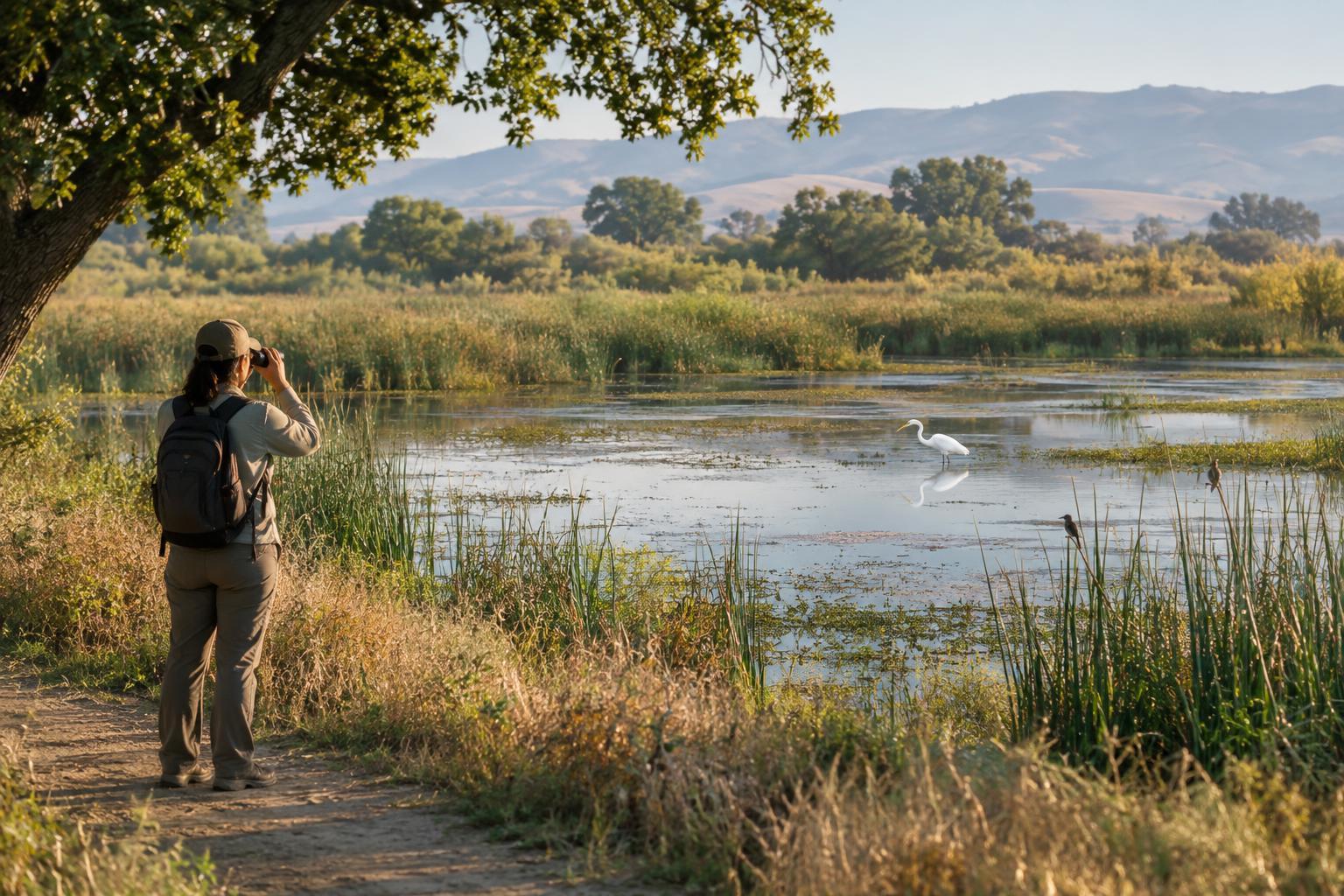
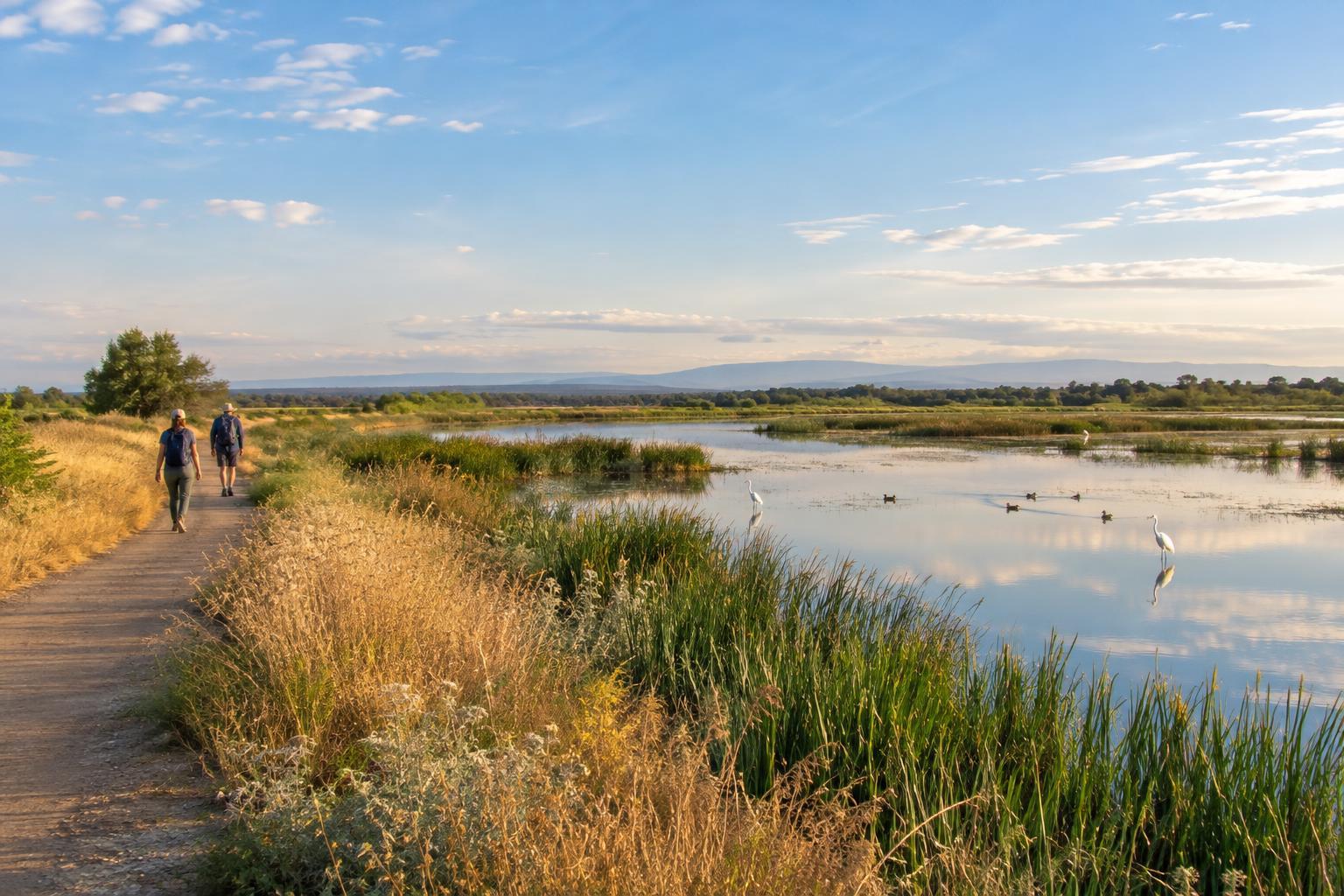
You do not need to travel far or identify every bird to enjoy a first outing. A public wetland trail, nature area, park beside a pond or permitted roadside viewing area can offer plenty to notice. Fields and wetlands attract different birds because they offer different food, cover and resting places. Even a short walk between open ground and water can reveal how birds use the landscape.
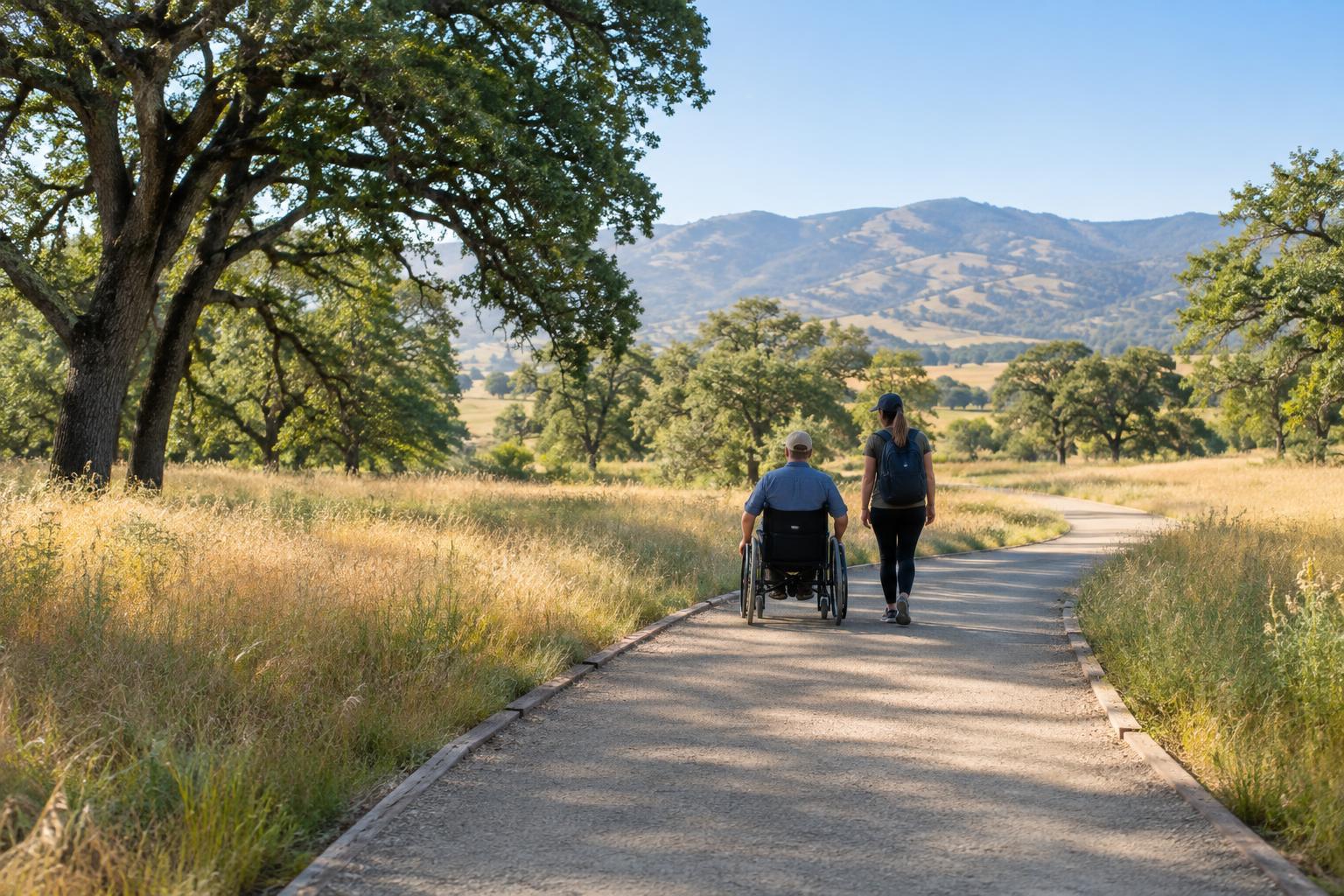
Choose a place with clear public access and a route that suits your energy and mobility. Check posted hours, trail conditions and access rules before setting out; a field visible from the road is not necessarily open to visitors. For an easy first trip, pick one spot where you can stand or sit safely for a while. Returning to that same spot can be more rewarding than trying to cover a large area.
Bring less gear than you think
Your eyes and ears are enough to get started. If you have binoculars, bring them, but practice focusing at home so they do not become a distraction. A small notebook or phone note is useful for recording what you notice: a bird’s size, colors, shape, behavior and location. Those details often help more than a quick guess at its name.
Dress for the conditions rather than for a long hike. Comfortable shoes, drinking water, sun protection and an extra layer can make an outing more pleasant. In wetland areas, stay on designated paths and expect some surfaces to be muddy or uneven. If you use a phone to help identify birds, keep the volume low. Listening to the place itself is part of the experience.
Look for behavior before names
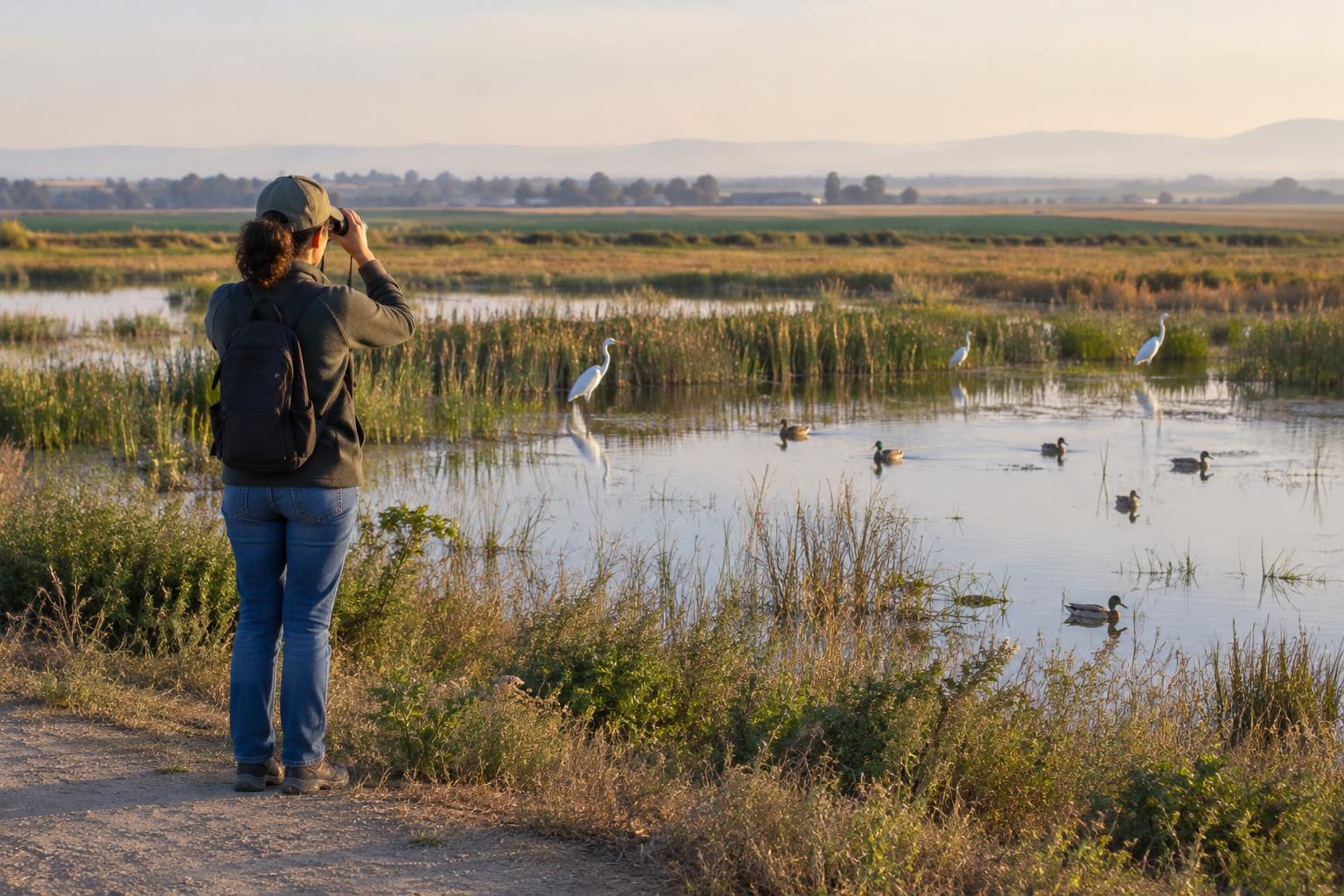
Start by scanning slowly, then pause. Near water, watch the edges for birds walking, probing or standing still. Over open fields, look for birds perched on fences or moving across the sky. Notice whether a bird swims, wades, hops or circles overhead. Its actions can narrow down what you are seeing, even when the light makes its colors difficult to judge.
Instead of trying to learn every species at once, sort birds into broad groups. Is it a small songbird, a long-legged wader, a ducklike swimmer or a bird of prey? Compare its size with something nearby, and note any striking features, such as a long bill or a pale wing patch. Field guides and identification apps can help afterward, but it is fine to leave a sighting unidentified. Careful observation is the skill you are building.
Let the season and time of day shape your visit
The mix of birds in Valley habitats can change as water levels, crops and seasons change. You may see a busy pond on one visit and a quiet one on another. Rather than treating that as a disappointment, pay attention to what has changed: Is there more exposed mud? Are nearby trees in leaf? Are birds feeding, resting or simply passing through?
Early morning can be a comfortable time to walk and listen, but it is not the only worthwhile time to go. A brief stop on a familiar route can teach you what is typical for that place. Try visiting the same public spot at different times, and record a few observations each time. Over several outings, patterns become easier to recognize without needing a long checklist.
Make room for the birds and other visitors
Good birdwatching depends on giving wildlife space. If birds stop feeding, move away or seem alarmed, step back. Keep to marked paths, observe closures and avoid approaching nests or groups of resting birds for a closer look. Do not use recorded calls to draw birds toward you. Binoculars let you enjoy a close view without getting physically close.
Be considerate of people working or recreating nearby, too. Park only where allowed, do not block farm entrances, and keep voices low at shared viewing areas. A satisfying outing might be twenty quiet minutes watching one patch of water or a fence line. The goal is not to collect the most names; it is to leave with a sharper sense of the living landscape and a reason to return.