Start with flavor, not just distance
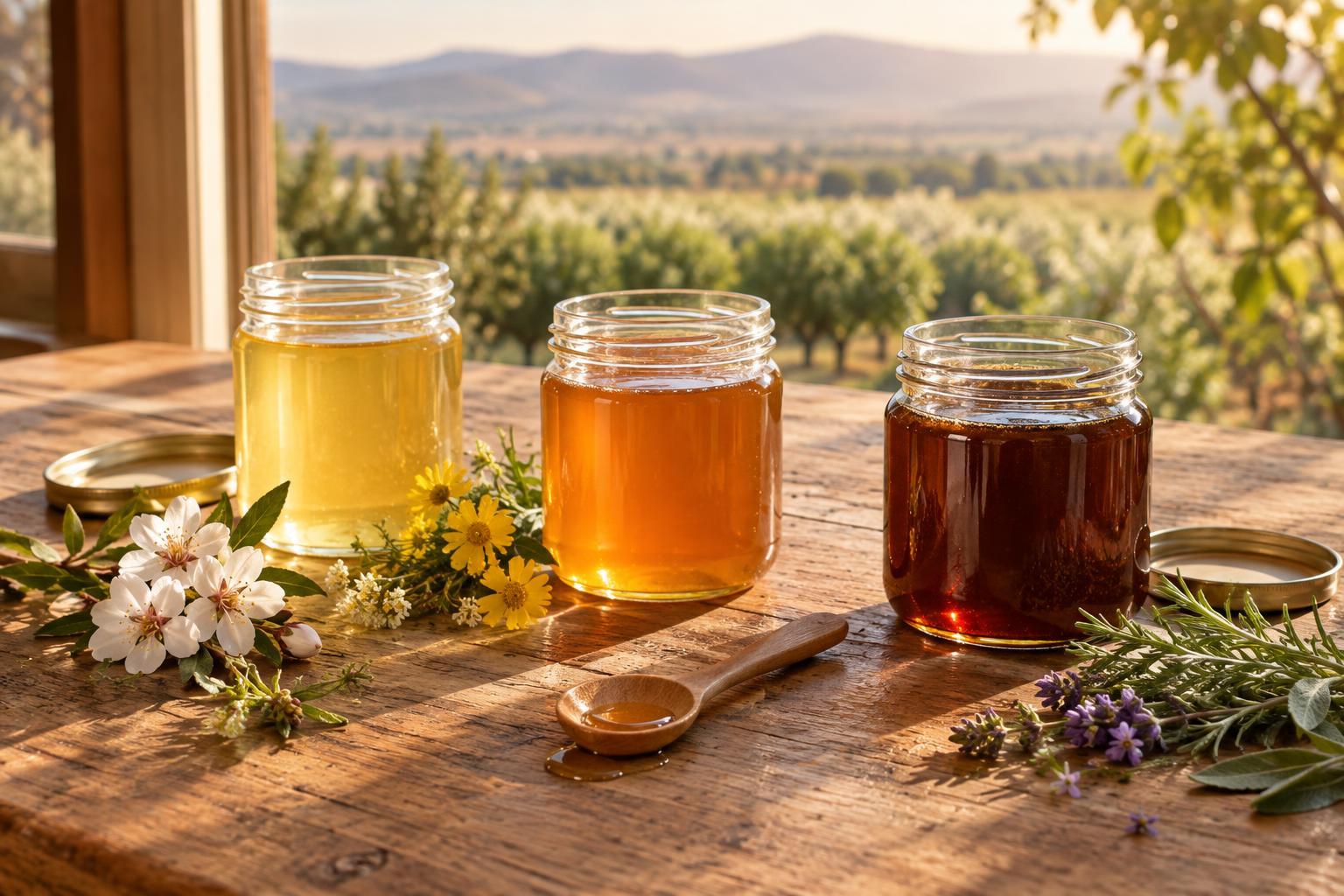
Buying local honey is a way to explore the ingredients close to home, but “local” is not a flavor description. Two jars produced in the same part of California’s Central Valley may taste noticeably different. One might be light and mild enough for tea; another might have a richer finish that stands up to toast, cheese or a savory glaze. Neither is necessarily the better honey. The useful question is what you want the jar to do.
Before shopping, think about where you use honey most often. If you stir it into delicate drinks or drizzle it over fresh fruit, you may prefer a gentle flavor. If you bake with it or serve it alongside strong cheeses, a more assertive jar could be welcome. Having a use in mind makes the choice easier than treating every local jar as interchangeable.
Understand what shapes a jar
Honey starts with nectar, and the plants available to bees help shape its color, aroma and taste. A honey labeled with a particular floral source suggests that the source played a prominent role. A wildflower or multifloral label generally points to a blend of nectar from more than one kind of bloom. Those terms are useful clues, not promises that every harvest will taste identical.
Forage can vary with location and growing conditions, while the timing of a harvest can affect which blooms contribute nectar. Beekeeping and bottling choices matter, too: a producer may combine honey from several hives or keep smaller harvests separate. When a jar tastes different from one you bought before, that difference can be part of the appeal rather than a sign that something is wrong.
Read the label and ask a few questions
Look for a producer name, an origin description and any information about floral sources or harvests. A label that says “local” may not explain where the bees foraged or where the honey was bottled. If that distinction matters to you, ask the seller what they mean by local. A beekeeper or knowledgeable shopkeeper may be able to describe a honey as mild, citrusy, herbal or robust without claiming that every batch is the same.
Words such as “raw” and “unfiltered” describe handling, but they do not tell you whether you will enjoy the taste. Likewise, a darker color may suggest a stronger flavor, yet color alone is an imperfect guide. If tasting is available, take advantage of it. If not, choose a small jar first, especially when a floral source or producer is new to you.
Use a simple tasting routine
You do not need a formal tasting setup to notice differences. Try a little honey on a plain spoon or a piece of neutral bread. Pay attention to the first impression, then to what lingers: does it seem softly floral, fruity, grassy or deeper and more caramel-like? Those descriptions are personal, and you do not need to identify a particular plant to decide what you like.
For a fair comparison, taste two jars at room temperature before adding them to a dish. Then try each in something familiar, such as plain yogurt or a simple vinaigrette. A honey that seems strong by itself may be just right when balanced by acidity or salt. Make a brief note of the producer and your favorite use so you can find a similar jar later—or deliberately try something different.
Keep the jar useful at home
Store honey tightly closed at room temperature, away from excess heat and moisture. It may crystallize over time, becoming cloudy or firm. Crystallization is a normal change in texture and does not, by itself, mean the honey has spoiled. Some people prefer that spreadable texture on biscuits or toast. If you want it fluid again, place the closed jar in warm water and give it time to soften.
A good local-honey habit is to keep one everyday jar and, when it appeals to you, one jar chosen for its distinctive flavor. Use the mild one where you want sweetness without much competition; save the bolder one for a finishing drizzle or a dish that can carry its character. Choosing this way leaves room for variation—and makes each jar more interesting to open.