Start with the bean, not the clock
Dried beans are well suited to relaxed home cooking: one pot can become dinner, a side dish and a few ready-to-use portions for later. But a recipe’s cooking time is only a guide. Bean variety, size and age all affect how long a batch takes to soften. The dependable approach is to give the beans plenty of water, keep them at a steady simmer and taste them as they cook.
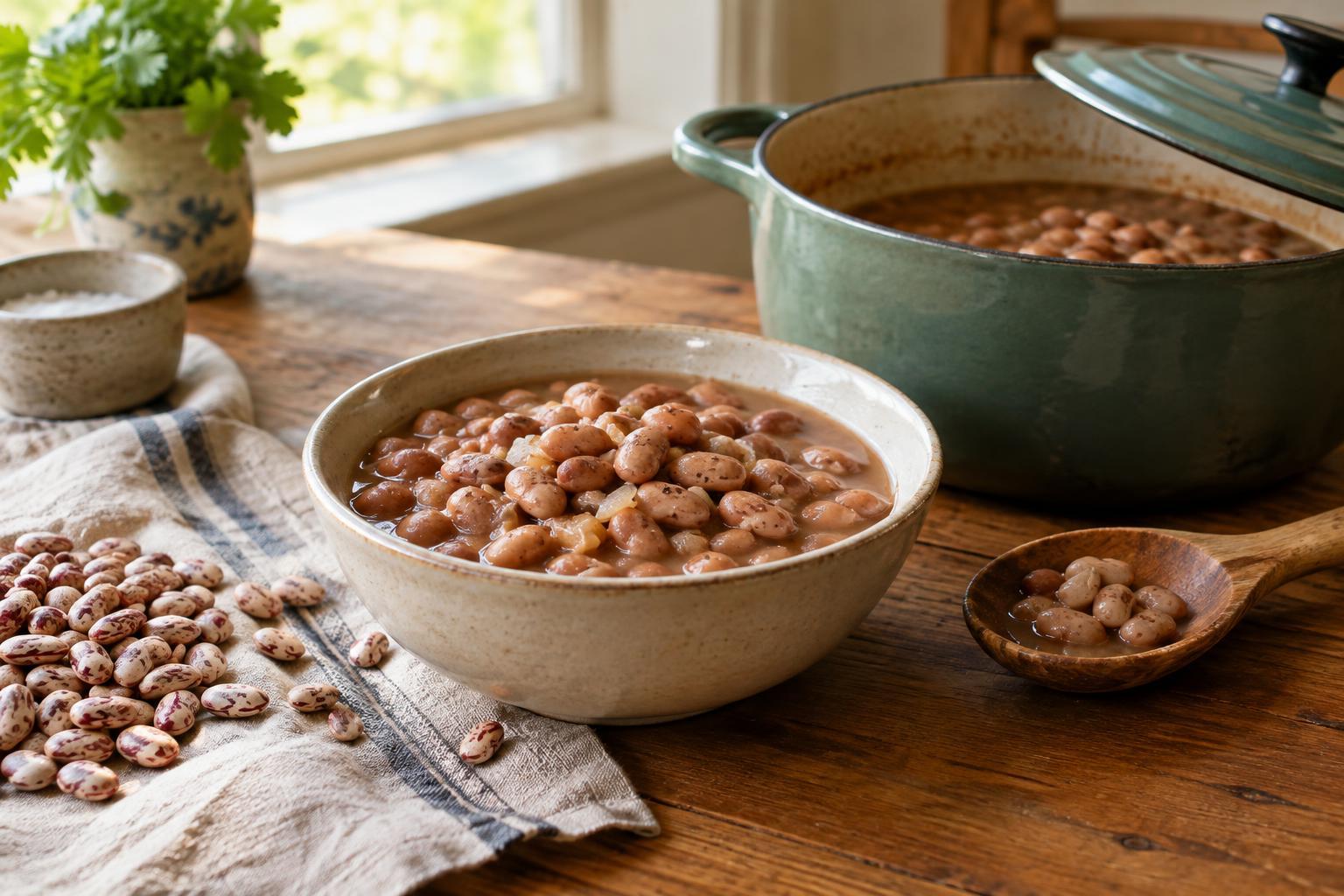
Pick through the dry beans on a tray or in a wide bowl, removing any small stones or damaged beans, then rinse them well. For a first batch, choose one kind rather than mixing varieties that may finish at different times. A pound of dried beans makes a generous pot; use a large saucepan or Dutch oven with room for the water to bubble without spilling over.
Decide whether to soak
Soaking can shorten cooking time and help beans cook more evenly, but it is not required for most varieties. For an overnight soak, cover the rinsed beans with several inches of water in a large bowl. Refrigerate them for 8 to 12 hours, then drain and rinse before cooking. Refrigeration is especially useful if the kitchen is warm or your schedule might stretch beyond an overnight soak.
If you want to start sooner, put the beans in a pot with plenty of water, bring them to a boil for two minutes, turn off the heat and cover the pot. After about an hour, drain and rinse them. You can also skip soaking altogether and go straight to the stove; allow extra time and check the water level often. Whichever route you choose, soaking is a planning tool, not a promise that the beans will be done at a particular hour.
Build a steady, flavorful simmer
Put the beans in a roomy pot and add fresh water to cover them by about two to three inches. Bring the water to a full boil, then reduce the heat to a gentle simmer. Keep the lid slightly ajar and stir occasionally, particularly as the liquid reduces. Add hot water whenever the beans begin to peek above the surface; they should stay submerged while they cook.
For simple seasoning, add about a teaspoon of fine salt per pound of dry beans to the cooking water, then adjust to taste at the end. A halved onion, a few garlic cloves or a bay leaf can go in early. Save tomatoes, vinegar and lemon juice until the beans are tender, since acidic ingredients can slow softening. The cooking liquid will pick up flavor as it goes, so taste it before adding more salt.
One important exception deserves its own rule: raw or undercooked kidney beans can cause illness. If you are cooking dried kidney beans, boil them vigorously in fresh water for at least 30 minutes before lowering the heat to a simmer. Do not use a slow cooker to cook raw kidney beans, as it may not reach a sufficient boil.
Let texture tell you when they’re done
Begin checking the beans as they become plump and look close to tender. Scoop out several from different parts of the pot, let them cool briefly and taste each one. A finished bean should be creamy or evenly tender all the way through, without a firm or chalky center. If one bean is soft and another is not, keep simmering and test again in 15 to 20 minutes. Add water if needed rather than turning up the heat to rush the process.
Very old beans may take much longer than expected and can remain stubbornly firm. If that happens, continue cooking while watching the water level, but be willing to start with a fresher batch next time. Once the beans are tender, turn off the heat and let them rest in their liquid for a little while. Taste again and add salt, citrus or vinegar as needed.
Make one pot work for several meals
Keep some beans in their cooking liquid for soups and stews; the liquid adds body and carries the seasonings you put in the pot. Drain another portion for a quick skillet supper with greens and garlic, or spoon warm beans beside roasted vegetables. A squeeze of lemon or a spoonful of salsa at serving time can make a plain batch feel new without changing the whole pot.
Cool leftovers promptly and refrigerate them in covered containers for up to three to four days, or freeze portions for longer storage. Include enough cooking liquid to help keep the beans moist, and leave space in freezer containers for expansion. With a few portions put away, the time spent simmering becomes an easy start to another meal.