Start with heat, not a timer
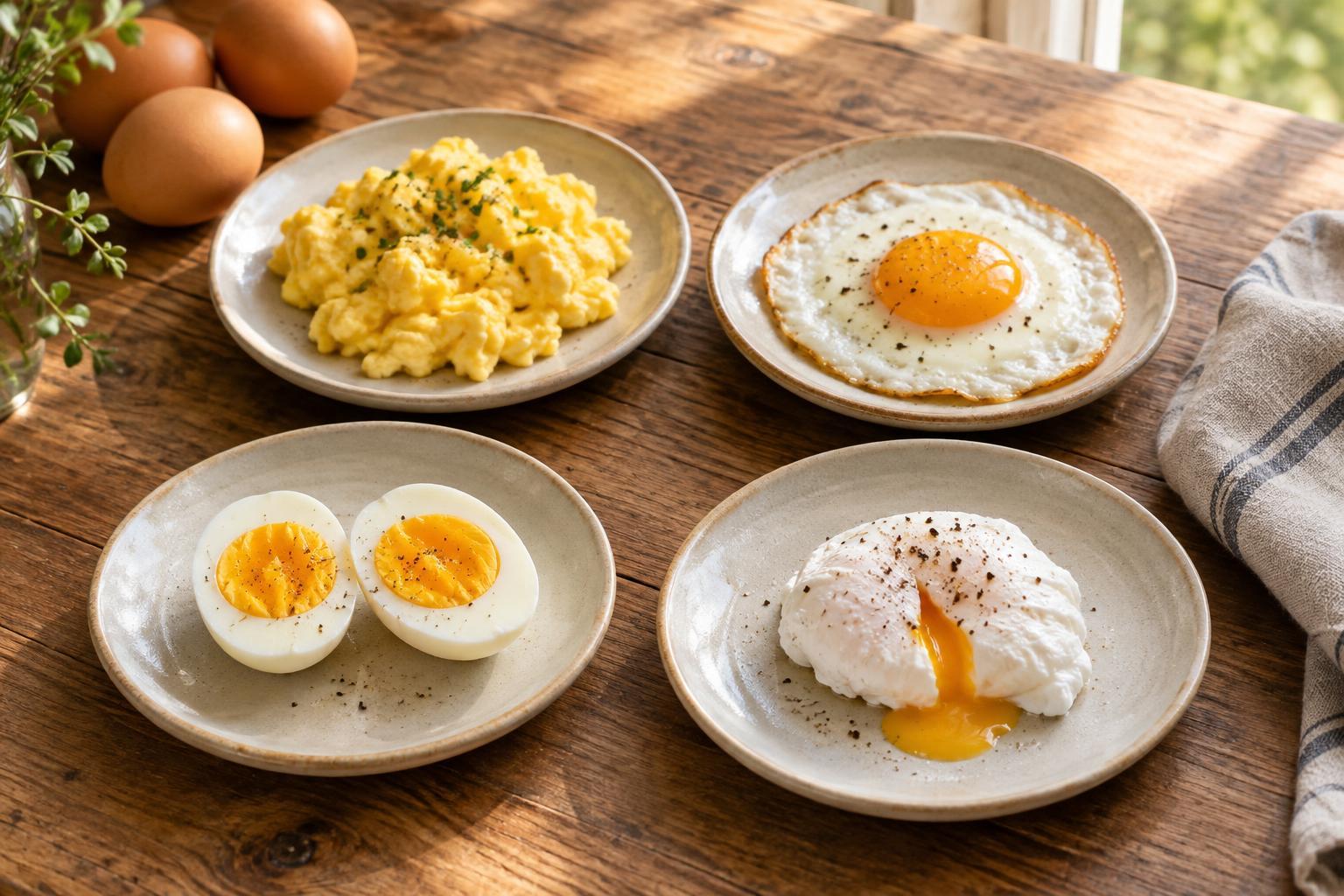
Eggs can make a quick breakfast, fill a sandwich or turn leftover vegetables into a meal. They are also sensitive to heat: a small change in pan temperature can take them from tender to firm. The most useful habit across all four methods is to watch what the egg is doing rather than rely only on the clock.
Set out your tools before you begin: a nonstick or well-seasoned skillet for scrambled and fried eggs, a saucepan for boiling or poaching, and a spatula or slotted spoon. Cooking times below are guides; egg size, starting temperature, pan material and stove strength can all make a difference. If you prefer fully cooked eggs, continue until both whites and yolks are firm.
Scrambled: keep the curds tender
Crack two or three eggs into a bowl, add a pinch of salt and beat with a fork until the whites and yolks look evenly mixed. Heat a skillet over low to medium-low heat, then add a little butter or oil. When the butter melts or the oil moves easily across the pan, pour in the eggs. They should begin to thicken gently, not sizzle loudly.
Use a spatula to push the setting egg from the edges toward the center, letting uncooked egg flow into the open spaces. For larger curds, stir less often; for smaller, creamier curds, stir more frequently. Take the pan off the heat when the eggs are nearly as set as you like, since the warm pan will keep cooking them briefly. Serve right away. Chopped herbs or a spoonful of sautéed peppers can go in at the end so they do not release extra moisture while the eggs set.
Fried: set the whites without rushing the yolk
Warm a lightly oiled skillet over medium-low heat. Crack an egg into a small bowl first if you want to lower it into the pan without breaking the yolk. Slide it in and let the white spread. If it bubbles aggressively or browns before the upper white starts to set, lower the heat. A moderate pace gives you more control over the texture.
For a sunny-side-up egg, leave it unflipped and cook until the white is opaque. A lid for the final minute or so can help set the white on top, though it may put a thin pale film over the yolk. For an over-easy egg, slip a spatula fully underneath, flip gently and cook the second side briefly. Keep it in the pan longer if you want a firmer yolk. Season just before serving, perhaps over toast or a plate of warm beans.
Boiled: use a consistent starting point
Bring a saucepan of water to a gentle boil, with enough water to cover the eggs. Lower the eggs in carefully with a spoon, then adjust the heat to maintain a gentle boil. As a starting point for large eggs, try about 7 minutes for a soft center, 9 to 10 minutes for a mostly set yolk, or 12 minutes for a firm yolk. You may need to adjust those times for your eggs and stove.
Transfer the eggs to a bowl of cold water when their time is up. Cooling stops much of the carryover cooking and makes them more comfortable to handle. To peel, tap the shell all over, roll it gently and start at the wider end if you can find an opening beneath the membrane. A boiled egg is useful on its own, sliced into a salad or tucked beside roasted vegetables for an easy lunch.
Poached: let gentle water do the work
Fill a saucepan with several inches of water and bring it to a bare simmer: look for small bubbles, not a rolling boil. Crack one egg into a small bowl. Lower the bowl close to the surface and slide the egg into the water. Fresh eggs often hold a neater shape, but you can also strain a very watery egg through a fine-mesh strainer before poaching to remove loose white.
Let the egg cook undisturbed for roughly 3 to 5 minutes, depending on how set you want the yolk. Lift it with a slotted spoon and check that the white holds together; return it to the water briefly if needed. Drain it on a clean towel before placing it on toast, greens or a bowl of cooked grains. Once you know the gentle simmer your stove can maintain, poaching becomes less of a trick and more of a repeatable routine.