Start with the texture you want
Tofu is a flexible starting point for dinner because its mild flavor leaves room for whatever vegetables and seasonings you have on hand. For pieces that hold their shape in a skillet, choose firm or extra-firm tofu. Softer tofu is better suited to dishes where a delicate texture is welcome, such as a gentle soup; it is harder to turn and brown without breaking.
Think about the finished plate before you cut the block. Cubes are easy to toss with vegetables and rice, while broad slabs can sit alongside a salad or be tucked into a sandwich. Smaller pieces offer more surface area for seasoning, but they need more attention in the pan. Aim for pieces of similar thickness so they cook at roughly the same pace.
Dry the surface before heating the pan
Moisture on the outside of tofu can slow browning. Drain the package, set the block on a clean towel and pat it dry. If you have a little extra time, wrap firm tofu in a towel and rest a plate on top for 10 to 20 minutes. There is no need to press it until it is completely dry; the goal is to remove some excess water so the surface cooks more readily.
Cut the tofu after pressing, then pat the newly exposed sides dry. For a lightly crisp coating, toss the pieces with a small amount of cornstarch just before cooking. Use enough to leave a thin, even dusting rather than a thick layer. The coating is optional: uncoated tofu can still develop golden edges if the pan is hot enough and the pieces have room.
Give each piece room to brown
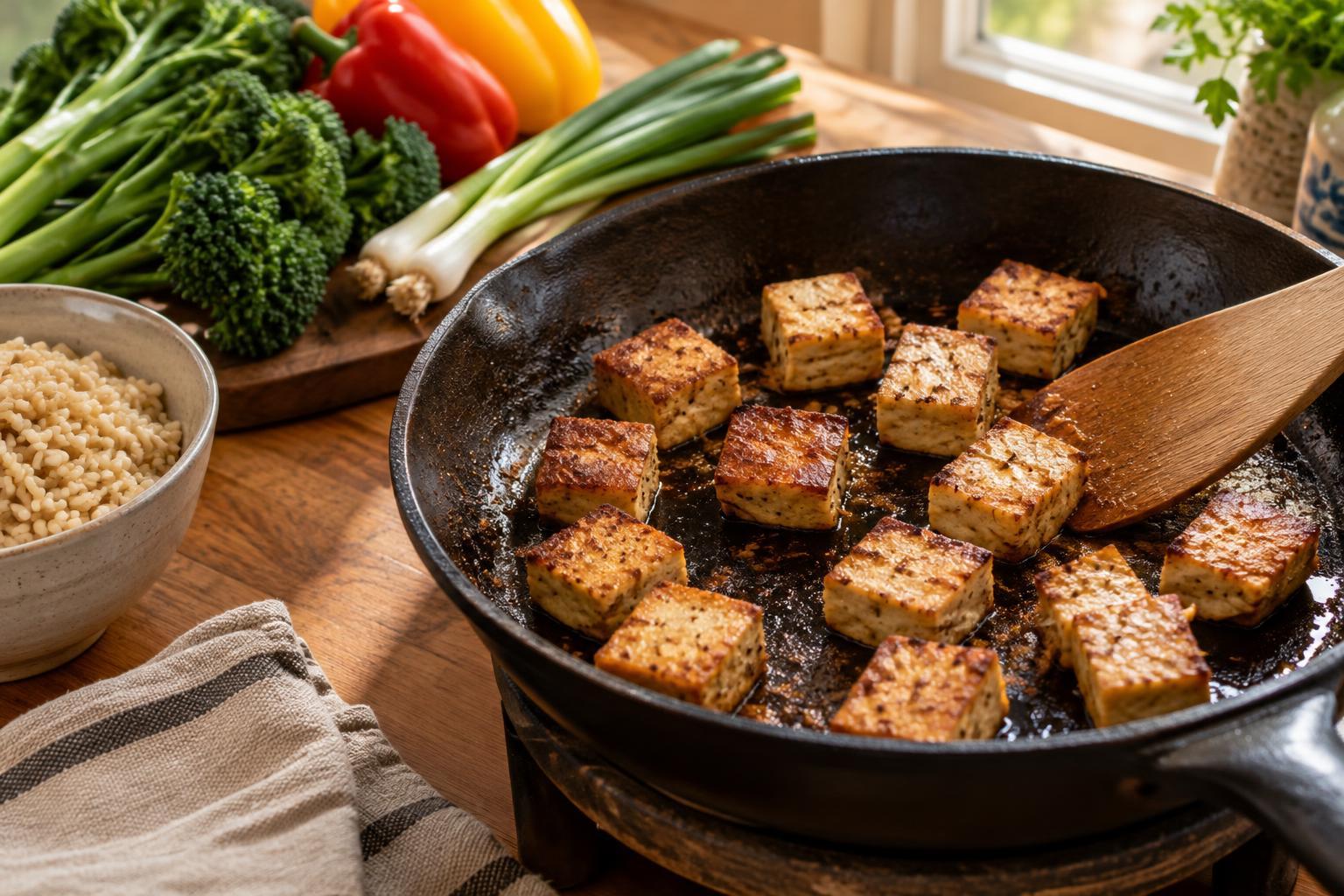
Set a skillet over medium-high heat and add enough neutral cooking oil to coat the bottom. When the oil looks fluid and shimmery, add the tofu in a single layer. Leave space between pieces; if the pan is crowded, cook in two batches. Let the first side sit undisturbed until it releases readily and shows some color. Then turn the pieces and brown the other sides you want crisp.
Adjust the heat if the oil smokes or the coating darkens before the tofu warms through. A steady sizzle is more useful than the highest possible heat. Once the tofu is browned, move it to a plate while you finish the rest of dinner. That pause helps keep its edges from softening as vegetables release moisture in the same pan.
Add flavor at the right moment
Tofu takes well to a finishing sauce, but a sugary sauce can catch and darken quickly in a hot skillet. For a simple savory finish, lower the heat after browning and add a small splash of soy sauce or another salty seasoning, a little water and something sharp, such as citrus juice or vinegar. Toss briefly to coat. If using a sweet ingredient, add it near the end and watch the pan closely.
You can also keep the tofu crisp and spoon sauce over it at the table. Try combining a creamy element, such as tahini or yogurt, with citrus and enough water to make it pourable. Taste before adding more salt, especially if the rest of the meal includes a salty dressing or seasoned grains. The best finish depends on whether you want crisp edges or tofu coated in sauce.
Turn it into a complete dinner
Build the rest of the plate around what needs using first. Sauté sliced zucchini or peppers while the tofu rests, or quickly wilt greens in the same skillet. Set the vegetables and tofu over rice, noodles or another cooked grain, then add a fresh contrast such as chopped herbs, cucumber or a squeeze of lemon. Keeping the components separate until serving gives you more control over texture.
For an easier start next time, cook extra rice or wash vegetables when you are already preparing another meal. Store cooked tofu and other leftovers promptly in the refrigerator in covered containers, then reheat what you plan to eat until hot. A browned batch of tofu is useful beyond a grain bowl: add it to a wrap, serve it with a chopped salad or pair it with leftover roasted vegetables for a low-effort lunch.