Start with one question
A tasting plate does not need to look like a restaurant presentation. Its purpose is to answer a question you might otherwise overlook while cooking: Which fruit has the sharper finish? Does a toasted nut taste different from a raw one? Would this olive oil work better on bread or on tomatoes? Comparing small portions side by side makes those differences easier to notice than tasting each ingredient on a separate day.
Keep the first lineup narrow. Try two varieties of a fruit, raw and toasted versions of the same nut, or a few ingredients that could serve the same role in a dish. Central Valley produce offers plenty of possibilities, but the ingredients do not all need to come from one place for the exercise to be useful. Choose what looks appealing and is available to you. A focused comparison will teach you more than a crowded board where every bite competes for attention.
Prepare each sample so the comparison is fair
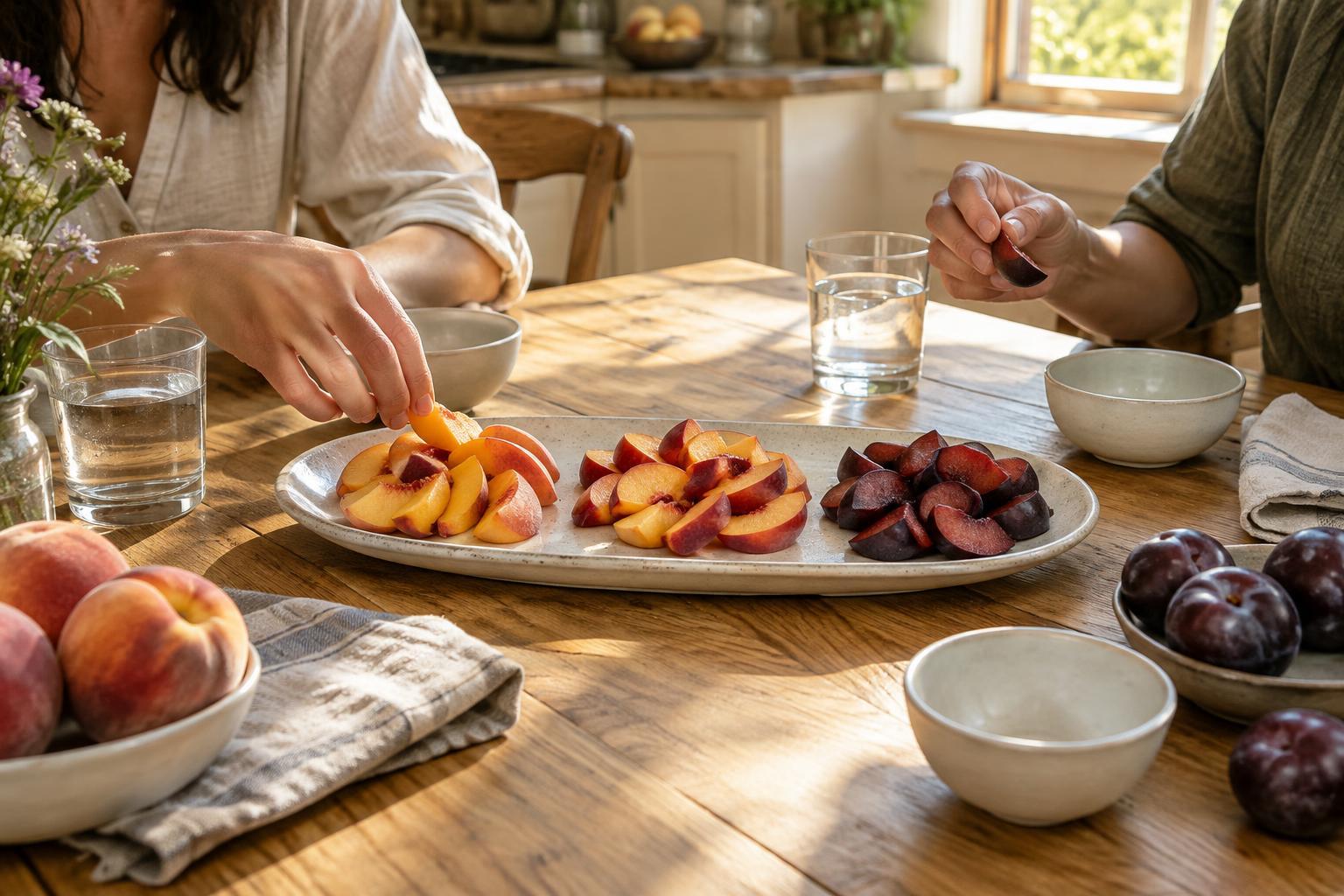
Wash and cut produce into pieces of roughly equal size, and serve similar foods at similar temperatures. If you are comparing two peaches, taste both plain before adding anything. If one is chilled and the other has been sitting on the counter, temperature may affect what you notice. Put samples on separate areas of a plate and give them simple names or labels so you can return to a favorite without guessing.
Pay attention to ripeness, too. A firm plum and a fully soft plum may tell you more about their stages of ripeness than about their varieties. That is still useful information, as long as you know what you are comparing. For ingredients such as nuts or dried fruit, take small bites and have water nearby. Plain bread can provide a neutral pause between strongly flavored samples. Leave sauces, salt and sweeteners aside until after the first round; then add them deliberately to see what changes.
Notice texture as well as flavor
You do not need a specialized vocabulary. Start with ordinary descriptions: crisp, tender, juicy, chewy, creamy, bitter, tart or mild. Then ask when each quality appears. A bite might begin sweet and finish tangy, or seem delicate until its skin adds a little bitterness. Smell matters as well. Before tasting, pause over each sample and notice whether its aroma reminds you of flowers, fresh greens, toast or something else familiar.
The most useful question is often what you would do with the ingredient next. A firm piece of fruit might hold its shape in a salad, while a softer one might be better spooned over yogurt. A walnut with a pronounced flavor could stand up to bitter greens; a milder nut might let a delicate fruit take the lead. These are possibilities, not rules. Write down one or two pairings you want to try, rather than attempting to rank every sample from best to worst.
Make it a relaxed shared activity
For a casual gathering, set out three or four samples and ask guests what they notice before revealing any labels. There is no need for scoring sheets or a correct answer. People may prefer different textures, and their descriptions can lead to useful cooking ideas. If children are joining in, invite them to invent names for flavors or suggest which ingredient belongs in a snack. For more ways to build an activity around observation and imagination, browse Story-Inspired Activities · The Curious Bookshelf.
A tasting can also fit alongside a book-club supper: offer a small plate at the start, then let guests move on to the meal and conversation. If planning that kind of evening appeals to you, browse Book Discussions · The Curious Bookshelf for further ideas about gathering around books. Keep any leftover ingredients in mind as you plan the next meal. Cut fruit can become a topping, nuts can add crunch to vegetables, and a favorite combination can become the starting point for a simple salad. The aim is not to become an expert in one sitting; it is to notice what you enjoy and make better use of it.