Start with a walk that leaves room to pause
Nature journaling is a way to pay attention, not a test of how many plants or birds you can name. A few lines about the light on a field, a sketch of an unfamiliar leaf, or a note about the sound of moving water all count. The best first outing is often a familiar walk where you can spend less energy finding your way and more energy noticing what is around you.
Choose a route with comfortable places to stop without blocking a path. A neighborhood greenway, a park loop, or an established trail can work. Decide roughly how long you want to be out, and leave time to return at an unhurried pace. In the Central Valley, exposed paths and shaded areas can feel quite different, so bring water and dress for the conditions you expect. If visibility is poor or a route feels uncomfortable, choose another place or day.
Carry less than you think you need
A small notebook and a pen or pencil are enough. A firm-backed notebook can be easier to use while standing, but a folded sheet of paper works too. If you prefer your phone, keep notes in one place so they are easy to revisit. Photos can help you remember a detail, though taking one is optional; the point is to look closely, not to document everything.
Before you set off, write the place and a brief description of the conditions, such as “cool and breezy” or “bright sun, little shade.” You do not need precise measurements. These opening notes provide context when you read the entry later. Leave yourself space for questions and uncertain descriptions. “Small yellow flowers near the path” is a useful observation even if you never learn the plant’s name.
Use a few prompts to notice more
At your first stop, take a moment to look in three directions: near your feet, across the landscape, and overhead. What changes as your gaze moves? You might notice cracks in dry soil, a line of trees along an irrigation channel, or clouds passing over the foothills. Record one detail from each view in words or quick marks. The exercise gives you a starting point without requiring a long journal entry.
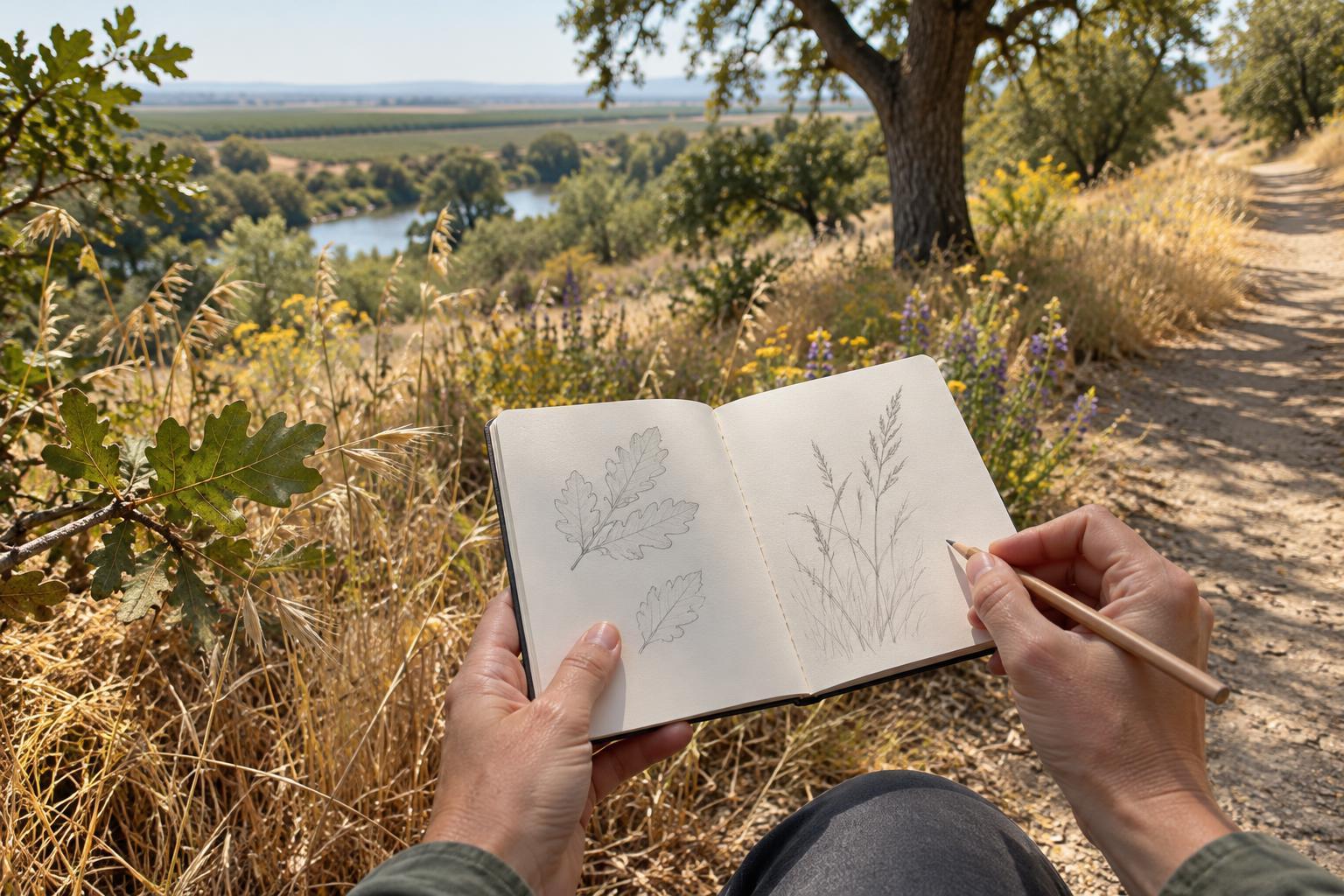
Other senses can help you slow down. Listen for layers of sound, from nearby footsteps to distant traffic, and note which ones shift when you stop moving. Look for differences in texture, color, and shape, but leave plants, nests, and other natural features where they are. If you want to draw, try a thirty-second outline rather than a polished picture. A rough sketch can capture the curve of a seedpod or the pattern of shade more clearly than a description.
Questions make good entries, too. Why is one patch of ground damp while the path beside it is dry? Does the same tree look different from the other side? Write down what you observed separately from what you think might explain it. That small distinction keeps the journal open-ended and makes a later walk more interesting.
Make it a repeatable, low-impact habit
A short entry at one stopping point is enough for a first outing. If you enjoy it, return to the same public spot at another time of day or in another season. Compare what you can actually see: the amount of shade, the appearance of a tree, or the sounds you hear. Familiar places often become more engaging when you have a record of small changes.
Journal from the path or another appropriate stopping place, and respect posted boundaries and other visitors’ space. Give wildlife room, and avoid handling plants or moving natural objects to improve a drawing or photo. On a shared path, step aside before opening your notebook so others can pass comfortably.
After the walk, add one sentence about what you would like to look for next time. It might be a color you kept noticing, a question about a plant, or simply a different stretch of the route. Your journal does not need daily entries or tidy pages. Its value is in giving you a reason to pause, observe, and enjoy a place at your own pace.