Start with curiosity, not expertise
Walking into an art gallery for the first time can feel like entering a conversation already in progress. You may not know the artist, the medium or what you are supposed to say. The good news is that you do not need any of that knowledge to begin. A gallery is a place to spend time with work someone made and notice what it brings to mind.
The Central Valley offers many possible starting points for that exploration, from small community spaces to exhibitions connected with schools and cultural organizations. Rather than trying to see everything at once, choose one place that sounds interesting. A single thoughtful visit can be more rewarding than rushing through several stops.
Plan a comfortable first visit
Before you go, check the gallery’s own information for its hours, location and any admission details. Exhibition schedules and public access can vary. If you are planning to visit with children or someone who needs step-free access, it is worth checking the space’s visitor information or contacting it directly. Give yourself enough time to find parking, settle in and browse without watching the clock.
You can turn the outing into an easy afternoon by pairing the visit with a walk or a meal nearby, but leave the gallery itself unhurried. Comfortable shoes and a light layer are usually more useful than dressing for a formal occasion. If an opening reception sounds appealing, consider going; if you would rather look quietly, choose a less social time.
Look slowly and follow your attention
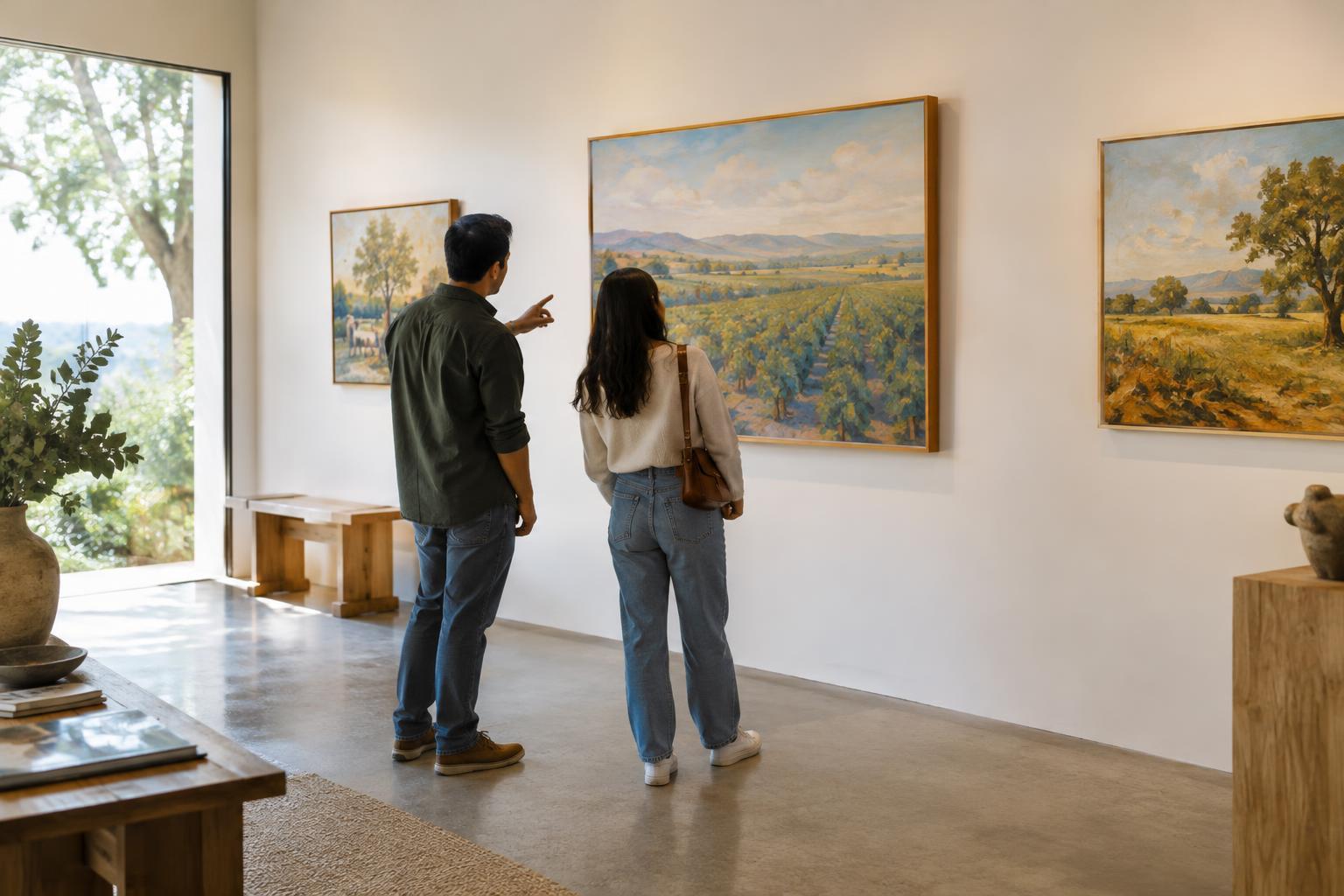
There is no required route through a gallery unless the space indicates one. Start with a piece that catches your eye, even if you cannot explain why. Notice its colors, materials, scale and placement. Step closer to see details, then step back to take in the whole work while respecting any boundaries around it. You might ask yourself what changed between those two views.
Wall labels can help, but you do not have to read every one before forming an impression. Try looking first, then read the title or artist’s description and look again. If a work feels unfamiliar or challenging, that is not a failure to understand it. You can simply note a question: What does this material remind me of? Why might the artist have made this choice? What feeling stays with me?
Join the conversation respectfully
If someone is staffing the gallery and seems available, a simple question can open up the experience: “Is there a piece you suggest starting with?” or “Can you tell me more about this exhibition?” At an event, you may have the chance to speak with an artist. Asking about their process or what they enjoy about a material is often more inviting than asking for a single, definitive meaning.
Follow the space’s guidance on touching work and taking photographs. Even when photography is allowed, avoid blocking another visitor’s view for long, and ask before photographing people. Give yourself permission to browse without buying anything. If work is for sale and you are curious, it is fine to ask how purchasing works or whether smaller pieces or prints are available.
Let the visit lead to another
Afterward, take a moment to remember one work that stayed with you. You might jot down the artist’s name, share an exhibition recommendation with a friend or bring someone along next time. If you post a permitted photo, crediting the artist and gallery helps others find the work rather than treating it as a backdrop.
Exploring local art can become a gentle habit rather than a checklist. Return to see how a space changes between exhibitions, try a different kind of venue or attend an artist talk when one fits your schedule. The more often you look, the more you may notice connections between the art and the places, materials and stories around you in the Central Valley.