Start with the experience you want
An accessible nature outing does not have to mean a long hike. It might be a short path to a shaded overlook, a loop beside a pond or a level route with places to pause and listen to birds. Before searching for a trail, decide what would make the trip comfortable for you and your companions. Think about distance, time outdoors, available energy and whether you would rather explore a loop or return along the same path.
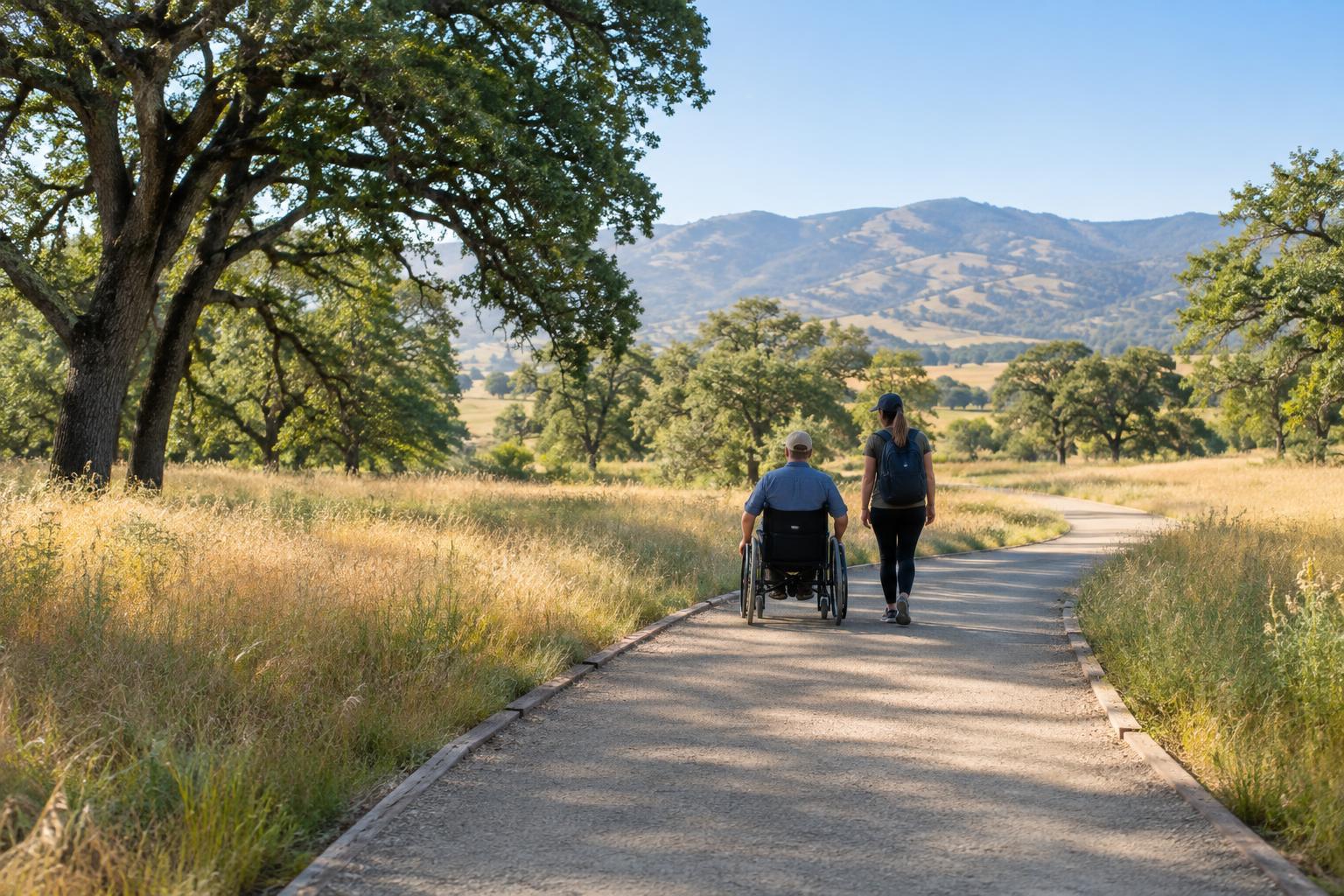
Accessibility is personal. A paved trail may work well for one visitor but be difficult for someone who needs shade, frequent seating or a quieter setting. Write down your essentials—such as a firm surface, nearby restroom, step-free entrance or room to turn a mobility device—and separate them from features that would simply be nice to have. That short list will help you assess trail descriptions without assuming that an “easy” rating answers your questions.
Look beyond the trail label
Begin with the organization that manages the park or open space. Its trail page, map or accessibility information may describe the route more precisely than a general listing. Look for the length and width of the path, surface material, steepest sections and any cross slope—the sideways tilt that can make travel uncomfortable even on a gentle trail. Note whether the route includes gates, bridges, gravel patches or unpaved connections between parking and the path.
Check the whole visit, not just the trail itself. Where is the accessible parking, and is there a continuous route from it to the trailhead? Are restrooms available and open during your planned visit? Are benches or other resting places shown on the map? If a description says only “accessible” or “family-friendly,” treat that as a starting point rather than a guarantee. Photos and maps can help you form questions, but they may not show a steep driveway, a narrow entrance or a worn section of path.
Confirm what could have changed
Trail conditions can change after rain, maintenance work or heavy use. Before leaving, check the managing organization’s latest posted notices for closures, detours, restroom availability and parking changes. If the details you need are missing, call or email and ask specific questions: Is the entire route open? Are there loose or muddy sections? Can a visitor reach the main path without using stairs? Staff may not know how a route will feel to you, but a concrete answer can help you decide.
In the Central Valley, weather and exposure deserve their own check. An open path that feels pleasant in mild conditions may offer little relief on a hot afternoon. Rain can soften dirt surfaces or leave puddles in low spots, while poor air quality can make an outdoor plan less appealing. Check a weather forecast and relevant local advisories close to departure. If conditions are uncertain, choose a shorter route, an earlier outing or a different day.
Plan the practical details
A useful plan includes how you will arrive, where you will begin and when you will turn back. Save or print a map if one is available, since mobile service and map detail can vary. Bring water, sun protection and any supplies you normally need for a comfortable outing. If you are going with others, agree that the pace and route can change without anyone feeling they have spoiled the trip.
Consider features beyond the path underfoot. Someone with low vision may want clear edges or a companion who can describe junctions. A visitor sensitive to noise or crowds may prefer a less busy time. For a group with different access needs, identify a shared destination—perhaps a viewpoint or picnic area—that everyone can reach by a suitable route. A short, enjoyable visit is more valuable than completing a distance that stops being comfortable.
Leave room for a change of plans
When you arrive, take a moment to assess the connection from parking to the trail, the surface near the entrance and the conditions ahead. A recent washout, locked restroom or unexpectedly exposed stretch may change your decision. It is fine to turn around, choose another path or enjoy the scenery from an accessible gathering area instead.
Afterward, make a few notes for next time: which details matched the description, where you found useful shade or seating, and what you would check again before returning. If the managing organization welcomes visitor feedback, you can share clear observations about a barrier or outdated trail detail. Over time, that habit makes it easier to choose outings that fit your needs—and to spend less of your day solving surprises at the trailhead.