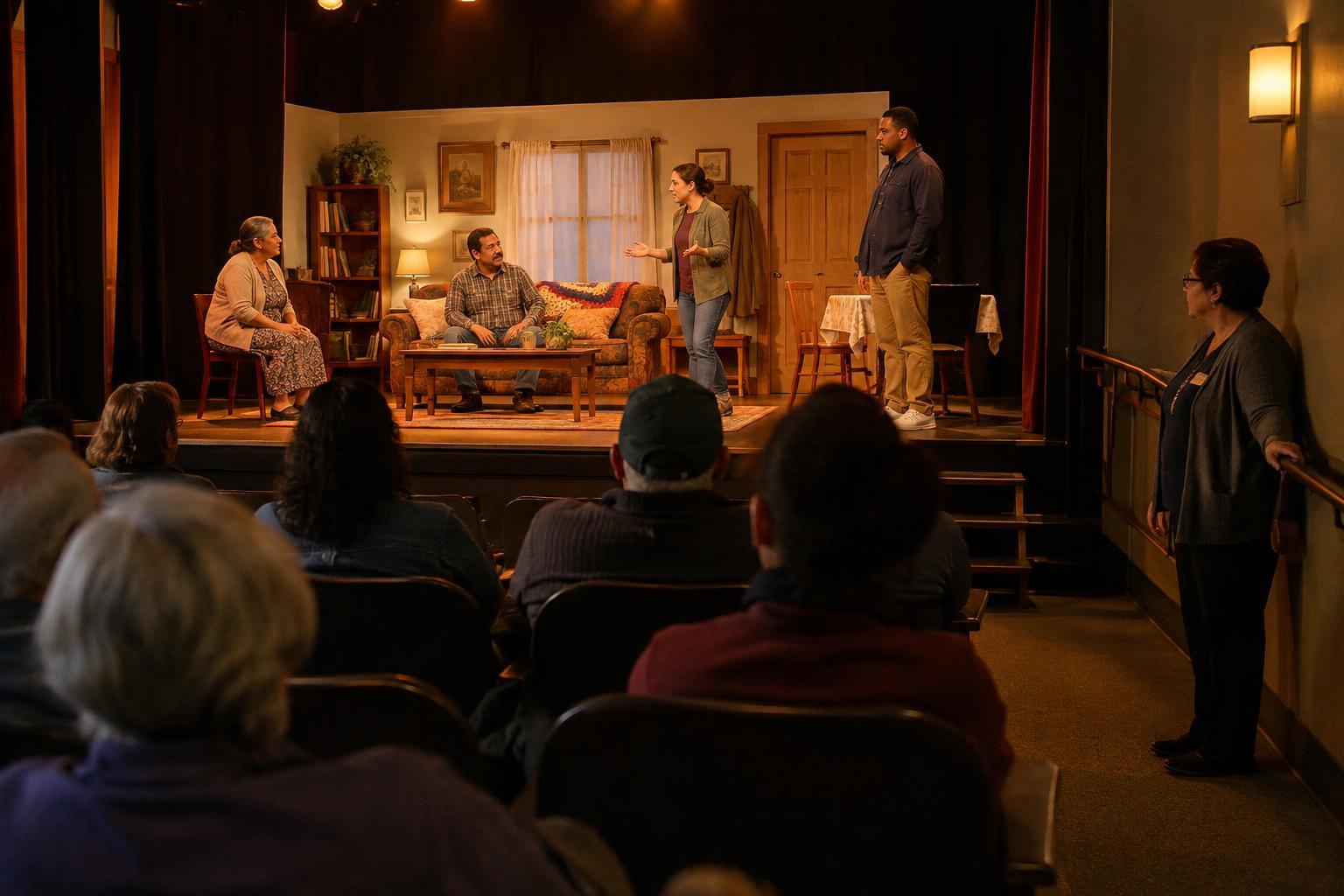
Start close to home, then widen the search
A search for “community theater” and the name of your town is a good beginning, but it may not show every opportunity nearby. Try neighboring towns and counties, and search for “community theatre,” “youth theater,” “playhouse” or “local auditions” as well. Across the Central Valley, a manageable drive can open up more options than looking within one city alone.
Check library event listings, parks and recreation calendars, school and college arts pages, and bulletin boards at cafés or community centers. Local arts groups may also share one another’s announcements. If you find an older listing, confirm the performance details through the producing group before making plans; schedules, locations and ticket arrangements can change.
Look beyond full productions. Staged readings, short-play festivals, workshops and student performances can be approachable introductions to a group’s work. An event that invites conversation with the cast or creative team may be especially useful if you are curious about getting involved yourself.
Choose a show that fits your evening
A little planning helps turn a first visit into a relaxed outing. Read the show description for its tone, length and any content notes the organizer provides. Check whether seating is assigned, when doors open and whether tickets are available at the door. For a family outing, look for the group’s age guidance rather than assuming that every play or musical suits every child.
Venue details matter, too. If you need step-free access, specific seating, captioning or another accommodation, contact the organizer directly. Ask about parking and the expected finish time if you are traveling from another town. For an easy dinner-and-show plan, leave enough time to eat without rushing; a performance often begins at a set time even when the rest of the evening feels casual.
Once there, give the performers and fellow audience members your attention. Silence your phone, follow the venue’s photography rules and save conversations for intermission or afterward. Applause is welcome, but thoughtful attendance starts with letting everyone experience the show.
Support the work in ways that suit your budget
Buying a ticket is a direct way to support a production. If your budget allows, consider inviting a friend, returning for another show or making a donation through a channel the group provides. You need not do all three. Regular attendance, even at modestly priced events, shows that there is an audience for local theater.
Word of mouth helps people discover performances they might otherwise miss. Share an official event announcement, recommend a show you enjoyed or tell a neighbor about a group whose next production interests you. When posting photos, respect the venue’s rules and the people pictured. Specific praise for the acting, costumes, set or welcoming atmosphere is more helpful to a prospective audience member than a generic endorsement.
You can also support a group without spending money. Ask whether it needs volunteers to greet guests, distribute programs, help with publicity or organize materials. Volunteer needs vary, so let the group explain its process and time commitment before you sign up.
Find a place behind the scenes
Community theater involves more than performing. Productions may need people who can sew, paint, build, manage props, assist backstage or help keep rehearsals organized. Some groups offer beginner-friendly tasks or workshops; others need particular experience. If you are interested, describe what you can do, what you hope to learn and when you are available.
Audition notices usually explain what to prepare and how the group plans to rehearse. Read them closely, including the performance dates, before committing. If you are new to auditions, a workshop or a small volunteer role can be a comfortable first step. For youth programs, parents and caregivers should review participation expectations and contact the organizer with questions.
Good support includes respecting people’s time. Arrive when you say you will, communicate early if plans change and follow the production team’s guidance about equipment and shared spaces. Those habits are valuable whether your role is onstage, backstage or at the front door.
Make theater part of your local routine
The most useful way to explore Central Valley community theater is to stay curious. Keep a short list of groups within a distance you are willing to travel, and check their own announcements when you are ready to go out. Try a comedy one month, a reading another time or a workshop when your schedule permits. You do not need to know theater to enjoy it.
After a show, take a moment to notice what surprised you: a clever use of a small space, a strong ensemble scene or a story that sparked conversation on the way home. Share that experience with someone who might enjoy the next performance. Showing up, paying attention and making room for local creative work are simple ways to help a community theater scene feel like a community.