Choose a small, varied lineup
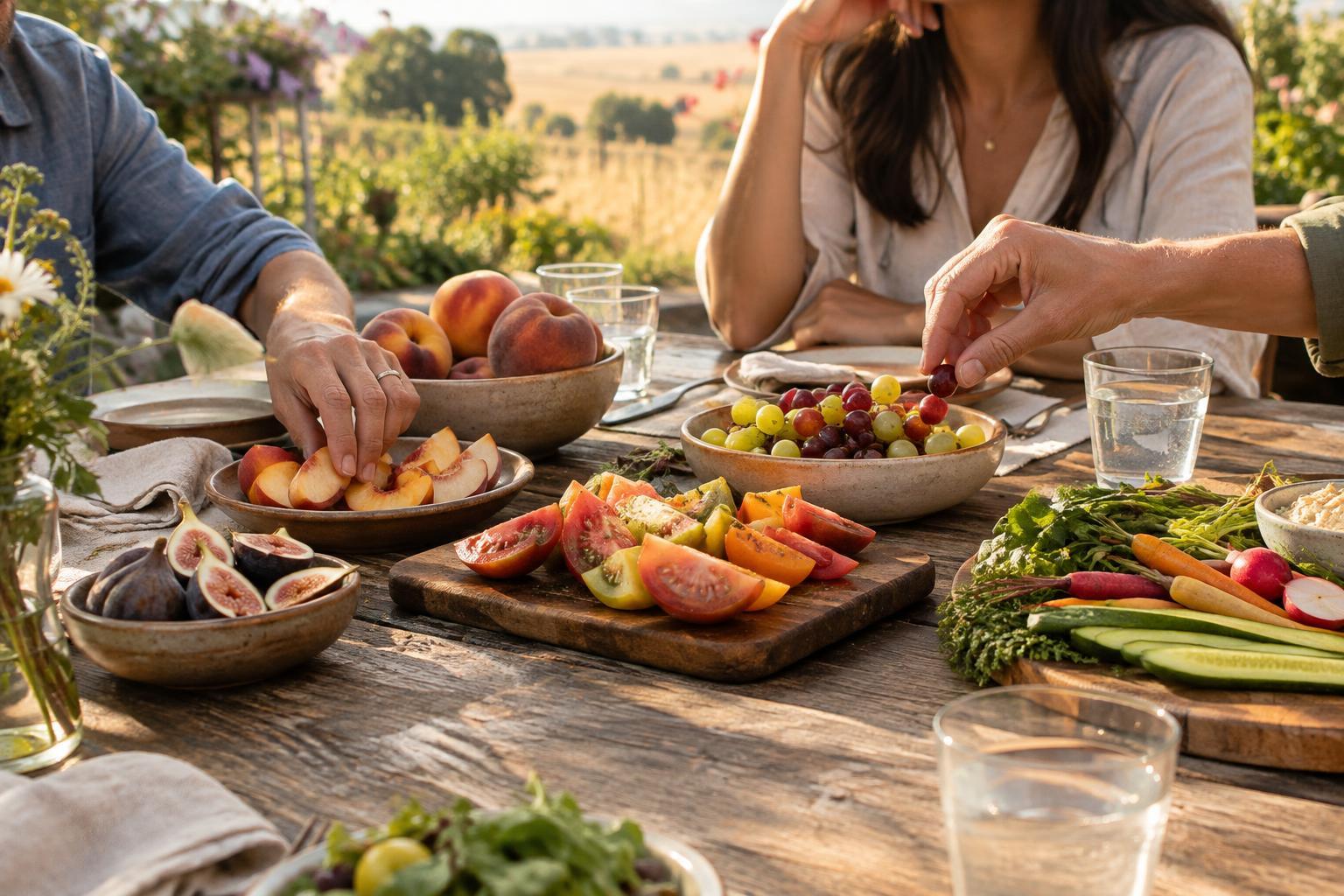
A produce tasting is part snack, part conversation starter. Instead of building a large spread, choose four to six items that look especially appealing at a market, farm stand or grocery store. A mix of familiar and less familiar choices gives everyone a way into the experience. You might compare two varieties of stone fruit, taste tomatoes with different shapes, or pair a crisp vegetable with a few fruits.
Let what looks good guide you rather than committing to a rigid list. Central Valley growing areas offer plenty of inspiration, but selection changes with season, weather and where you shop. Ask a seller how they like to eat something if you are unsure when it is ready. Buy modest quantities: guests only need a bite or two of each item, and a smaller lineup leaves more time to notice the differences.
Aim for contrast in texture and flavor. Something juicy, something crunchy and something fragrant will make a more interesting tasting than several similar items. If you plan to include a fruit or vegetable that is best cooked, prepare it ahead of time and make clear which samples are raw and which are cooked.
Prepare the table for easy tasting
Give each item its own plate or bowl, with a small card naming it. If you know the variety, add that too; if not, a simple name is enough. Keep the presentation casual so guests feel welcome to pick up a slice and ask questions. Small plates, napkins, water and a bowl for pits or peels will do more work than elaborate decorations.
Wash produce before serving, and use clean utensils and cutting boards. Slice delicate items close to guest arrival when practical so they stay appealing. Keep cut fruit and other perishable foods chilled until it is time to serve them, and put leftovers away promptly. If guests have allergies or dietary restrictions, ask in advance and label any dips or toppings that contain common allergens.
For a regional touch, set the table with a washable cloth, a few herbs in a jar or a basket of whole produce that you will cut later. The ingredients can be the centerpiece. Leave enough open space for everyone to reach the plates without crowding around a single spot.
Make tasting a conversation, not a test
Start by inviting everyone to try one item on its own. Ask what they notice before offering salt, citrus or a dip: is it sweet, tart, earthy or mild? Does the texture change near the skin? There is no need for formal tasting vocabulary. “Reminds me of a summer lunch” is as useful a response as a precise flavor description.
After the first round, offer a few simple additions and let guests try the same produce again. A tiny pinch of salt may change how a tomato tastes; a squeeze of citrus can bring a different edge to a sweet bite. Serve additions on the side so anyone who prefers the produce plain can keep it that way. If you include honey, cheese or a seasoned dip, label it clearly and offer an uncomplicated option alongside it.
One gentle prompt is enough to keep things moving: Which item would you pack for a picnic? Which would you cook with? Avoid ranking everything as “best.” Preferences vary, and the pleasure of the gathering is in hearing why friends notice different things.
Add a simple meal without hiding the produce
If the tasting falls near lunch or dinner, make it the beginning of an easy meal. Bread, a pot of grains, a bowl of beans or a simple salad can give guests something more substantial while leaving the produce at the center of the gathering. Choose foods you can prepare ahead so you are not working in the kitchen while everyone else is talking.
Set out a few plain ingredients that let people assemble their own plates. Sliced tomatoes might go onto toast, while fruit can finish a meal with yogurt or be eaten as it is. Keep strongly seasoned sauces separate until after the tasting; they are welcome at dinner, but they can make subtle differences harder to notice during the first round.
For drinks, water is plenty. You could also offer unsweetened iced tea or sparkling water with citrus on the side. The point is not to build a complete pairing menu. It is to make people comfortable enough to linger.
Send the idea home with your guests
Keep the ending as relaxed as the beginning. If you have whole produce left over, invite guests to take a piece home, or save it for your own next meal. Jot down the combinations people enjoyed so you can use them later: a favorite tomato for sandwiches, perhaps, or a fruit that tastes especially good alongside a simple snack.
A Central Valley produce tasting does not depend on rare ingredients or expert knowledge. It works because everyone brings curiosity to the table. With a manageable selection and a little room to compare notes, an ordinary afternoon can become a memorable way to share what tastes good right now.