Start with the space, not the camera
A mural along a neighborhood walk, a ceramic piece at a market and a painting in a gallery invite different kinds of attention. Before taking out your phone, look for posted photography guidance. A gallery, studio, festival or market may have rules about cameras, flash or sharing images, and an individual artist may have preferences of their own. If you are unsure, ask a staff member or the artist when they are available. A simple question about whether photographs are welcome can make the exchange more comfortable for everyone.
Keep your purpose in mind, too. A personal snapshot, a social post and an image intended for a publication or promotion are not the same request. Permission to take a picture does not necessarily mean permission to use it in every setting. When you have a specific use planned, explain it plainly before you shoot. If the answer is no, put the camera away and enjoy the work in person.
Make room for the artist’s choices
Local art often appears in shared places, but visibility is not an invitation to treat an artwork as your own content. Artists may want to control how a new piece is first seen, may be documenting it themselves or may prefer that details not be posted. At an open studio or market booth, give the artist a chance to tell you what is comfortable. Avoid assuming that a friendly conversation or a purchase includes permission to photograph and publish everything on display.
When you do share a permitted image, identify the artist accurately if you can. Check a label, business card or the artist’s own information rather than guessing at a name or social account. Mention the artwork title when it is provided and relevant. Credit is a way to guide interested viewers toward the maker; it does not replace permission when permission is needed. If an artist asks you to remove a post or correct a credit, respond promptly and respectfully.
Photograph the work without disrupting the visit
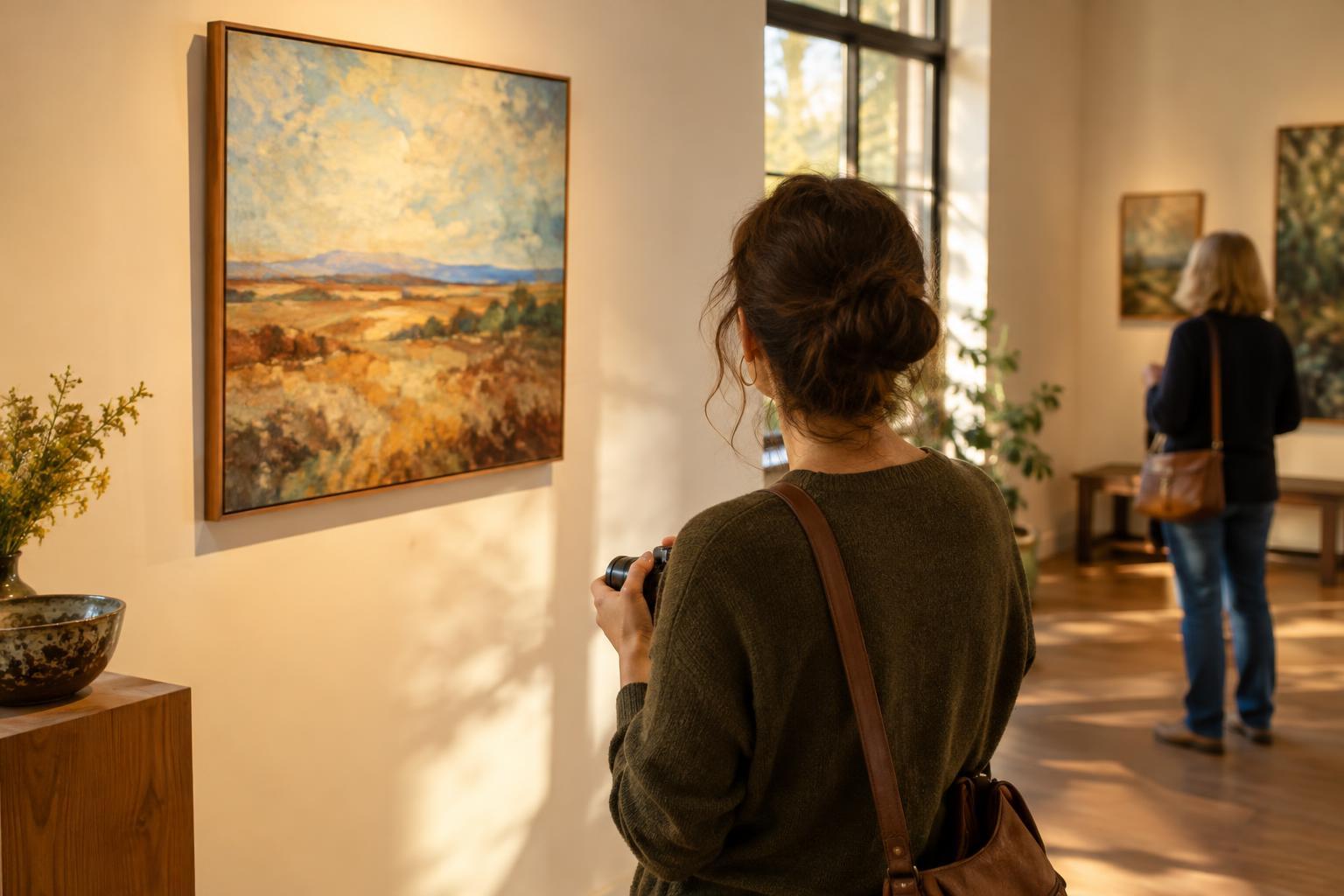
Good art photographs rarely require taking over a space. Step back to show the piece in context, then try a closer frame if photography is allowed and you can do so without crossing a barrier or touching the work. Natural or existing light may be enough; avoid flash where it is prohibited or distracting. Watch for reflections, tilted lines and your own shadow before taking several nearly identical shots. A few considered frames are often more useful than a long photo session.
Be mindful of other visitors, especially in small galleries and busy community events. Do not block a walkway while arranging a picture. If you need a clear view, wait for a quieter moment instead of asking people to move. These habits help preserve the easy pace that makes an afternoon exploring Central Valley art spaces enjoyable.
Consider the people and places in the frame
A photograph of art can also include a maker at work, a family browsing a booth or someone standing beside a mural. Before posting an identifiable portrait, ask the person if they are comfortable being featured, particularly when they are the focus rather than an incidental part of the scene. Take extra care around children: framing the artwork without them is often the simpler choice. The same courtesy applies inside studios and homes, where tools, notes and works in progress may be visible in the background.
Location deserves thought as well. A venue name can help people find a public exhibition, but not every workspace is open to visitors. Check how the artist describes the place before tagging an exact location or inviting others to stop by. If you cannot tell whether a detail is meant to be public, leave it out or ask.
Share a discovery, not a substitute for the work
A useful post gives viewers a sense of why the art caught your attention without claiming to capture the whole experience. Describe a color, material or idea you noticed in your own words. Include the artist’s name and exhibition or event information when you have confirmed those details and sharing is welcome. If you are unsure about posting a close-up that reproduces an entire piece, consider a wider view of the setting or a short description instead.
Respectful photography is less about mastering a complicated checklist than about staying open to conversation. Ask when the situation calls for it, follow the answer you receive and remember that the person who made the work should remain visible in the story you tell. That approach leaves room for both a meaningful photograph and a thriving local arts community.