Choose a trail that fits your dog and the habitat
A dog-friendly outing begins with a route where dogs are actually welcome. Before leaving, check the land manager’s posted rules for leash requirements, closures and areas where pets are not allowed. Rules can differ between nearby trails and may change to protect habitat or trail conditions. If you cannot confirm that dogs are permitted, choose another route rather than guessing at the trailhead.
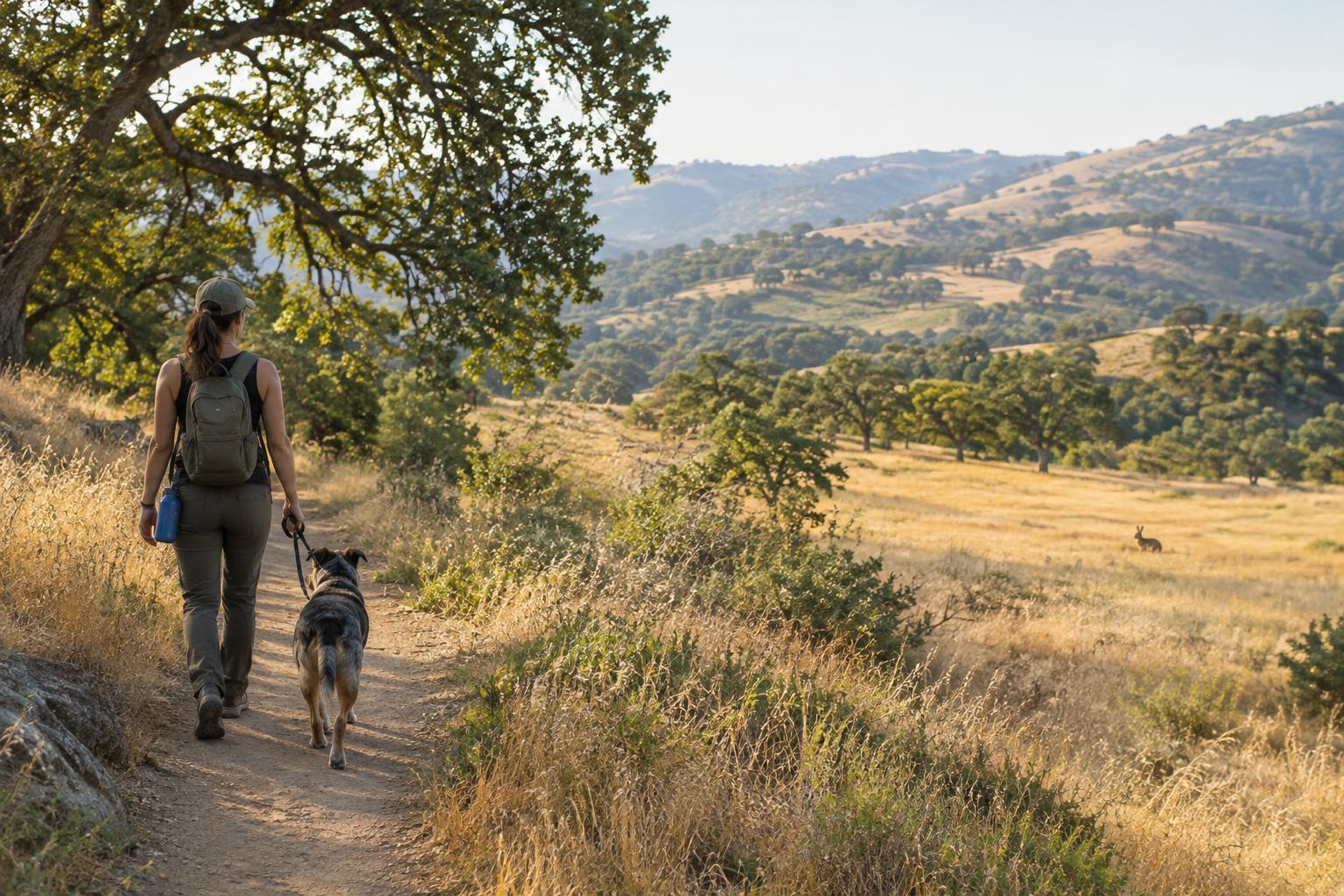
Match the route to your dog’s comfort, not just your own ambitions. Consider distance, shade, footing and access to water you bring yourself. Around California’s Central Valley, an open path can feel very different from a shaded one, especially on a warm day. A shorter outing with time to pause is often more enjoyable than a long hike that leaves your dog tired or overheated. Choosing a well-used path and staying on it also helps keep paws out of sensitive vegetation.
Pack for comfort and control
Bring a sturdy leash, a well-fitting collar or harness, drinking water for both of you, a bowl, waste bags and a way to carry used bags until you reach a bin. Pack a little more water than you expect to need; a stream or pond may be inaccessible, unsuitable for drinking or important to wildlife. Depending on the route, a small towel can help you check and clean paws before the drive home.
Before setting off, make sure your dog can respond to familiar cues such as “come,” “leave it” and “wait.” These cues do not replace a leash where one is required, but they make it easier to pause for other trail users and redirect an interested nose. If your dog tends to pull toward birds or small animals, choose equipment you can handle comfortably and begin with a quiet, manageable route.
Give wildlife room to carry on
Wild animals need space to feed, rest and care for their young. Keep your dog close enough that you can prevent a chase, even when an animal appears calm or the trail seems empty. Do not encourage your dog to investigate burrows, nests, brush piles or shoreline cover. Staying on the trail limits disturbance that can be easy to miss from a human’s height but irresistible to a curious dog.
If you spot wildlife ahead, stop and assess the easiest way to give it room. Shorten the leash without yanking, ask your dog to focus on you and wait at a distance or turn back if needed. Never move closer for a photo or try to make an animal leave the path. Around water, keep your dog from rushing into areas where birds or other animals are gathered. A peaceful encounter is one you can walk away from without changing what the animal was doing.
Share the trail thoughtfully
Other hikers, cyclists, horses and dogs may use the same path. When someone approaches, bring your dog beside you and give others space to pass. Ask before allowing greetings; not every person or dog wants one. On a narrow trail, stepping aside at a durable spot is better than pushing through plants to make room. Keeping the leash from crossing the path prevents an avoidable trip or tangle.
Pick up waste promptly, including when it lands off the edge of the trail, and carry the sealed bag out. Leaving a bag beside the path to collect later is easy to forget and leaves litter for others to encounter. Food scraps and treats deserve the same care: pack out what your dog does not eat. These small habits make shared spaces more pleasant while avoiding unnecessary additions to the habitat.
Know when to shorten the outing
Check in with your dog throughout the walk. Frequent stops, reluctance to continue, sore paws or difficulty settling may be signs that it is time to head back. Take breaks in a suitable spot without blocking the trail, offer water and avoid pressing on just to reach a planned viewpoint. If conditions feel too hot, crowded or distracting for your dog, turning around is a successful decision.
End with a quick paw and coat check, then make sure no gear or litter is left behind. A respectful dog-friendly outing does not depend on covering a lot of ground. It depends on choosing an appropriate place, keeping your companion close and allowing the plants and animals along the way to remain undisturbed.