Let visibility shape the outing
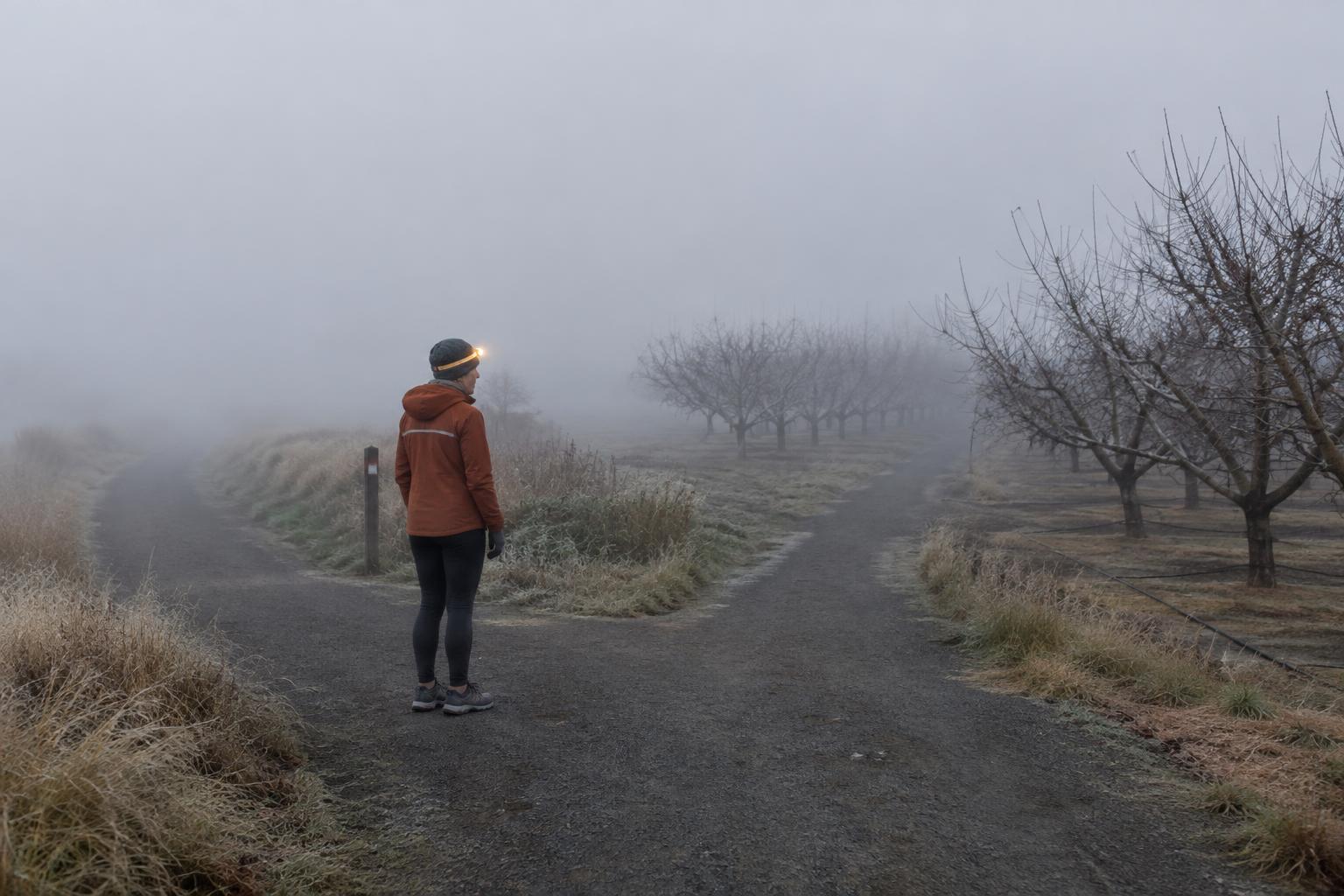
Tule fog is part of the Central Valley’s cooler-season landscape, settling over fields, roads and neighborhoods and sometimes reducing visibility sharply. It can also vary along a route: a clear view at home does not guarantee a clear road a few miles away. Rather than treating fog as a reason to press ahead with the original plan, decide what you need to see clearly for the outing to feel comfortable and safe.
Start with the simplest question: does this trip need to happen in fog? A short walk on a familiar path may be easier to adapt than a drive to an unfamiliar trailhead. Check conditions before leaving, then look outside again when you are ready to go. If visibility is poor, consider a nearby alternative, a later start or a day at home. Fog may lift, but there is no need to count on it doing so by a particular hour.
Choose a route with easy decisions
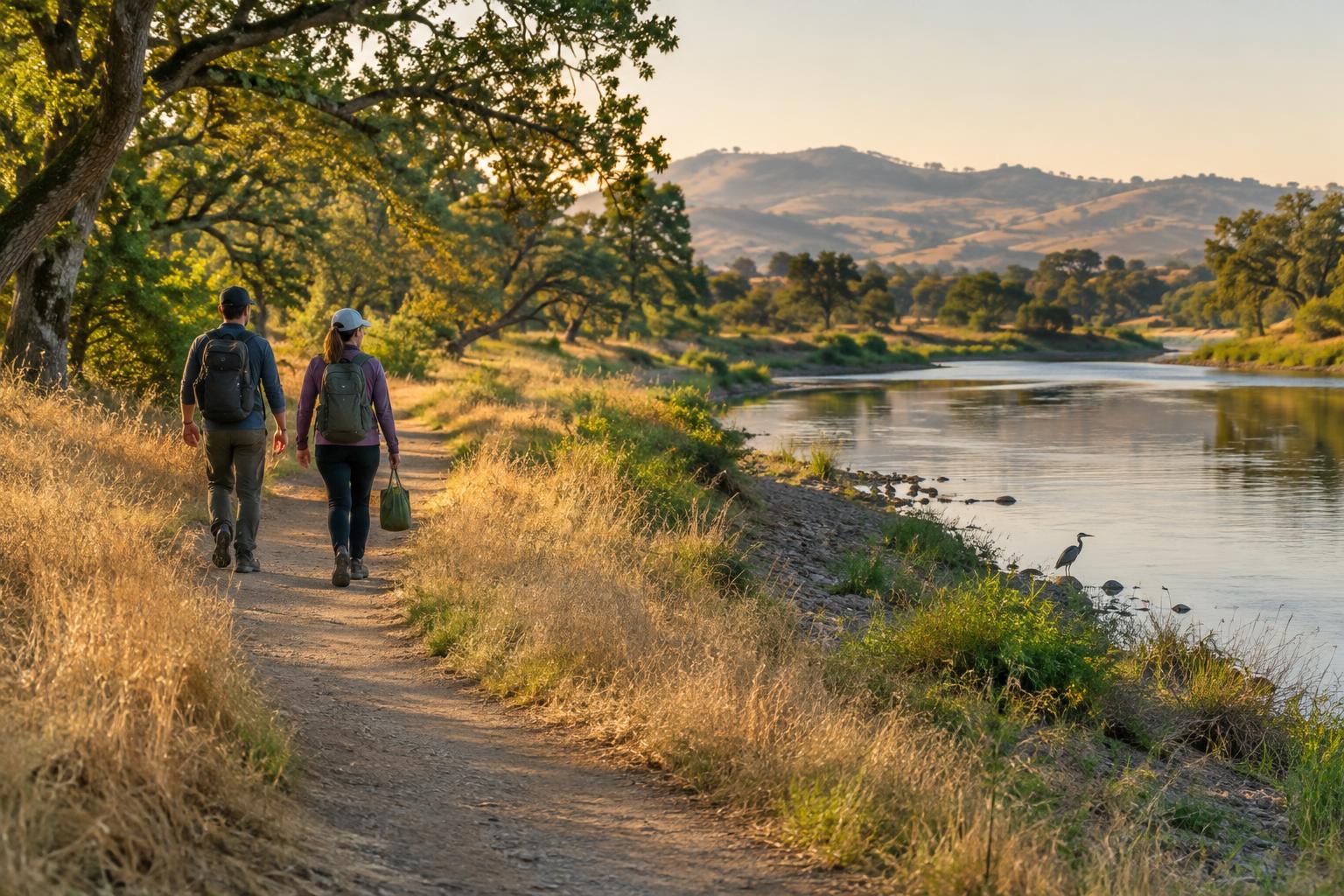
For a foggy-day outing, favor a route you already know, with clear entrances, obvious turns and a straightforward way back. A park loop or neighborhood path can be a better fit than an exposed rural road or a trail with hard-to-spot junctions. Think about the full trip, including the drive, parking area and walk back to the car. A destination is less appealing if reaching it requires stressful travel through low visibility.
Keep the plan modest and build in a turnaround point. Tell someone where you expect to go and when you expect to return, especially if you will be away from busy areas. Carry a charged phone, but do not rely on its map as your only way to follow the route; a screen cannot show every nearby hazard. If you miss a turn or the route feels unclear, stop somewhere safe and reassess rather than improvising farther into the fog.
Make yourself easier to see
Fog makes it harder to judge distance and notice movement, particularly near roads and parking lots. If you are walking, choose paths separated from traffic where possible. Wear light-colored or reflective outer layers, and consider a small light if conditions are dim. A light helps other people spot you, but it does not make an unsafe crossing safe. Pause at intersections, use designated crossings and allow extra time to check for approaching vehicles.
Cyclists need the same margin for uncertainty. Use appropriate front and rear lights, wear visible clothing and choose routes that do not depend on drivers seeing you from far away. If the road edge, turns or other users are difficult to make out, a separated path or a different day may be the better choice. For any outing, slow your pace enough to notice uneven ground, other visitors and changes in the route ahead.
Treat the drive as part of the plan
Many outdoor trips begin with a drive, and that may be the most demanding part of a foggy outing. Before leaving, ask whether the route includes unfamiliar turns, rural intersections or stretches where you would have few comfortable places to pause. Keep your schedule loose so you are not tempted to hurry. If you do drive in fog, reduce speed, leave more space between vehicles and use low-beam headlights rather than high beams, which can reflect glare back toward you.
Avoid sudden stops or turns when you cannot see well ahead. If visibility becomes too poor to continue comfortably, look for a safe place off the traveled roadway to stop; do not stop in a traffic lane. The goal is not to complete the trip at any cost. Turning around, waiting in a safe location or choosing an outing closer to home can be the most sensible version of the plan.
Keep a good backup close to home
A flexible plan can make a foggy morning feel less disappointing. Pair your preferred outing with a shorter option nearby: a familiar park loop, a walk after conditions improve or a relaxed afternoon outside if visibility allows. Pack what you would normally need for the weather, including a layer for the chill, water and shoes suited to damp ground. Give yourself enough time to return before the light fades.
The best fog-day outing is one you can adjust without feeling that you have failed. Notice what you can see, make decisions early and leave yourself an easy way home. On some days, that will mean a quiet local walk; on others, it will mean saving the longer route for clearer conditions.